The Reality of the Watch: Analyzing the 2024 Police Fatality Surge
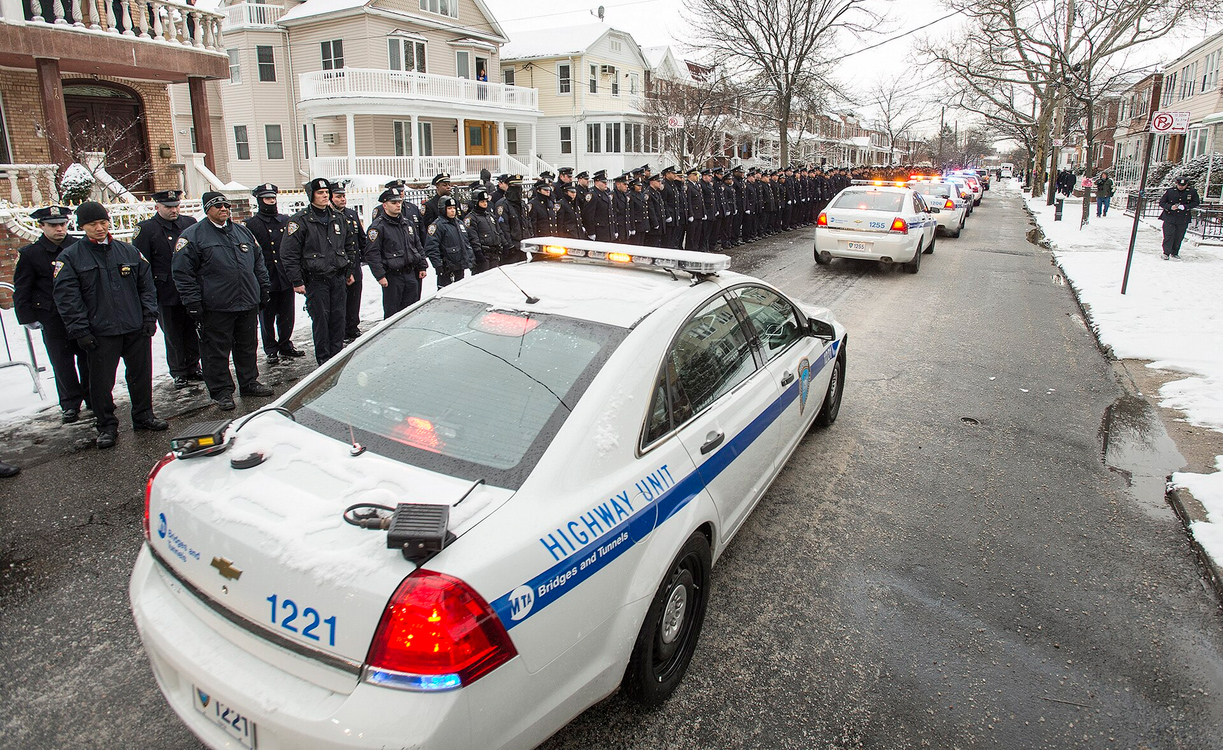
The Reality of the Watch: Analyzing the 2024 Police Fatality Surge. Every badge represents a promise. Every fallen officer represents a promise kept.
Behind every police radio transmission is a husband, wife, father, mother, son, daughter, or friend who left home expecting to return at the end of the shift.
In 2024, far too many never did.
According to the National Law Enforcement Officers Memorial Fund (NLEOMF), 147 law enforcement officers across the United States died in the line of duty during 2024. That marks a 25% increase over the 118 officers who died in 2023, reversing the encouraging downward trend seen in recent years.
These losses include federal, state, county, municipal, tribal, military, campus, and territorial law enforcement officers, underscoring that no agency is immune to the dangers of modern policing.
These numbers represent far more than annual statistics.
Every figure is a life cut short, a grieving family, a department forever changed, and a community left to honor an officer who fulfilled the oath to protect others.
A Troubling Reversal
The increase from 118 to 147 line-of-duty deaths should concern every police executive, supervisor, trainer, and officer.
Policing has always carried risk, but today's threats continue to evolve. Officers routinely encounter heavily armed suspects, individuals suffering from severe mental illness, drug-induced violence, and increasingly unpredictable situations where routine calls can instantly become deadly.
Many officers begin every shift expecting ordinary calls for service. Instead, some find themselves in life-or-death confrontations without warning.
The 2024 fatality report serves as a reminder that danger often arrives without notice.
Gunfire Remains the Leading Killer
The most sobering finding remains unchanged.
Gunfire claimed the lives of 52 officers in 2024, a 13% increase from 46 firearm-related deaths the previous year. Once again, firearms were the leading cause of felonious officer deaths.
The circumstances surrounding those shootings demonstrate the unpredictable nature of policing.
Among the firearm fatalities:
Officers were killed during traffic stops.
Others died while attempting arrests.
Several lost their lives serving warrants or civil process.
Others were investigating suspicious persons.
Five officers were victims of ambush attacks.
Several were responding to domestic disturbance calls or tactical incidents.
These were not extraordinary assignments.
They were routine police responsibilities performed thousands of times each day across America.
The reality is that every call carries uncertainty.
The Growing Threat of Ambushes
Perhaps the most disturbing category remains ambush attacks.
Unlike many police encounters where officers have time to assess danger, ambushes eliminate nearly every tactical advantage. Officers arrive expecting to help, while suspects have already decided violence is the objective.
Training, body armor, and tactical awareness improve survivability, but no preparation completely removes the danger posed by offenders intent on killing law enforcement officers.
These attacks highlight a continuing challenge facing the profession.
Traffic Stops: Routine Until They Aren't
Many people assume SWAT operations or hostage situations are the most dangerous aspects of policing.
The statistics suggest otherwise.
Traffic enforcement continues to rank among the deadliest assignments.
A simple speeding stop may involve an impaired driver, a wanted fugitive, an armed felon, or someone determined not to return to jail.
Within seconds, a routine citation can become a deadly encounter.
The same uncertainty exists during domestic violence calls, suspicious person investigations, warrant service, and countless other routine assignments.
Experienced officers have long understood that there is no such thing as a "routine call."
Traffic-Related Deaths Also Increased
Gunfire was not the only growing threat.
Traffic-related fatalities rose dramatically during 2024.
A total of 46 officers were killed in traffic-related incidents, representing a 48% increase compared to the previous year.
These deaths include vehicle crashes and officers struck while working along roadways.
Departments nationwide continue emphasizing move-over laws, reflective safety equipment, improved roadside procedures, and public education campaigns.
Despite those efforts, officers continue losing their lives while protecting motorists and investigating crashes.
Beyond the Statistics
Annual reports help identify trends.
They cannot measure grief.
Behind every fallen officer are spouses planning funerals instead of anniversaries.
Children growing up without a parent.
Partners returning to patrol while carrying memories that never fully disappear.
Departments and Communities also pay an emotional price.
Morale changes.
Recruitment becomes more difficult.
Veteran officers attend yet another funeral and quietly add another name to memories they never wanted to collect.
Those consequences cannot be captured in charts or graphs.
Every Badge Faces Risk
The NLEOMF report reminds us that these tragedies affect every level of law enforcement.
Federal agencies.
State police.
County sheriff's offices.
Municipal police departments.
Tribal law enforcement.
Military police.
Campus officers.
Large metropolitan departments may dominate national headlines, but smaller agencies often experience equally devastating losses.
In departments with only a handful of officers, losing one deputy or officer can reshape an entire organization for years.
Every badge carries responsibility.
Every badge carries risk.
Officer Safety Must Continue Evolving
The increase in fatalities reinforces the importance of continual improvement.
Law enforcement agencies continue investing in advanced tactical training, improved body armor, enhanced communications, drone technology, intelligence sharing, and officer wellness initiatives.
Technology alone cannot eliminate danger.
Neither can training.
However, continual improvement gives officers better opportunities to survive encounters that previous generations might not have.
Leadership also plays an essential role.
Supervisors who encourage sound tactics, backup requests, proper equipment use, and officer wellness help build safer organizations.
Officer safety extends beyond firearms training.
Healthy officers make better decisions.
Better decisions save lives.
Honoring Those Who Served
The public often remembers annual fatality reports as numbers.
Law enforcement remembers names.
Every one of the 147 officers who were killed in 2024 wore a different uniform, served a different community, and answered different calls.
Yet they all shared the same mission.
To protect others.
Their sacrifices remind us that policing remains one of America's most demanding professions.
Every shift carries uncertainty.
Every call requires courage.
Every officer understands that danger is part of the oath.
Looking Forward
The sharp increase in line-of-duty deaths during 2024 should not simply become another statistic filed away until next year's report.
It should inspire continued investment in training, officer wellness, modern equipment, intelligence sharing, leadership development, and public support.
Every improvement matters.
Every lesson learned matters.
Every officer deserves every reasonable opportunity to return home safely after the shift ends.
Behind every number is a family forever changed.
Behind every badge is a person who chose service over comfort.
The 147 officers who made the ultimate sacrifice in 2024 stood the watch on behalf of communities across America.
Their courage deserves more than remembrance.
It deserves a continued commitment to making the profession safer for those who continue answering the call.
Attributions
National Law Enforcement Memorial Fund

Radio Show Host and Producer
Retired from the Baltimore Police Department at the rank of Sergeant. He was retired early due a permanent line of duty injury that occurred during an act of violence. The injury resulted in 3 surgeries, two steel plates and a fusion of his right wrist and thumb.
About 8 years after retiring from police work, he began a career in the audio broadcasting space. Starting with "audio-blogs" in 1999. Which progressed into a brokered once a week radio show and then led to broadcasting school.
After graduating he has been a full time FM radio personality and launched the Law Enforcement Today Show as a podcast in March of 2017. This was in a partnership with Law Enforcement Today's Robert Greenberg. The show was quickly recruited by radio and is a nationally syndicated radio show, broadcasting weekly on many US Radio Stations to millions of people.
The partnership with them ended in the Summer of 2023 and the show was renamed the Law Enforcement Talk Radio Show and Podcast.
The radio show is syndicated by Talk Media Network. Go to the Radio Page of the site for more information.
Beyond 'I'm Fine': How Cops Hide Trauma Behind Extreme Fitness