 Apple Podcasts Apple Podcasts
  Spotify Spotify
  Amazon Music Amazon Music
  Audacy Audacy
  Audible Audible
  Castbox Castbox
  Castro Castro
  Deezer Deezer
  Fountain Fountain
  Goodpods Goodpods
  iHeartRadio iHeartRadio
  PocketCasts PocketCasts
  Podcast Addict Podcast Addict
  Podchaser Podchaser
  Podverse Podverse
  Spreaker Spreaker
  Podurama Podurama Apple Podcasts Apple Podcasts Spotify Spotify Amazon Music Amazon Music Audacy Audacy Audible Audible Castbox Castbox Castro Castro Deezer Deezer Fountain Fountain Goodpods Goodpods iHeartRadio iHeartRadio PocketCasts PocketCasts Podcast Addict Podcast Addict Podchaser Podchaser Podverse Podverse Spreaker Spreaker Podurama Podurama
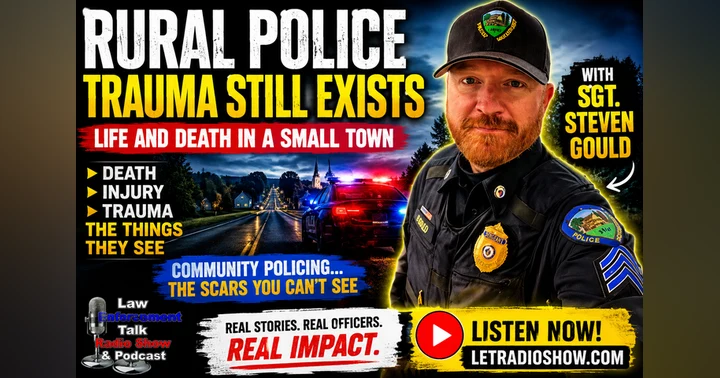
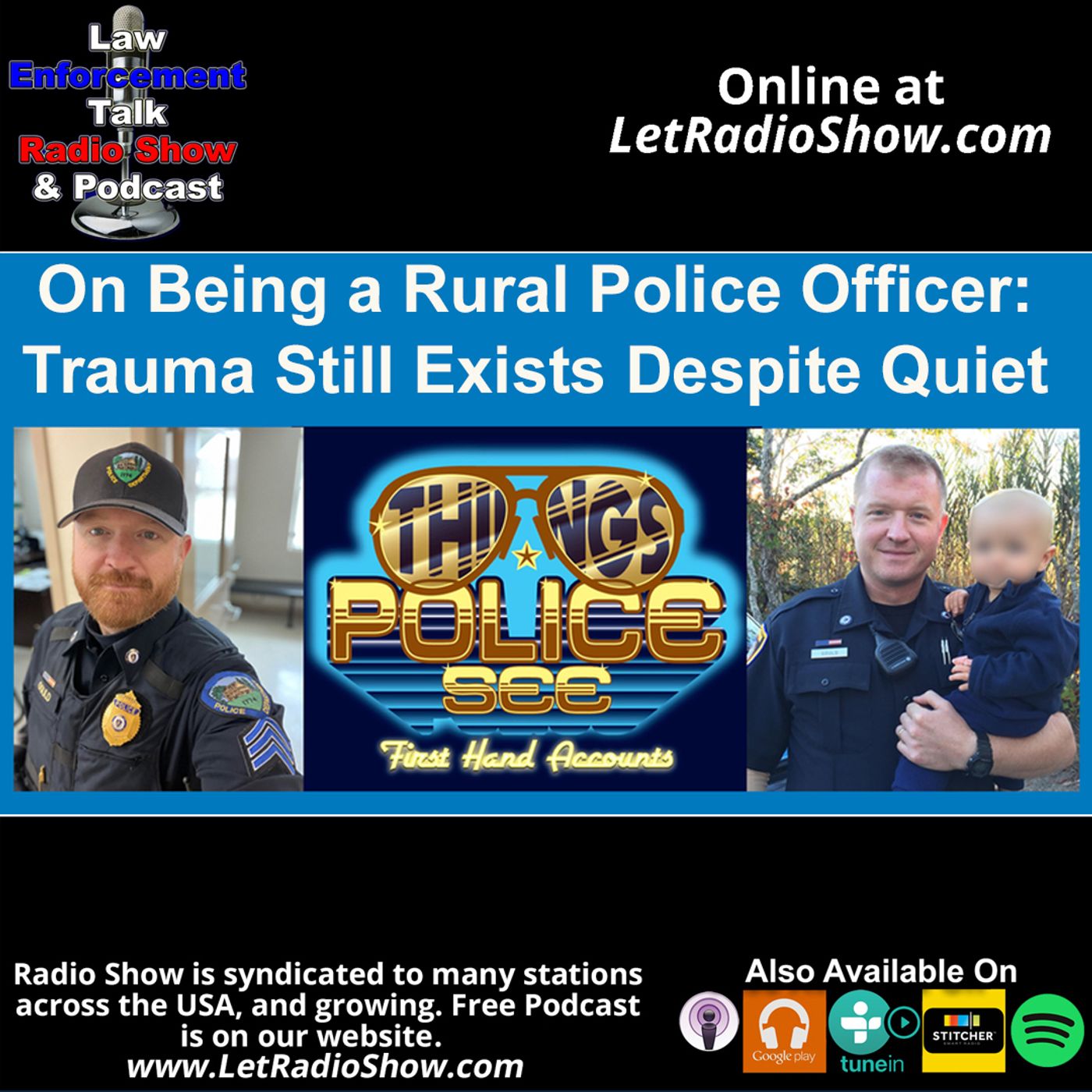
 On Being a Rural Police Officer: Trauma Still Exists Despite the Quiet Small-Town Life. Special Episode. Death and Injury, the Things Police See, and Why Rural Officers Carry Invisible Scars. The Podcast is available for free on the Law Enforcement Talk Radio Show and Podcast website, also on Apple Podcasts, Spotify, YouTube, iHeartradio and most major podcast platforms. #LawEnforcementTalk #Free #Podcast #Radio
When most people picture a rural police officer, they often imagine something straight out of a Norman Rockwell painting. Neighbors know each other's names. Kids ride bicycles through quiet neighborhoods. The local police officer waves to residents while walking Main Street. The Law Enforcement Talk Radio Show and Podcast social media like their Facebook , Instagram , LinkedIn , Medium and other social media platforms.
It seems like the perfect example of community policing.
But behind that peaceful image lies a reality few people ever see.
Death.
Serious injury.
Family tragedies.
Suicides.
Fatal crashes.
Child abuse.
Domestic violence.
The things police officers see don't disappear simply because the town is small. On Being a Rural Police Officer: Trauma Still Exists Despite the Quiet Small-Town Life. Supporting articles about this and much more from Law Enforcement Talk Radio Show and Podcast in platforms like Medium , Blogspot and Linkedin.
Those memories follow them home.
Community Policing Doesn't Eliminate Trauma
Police Sergeant Steven Gould serves with a smaller New England police agency where community policing remains a daily priority. Officers know many of the people they serve personally. They coach youth sports, attend local events, and often respond to calls involving neighbors they've known for years.
That close connection makes the rewards of policing even greater.
It also makes the tragedies far more personal.
"When something terrible happens," Gould explains, "it's often someone you know."
Unlike officers in large metropolitan departments who may never encounter the same victims again, rural officers frequently continue seeing grieving families, injured victims, and traumatized children long after the emergency has ended. The episode is available across major platforms including their website, Apple Podcasts, Spotify, YouTube, with highlights shared across their Facebook, Instagram, and LinkedIn profiles.
The emotional weight doesn't simply disappear when the shift ends.
The Myth That Rural Police Have It Easy
Many assume officers working in smaller communities experience less stress because they respond to fewer violent crimes than officers in major cities. On Being a Rural Police Officer: Trauma Still Exists Despite the Quiet Small-Town Life.
The reality is very different.
Even if calls come less frequently, the emotional impact can be just as devastating.
One horrific crash.
One murdered victim.
One child death.
One suicide.
Those incidents become part of an officer's memory forever.
Trauma does not measure population size.
It measures human experience.
Leaving Police Work... Then Coming Back
Steven Gould understands the profession from another perspective as well.
After years working as both a natural resource officer and municipal police officer, he and his family decided to make a dramatic change.
In 2016 they packed everything they owned into an RV, rented out their home, and drove across America toward California.
After arriving in Los Angeles, Gould accepted a civilian position as a background investigator with the Los Angeles Police Department. Available for free on the Law Enforcement Talk Radio Show and Podcast website, also on Apple Podcasts, Spotify, Youtube and most major Podcast networks.
It was supposed to be a new chapter.
Instead, it reminded him why policing had become part of who he was.
The Conversations That Changed Everything
While working for the LAPD, Gould spent countless lunch breaks listening to veteran officers tell unbelievable stories.
Some were hilarious.
Others were heartbreaking.
Many were terrifying.
The conversations revealed something the public rarely gets to hear.
Police officers witness extraordinary events every single day that never make the evening news.
The emotional burden stays with them long after the headlines disappear.
Those conversations inspired Gould to create a platform where officers could tell their stories honestly and without censorship. On Being a Rural Police Officer: Trauma Still Exists Despite the Quiet Small-Town Life. The Podcast is available for free on the Law Enforcement Talk Radio Show and Podcast website, also on Apple Podcasts, Spotify, YouTube, iHeartradio and most major podcast platforms.
"I wanted people outside of law enforcement to hear what police officers actually deal with every day," Gould says. "If they heard these real stories, they'd better understand and appreciate what these men and women do."
The Things Police See Stay Forever
Whether serving in Los Angeles or a quiet New England town, certain experiences never leave an officer.
Fatal accidents.
Violent assaults.
Child victims.
Domestic abuse.
Mental health crises.
Officer deaths.
Critical injuries.
These are the things police see that most citizens thankfully never will.
Yet officers often carry those memories silently for decades.
Many never seek help.
Many believe they simply have to push forward.
Increasingly, departments recognize that mental health deserves the same attention as physical safety.
The badge protects the body.
It cannot protect the mind.
Why These Stories Matter
Every police officer has stories that reveal courage, heartbreak, compassion, and resilience.
Whether they patrol a city of millions or a town of just a few thousand residents, trauma remains part of the profession.
Understanding those experiences helps bridge the gap between law enforcement and the communities they serve. The Law Enforcement Talk Radio Show and Podcast continues bringing listeners real conversations from the front lines of crime, policing, trauma, survival, and healing.
Behind every uniform is a human being carrying memories most of us will never experience.
Listen to Steven Gould's Story
Steven Gould shares his remarkable journey from rural policing to the LAPD, why he returned to law enforcement, the realities of community policing, and the emotional impact of the life-and-death situations officers face, even in America's smallest towns. On Being a Rural Police Officer: Trauma Still Exists Despite the Quiet Small-Town Life.
Listen to this powerful episode of the Law Enforcement Talk Radio Show and Podcast, available on Facebook, Instagram, YouTube, Apple Podcasts, Spotify, LinkedIn, and all most major podcast platforms.
His story offers an honest look at rural policing, the invisible weight of trauma, and the sacrifices officers make every day, whether they're protecting a bustling city or a quiet small town.
Get the Free Clubhouse App, it is Drop In Social Audio. Think of it as your own talk radio show on your phone, and best of all it is free. Be sure to look for me and follow me, that’s John J Wiley or @letradioshow you can do all that here.
The Law Enforcement Talk Radio Show and Podcast social media like their Facebook , Instagram , LinkedIn , Medium and other social media platforms.
You can contact John J. “Jay” Wiley by email at Jay@letradio.com , or learn more about him on their website .
Find a wide variety of great podcasts online at The Podcast Zone Facebook Page , look for the one with the bright green logo.
Be sure to check out our website .
Be sure to follow us on X , Instagram , Facebook, Pinterest, Linkedin and other social media platforms for the latest episodes and news.
Learn and get access to money saving tips and how to increase your net worth at www.LetSavings.com
Download the Free Ebook about ways and tips to improve your health. You can get the ebook for free at www.LetHealthy.com
On Being a Rural Police Officer: Trauma Still Exists Despite the Quiet Small-Town Life.
Attributions:
Hosted by Simplecast, an AdsWizz company. See pcm.adswizz.com for information about our collection and use of personal data for advertising.
ZipRecruiter Ad (0:00): Finding great candidates to hire can be like, well, trying to find a needle in a haystack. Sure, you can post your job to some job board, but then all you can do is hope the right person comes along. Which is why you should try ZipRecruiter for free at ziprecruiter.com/zip. ZipRecruiter doesn't depend on candidates finding you, it finds them for you. Its powerful technology identifies people with the right experience and actively them to apply to your job.
ZipRecruiter Ad (0:28): You get qualified candidates fast. So while other companies might deliver a lot of hay, ZipRecruiter finds you what you're looking for. The needle in the haystack.
ZipRecruiter Ad (0:38): See why four out of five employers who post a job on ZipRecruiter get a quality candidate within the first day. ZipRecruiter, the smartest way to hire. And right now, you can try ZipRecruiter for free. That's right. Free at ziprecruiter.com/zip.
ZipRecruiter Ad (0:54): That's ziprecruiter.com/zip. Ziprecruiter.com/zip.
John J. Wiley (0:59): He's a police officer in New England in kind of idyllic Norman Rockwell setting, or at least you would think. He'll share the good, the bad, and the ugly. Welcome to the law enforcement talk radio show. In the law enforcement talk radio show, we are joined by special guests talking about their experiences, the realities of investigating crimes. Plus, those who have experienced horrendous trauma, police, first responders, military, and victims of crime share their stories.
John J. Wiley (1:31): Hi, I'm John J. Wiley. In addition to being a broadcaster, I'm also a retired police sergeant. Be sure to check out our website, letradio.com, and also like us on Facebook. Search for the law enforcement talk radio show.
John J. Wiley (1:45): Joining us from New England area, we have Stephen Gould on the phone. Stephen a police officer in New England and has been for quite a while. He's also the host of the very popular podcast, Things Police See. Stephen, thanks so much for being a guest on the law enforcement show. Very much appreciated.
Unknown Speaker (2:01): Oh, thank you for having me. It's my pleasure.
John J. Wiley (2:03): It's been a long time coming. We've been in communication back and forth, email and other things for quite a while. I'm a big fan of what you do. And as I alluded to earlier, you didn't get to hear this. There is a misconception in America about policing.
John J. Wiley (2:17): It's always violent and it's always horrible. It's always dramatic. And in some cases, my cases it was. That's not the case in all of them. Some of them are either gonna be like the normal Rockwell hallmark type scenario or ultraviolet.
John J. Wiley (2:31): And yours is kind of like leaning towards the normal Rockwell, isn't it?
Stephen Gould (2:35): Yeah. It's pretty good. I don't have too many complaints. You know, it's I actually just had a conversation on the podcast about this with another officer, but he was from a bigger city. But I said, in the more rural areas, the clientele that we deal with is probably 90% good folks who are having a bad day and 10% those real bad guys.
Stephen Gould (2:59): You know, so we're we're we wear a lot of different hats, you know, out in the out in the country, but, I really like the the style policing that I'm doing.
John J. Wiley (3:08): Back in the day, we had a term before advent of politicians wanting to do more with less and change the way policing was, we had a term called policing. Now they call it community policing. And it sounds a lot like what you're doing.
Stephen Gould (3:22): Yeah. Yeah. You're right. That community policing term catchphrase is what all the politicians and high up police administrators like to throw around. But, yeah, it's just normal policing.
Stephen Gould (3:36): You're out there in the community. I'll go to the country store. I'll go to the local market, whatever, get a cup of coffee, chat with people, get to know the community. They get to know you. It's great.
Stephen Gould (3:46): It's really rewarding in smaller area to do that. And, you know, a lot less of a burnout rate than the big cities for sure.
John J. Wiley (3:53): One of things that happened in my career is, you know, in Baltimore, I always worked some of the most violent high crime areas. And you made a point earlier in the conversation, which is really true. About 85 to 90% of all of our interactions were people who've never been in trouble. They're hardworking, honest folks, good people, the salt of the earth. The other 10 to 15% are criminals.
John J. Wiley (4:16): And of that 10 to 15% are criminals doing criminal things, only one to 2% were hardcore criminals and violent. The vast majority were not.
Stephen Gould (4:25): Right, absolutely. Yeah, that very small percentage of I've been in law enforcement about fifteen years, and I have met some truly evil people, but it was, very rare, thankfully that I ran into them. But, yeah, I agree with those numbers, absolutely.
John J. Wiley (4:43): So you said you've been in about fifteen years. Am I correct? You were in law enforcement before, left it and then came back?
Stephen Gould (4:50): Yes. I had a little, a bit of a walkabout, a little siesta. Did four years as a natural resource officer on Cape Cod, which is kind of like a local game warden position. I did ten years as a police officer. And then my wife and I kind of, we rented our house out and we got in a camper and RV with our two young kids and we drove cross country, the West Coast in our sights, just looking for a change.
Stephen Gould (5:19): We'd been born and raised, lived in the same town our whole lives, and we're looking for something different. So kind of California dreaming at the exact wrong time. So we pulled into California in late twenty sixteen and you know, it didn't it went down downhill from there.
John J. Wiley (5:37): We'll just say this. It wasn't big city dreaming because you could have easily gone from Cape Cod to Boston or to New York. It was a West Coast dream. It was a California dream. And I'll be honest with Steven.
John J. Wiley (5:48): I had some of those dreams before let's just say this. I don't wanna get in political conversation. Before the bottom fell out in that state. Right. And my sister who lived there for years left.
John J. Wiley (5:58): She said, I can't take it anymore. The politics, the taxes, she just can't take it. So we're not gonna beat that that horse because it's a beautiful state with beautiful people, but I just don't get what they do.
Unknown Speaker (6:09): Yeah. I agree. And, you know, there is there is something about the West where I don't know if it's because I grew up in the Northeast and the all the trees are very tall and you can't see far most places. But when we got, you know, when we had visited the West, you can see those the mountains off in the distance, the plains, the high desert, they have the ocean. I mean, they truly have everything to enjoy.
Stephen Gould (6:29): Just some questionable leaders who are making it difficult to enjoy, let's say.
Unknown Speaker (6:34): So you left for a while, then you came back to law enforcement and you came back to your hometown area in New England.
Stephen Gould (6:41): Yeah. Well, we came back to the Western Part Of Massachusetts. So I'd worked on Cape Cod. And then when we came back, when we were the last year, the four years we were in Southern California, we ended up with some chickens and some guinea hens and some dairy goats. Believe it or not, we kind of had a little homestead going.
Unknown Speaker (7:01): And we wanted to do that in Massachusetts. But buying four or five acres in Cape Cod, I don't know if people know this, is very difficult. You have to be a very wealthy man to do that. So Western Mass, a little bit more affordable. They need police officers too.
Unknown Speaker (7:17): And here we landed.
John J. Wiley (7:19): I'm sitting here thinking this. You left Cape Cod, went to California, you, your wife, your kids, starry eyed, all these dreams, and you came back to Massachusetts kinda like the Beverly Hillbillies with goats and dogs and chickens and all that stuff.
Stephen Gould (7:33): Yeah. Absolutely. My family thought we were crazy. We pulled in, like, a few days before Christmas with a stock trailer, filled with our things and three goats. And they're just, you know, they couldn't believe it.
Unknown Speaker (7:46): You know, who who does that? Who goes to California to return with, livestock? But, yeah, that's what we did.
John J. Wiley (7:52): That right there kinda smashes the stereotypes that Hollywood loves to put out about police officers. American police officers, they they always portrayed them as being like the the John Wayne types, the Clint Eastwood types, all these other ones. I'm not saying they're bad. I grew up with those. However, it is not shoot them ups, and it's not drinking and everything else and cursing.
John J. Wiley (8:14): You you are the exact opposite of that. You've got chickens and goats, guinea hens, all these other things, happily married guy, and you've been in law enforcement for quite a while.
Stephen Gould (8:24): Yeah. Absolutely. I'm a family man, you know, and I care about the the land and being a good steward of all the things God has given me. And I try to live that out in my job as well. I do police work for the money.
Stephen Gould (8:39): Did at one point when I took my break, a stint for a couple of years as an insurance investigator and enjoyable work paid way better than being a cop. But there's always, I think once you're a police officer, and I'm sure you'll agree, there's kind of a, it's a calling, you know, it's corny to say that, but I felt pulled back to the profession because it is regardless of the money you make and you can make extra by putting extra hours in, you feel it's very purposeful. You are doing something for mankind, for your community. I have buddies who make millions of dollars and they're happy. They say they're happy, but their work is not regarded as almost meaningless.
Stephen Gould (9:23): They're working for giant corporations and to them they're not. I need that. I'm one of those people that need to fill that hole. I need to feel like I'm doing something for people.
John J. Wiley (9:32): There's a gratification level of serving. And I know it's not we talked about this. It sounds corny to protect and serve and to help people, try to help people solve their problems, get solutions to situations that are going on, which is 95% of what policing is all about. We're talking with Steven Gould. He's an active duty police officer.
John J. Wiley (9:51): He's also host of the very popular podcast, things police see. This is Long Voice Show. We're gonna take a short break. I promise you, we got so much more heading away. Don't go anywhere.
John J. Wiley (10:01): We'll be right back. You know, we used to have an app, and it was a very popular app. And then guess what? We couldn't hold a candle to our Facebook presence. How many people have the mobile Facebook app already installed on their phone?
John J. Wiley (10:16): How many people use it on their computer? Make sure you follow us. Make sure you like us. On our Facebook page, just search for law enforcement talk radio show and podcast, and be sure to send us a comment to one of the posts. Best of all, it's 100% free.
John J. Wiley (10:37): This is law enforcement show. We're doing our conversation with Stephen Gold. We call him Steve. That's what he likes to go by. He is a police officer in New England, has been for about fifteen years.
John J. Wiley (10:47): He's also the host of very popular podcast, Things See. And I've had a chance to check out your podcast, and we'll talk more about that at length in a few moments. There's kind of a contrast here, Steve. You talk about Things Police See. I I don't tell my story very often.
John J. Wiley (11:04): I was a guest on a couple shows and did little glimpses. And quite honestly, there's things about my story that I don't talk about because I'm not comfortable talking about. And I have the same last name as my daughters, my wife, my ex wife, my sisters, my mom. So a lot of reasons I don't talk about certain things. And some of them you see, you just can't unsee.
John J. Wiley (11:24): And you may work in smaller agencies where it's idyllic, kind of like the normal Rockwell situation. There's trauma they're exposed to. It's unavoidable. It'd be accidents, house fires, unexpected deaths, suicides, all those things, they take a toll. I imagine you're not immune from that.
Stephen Gould (11:43): Oh, absolutely not. Yeah. Like you said, it's, might be a slower pace if you work in a rural area. But people got to remember too, a lot of times you're going to go to these calls, maybe not as frequently, but you're also going to be very alone for could be up to half an hour before you're getting some backup or someone there to help you. That feeling was something I had to get used to in my job now where I'm kind of a little bit more remote and help isn't necessarily right behind you.
Stephen Gould (12:15): I remember when I went to police academy, went to a regional academy, the city guys loved the fact that when were, when it hit the fan, there's five guys in the pig pile. There's usually backup right there. If you're more remote, sometimes you gotta kind of buy yourself some time or make it through until your help gets there.
John J. Wiley (12:34): Yeah. It can be pretty violent. It's gonna be pretty lonely feeling in a car stop, for example, and it goes south and it turns very, very bad and your nearest backup is 15 miles away.
Stephen Gould (12:44): Absolutely. Yeah, there's a weird kind of thing in the now too that I've reinserted back into law enforcement is I feel a little bit like people feel a little bit more entitled to push back on you for even just doing normal police things, just stopping someone for speeding. I feel like the climate in the country, the political climate kind of allows people or gives them that if they were already kind of leaning that way towards not really liking authority or police, they feel like they have a little bit of a license now to get a little agitated with you, which I kind of found interesting. And even working in a remote area is kind of strange.
John J. Wiley (13:30): Are you encountering more of that now than you were ten, fifteen years ago?
Stephen Gould (13:34): Absolutely. Yeah. And the one thing people do now all the time is they record you, which, you know, I don't care. It's fine. I've been on, I've been recorded and put on YouTube before doing police stuff and it was no issue, but it's a little bit odd.
Stephen Gould (13:53): They think they're getting you. Usually, it's someone who's kind of he's called like a booking room lawyer. Like, they're telling you how it's going go. They know the law, and you're nothing but a no good, you don't know anything because you're a police officer type of person. You know?
Stephen Gould (14:11): It's just I think it's weird. We're we're a lot of times we're filming them. They're filming us. It's this whole it's gonna
John J. Wiley (14:17): Not on the cameras, I would think.
Unknown Speaker (14:19): Yes. Yes. Exactly.
John J. Wiley (14:22): Know, we had a philosophy back in the day and I was I was trained by Vietnam combat veterans and we had a couple Korean war veterans who were commanders, command staff level officers, but I was trained. And the rule of thumb we had was always treat people respect until they change the tone of the conversation. Then there's no backing down. And as rules really applied in their houses, in front of their friends, but it was a juggling act. And we had things as a term used many years ago, verbal judo.
John J. Wiley (14:51): We would say things that quite often people found nowadays would be very offensive, and what it was done was to to diffuse situations and take the use of force out of scenario and quite often to avoid arresting people. Is that being limited by the use of cameras now? Are you are you guys even being trained in verbal judo?
Stephen Gould (15:14): It's tough. Most agencies have the cameras now, and it's but getting used to it's tough. And you kind of feel like you don't know what you can say and what's going to fly and what's not. Because like you said, some harsh language at the right moment can really if you're dealing with the kind of person that needs that, can really back them off the ledge, the back down for a second that you need. And it does make guys and gals, when they're new to the cameras, of, because you're kind of, you're feeling out your admin, because they're going to review these, that's how you're going to learn what they're cool with.
Stephen Gould (15:50): Think over the last few years, it seems like it's kind of evened out, and they're good with police work like that. It's okay. I mean, all kinds of things happen with lighting cameras, people leave them on when they go to the bathroom, and you get people doing their hair and singing on camera and all this stuff. It's just kind of like, you can just mark it as a test or whatever. Review it and delete it.
Unknown Speaker (16:10): But
John J. Wiley (16:10): Thank goodness for delete button because I'll tell you what, it caught me singing on camera and no one wanna hear that nonsense.
Stephen Gould (16:17): Exactly. Yeah, it is tough though, especially if you're neighboring towns and one agency has cameras and one doesn't, and then you're always trying to let everybody there know, hey, we're going to record the whole thing. Was kind of like that when I worked on the Cape, we had federal park rangers. They were the first ones to get cameras. So we'd go to a call there, National Seashore Visiting Center, someone who was being outrageous or causing a public disturbance, certain things are said, and you say things to kind of encourage someone to comply with you rather than hurt them.
Stephen Gould (16:52): And, that all goes on camera. And I remember leaving a few situations like, I hope that's okay. I don't know.
John J. Wiley (16:59): Apparently it was because you're still here. You're still policing. And the whole body camera thing, to be totally honest with you, when they first started being implemented across The United States, I thought to myself, there's no way I'd want body cameras. I I wouldn't wanna be on the street with a body camera. And here's the main reason why.
John J. Wiley (17:16): We would use discretion, and believe it or not, people don't understand this concept. We've used discretion quite a bit. We wouldn't lock up and arrest everybody that could be arrested. Quite often, would do things that if you had a body camera on, you my opinion, you would be limited and you'd be forced into arresting people. Thank goodness some laws are changing.
John J. Wiley (17:35): I won't get more elaborate than that. However, nowadays, I don't think I'd ever be a police without a body camera. And if even if my age didn't have one, I think I'd buy my own because 99.9% of the discourtesy complaints against me would have been found this unfounded immediately because these cameras approved the truth. And they've been doing that time and time again, and be it people don't seem to believe it.
Stephen Gould (18:02): Yeah. Isn't it isn't it funny that all of a sudden the lobby, the people, the group that wanted these cameras because the police are corrupt and we're gonna expose them. Now that everybody has cameras, they could care less if you have one or not.
Unknown Speaker (18:15): Yeah. And or even worse
Unknown Speaker (18:17): reason you said.
John J. Wiley (18:18): Even worse is it's all caught on camera. And granted, these are not fish eye lenses. They don't capture everything. You see things that are corner of your eye. You don't it's not captured on camera.
John J. Wiley (18:28): But when everything is presented in video as it occurred and it justifies the police's actions showing it wasn't illegal, wasn't immoral, wasn't unconscionable, whatever terms people wanna use, they still don't believe it. They still oh, the video's being edited and it doesn't matter. So we're talking with Stephen Gold. He is a police officer in New England. He's also the host of the very popular podcast, Things Police See.
Unknown Speaker (18:55): This is the Law Enforcement Show. We're gonna be a short break. We'll be right back.
Unknown Speaker (19:01): They say that it's not about how much you earn, it's about how much you save, and that is partially true. If you can take some of that savings and turn it into high yield investments, you are way ahead of the game. Get more details on how you can get started at letsavings.com. Letsavings.com. Again, that's letsavings.com.
John J. Wiley (19:27): Return conversation with Steve Gold. Steve is a law enforcement officer in New England. He is also about fifteen years doing law enforcement. Distant, we'll go back to that in a moment. He's also a host of very popular podcast, Things Police See.
John J. Wiley (19:40): You were a police officer working in law enforcement for a real time, then left it pursuing the West Coast dream and came back from doing it about is it about fifteen years this time?
Unknown Speaker (19:50): About. Yep. Total.
John J. Wiley (19:52): So fifteen years in law enforcement. There's gotta be a lot of good, a lot of bad, and some downright ugly in there. In your fifteen years in law enforcement, what do you say would be would would be the worst situation you've been in?
Stephen Gould (20:08): I'll pick one. There's a few, as you can imagine. Went to One night I was investigating a beanie in the north part of my sector.
John J. Wiley (20:20): For no non police people that's breaking and entering.
Stephen Gould (20:24): Right. Right. So I'm there, crime scene photographer had showed up to do prints and pictures. And while I'm there, the call comes in for a crash on the highway. And, you know, you hear that, you know, it's usually serious.
Stephen Gould (20:40): It's, you know, it's probably, I don't know, midnight, 11PM maybe, highway, cars go faster, crashes can be worse. Okay, I got to beat feet and get there. So I tell the crime scene guy, Hey, you know, gonna wrap. I got my statements. I'll get ahold of you later for the evidence.
Stephen Gould (20:56): Take off. Get there. My partner that night was already there. Academy mate also, so and guy I went to high school with, a friend of mine, and it was a rollover crash and it was a convertible. So this car skidded over the highway, went down an embankment that was also a restaurant parking lot.
Stephen Gould (21:25): So you go down like a little ramp to get down kind of in a little depression off the side of the road. This car rolled over multiple times, flipped, dropped about 10 feet down into this parking lot, landed, boom, right in front of the restaurant in a parking space. I could park there. Lights on, state state stereo blaring Shania Twain. I'll never forget that.
Stephen Gould (21:45): You know, music. But in the driver's seat, kind of contorted, distorted, and broken is the body of a 25 year old female. And when she had, I don't want get too graphic on your show, but when she had rolled over, she was strapped in initially, but her head hit the top of the pavement as the car rolled because it's convertible. And you can imagine what that would do. So when I run up and my buddy, my partner is there, you can tell it's bad up against the wall of the restaurant on these two people.
Stephen Gould (22:27): And it's a good contrast of law enforcement or emergency personnel and non emergency personnel. So these people are green in color. They're just washed out and off color. And there actually were two psychologists or psychiatrists from Boston that were down visiting. And they witnessed the whole thing, and then they ran up to try to help the woman, and it was clearly no help could be done.
Stephen Gould (22:54): So they were traumatized. They were like almost speechless. So we were dealing with them, dealing with that problem. We get investigators on the way. We shut down the scene.
Stephen Gould (23:07): And then sergeant shows up. And you know, one of us has to stay there and help fire department and investigators with the body. Not a great job, you know? Not not something you'd wanna do. And the other person, which ended up being me, had to go to her mother's house and tell her what had happened and also her four year old son.
John J. Wiley (23:30): Death notifications are the absolute worst.
Unknown Speaker (23:33): Yeah, absolutely. There's nothing
John J. Wiley (23:36): that really prepares you for that. I go back very quickly to being a 22 year old getting a call and a dispatcher go to this address, locate so and so. And if you find them, tell them they're I can't remember. Their 23 year old son was killed in a car accident in Ohio. And I was 22.
John J. Wiley (23:51): Yeah. And I'm like, I I thought I had it going on. At that moment, you realize, Steve, that that you have no all you can do is tell people, and the range of emotions is extreme.
Stephen Gould (24:03): Yes. Absolutely. The, you It's funny you don't know how everybody reacts differently. There's different categories of how people react to hearing this kind of trauma. I went it was in a different jurisdiction, I teamed up with thankfully, one of their agency's officers volunteered to go with me, went there.
Unknown Speaker (24:22): And people do funny things when you tell them something like this. Because this woman had just seen her daughter. She let her borrow her convertible to go out with her friends for the night. She's, you know, sitting at home with the with the baby, waiting for her to come back. And the first thing the woman said was she stared at me in disbelief and then said, need to call in work because I probably can't go to work in the morning.
Unknown Speaker (24:50): And that was her reaction. And that's not what you expect. A couple minutes later, when she's done processing, I'm sitting there with her with the other officer, and then it all comes out. And then she starts going through the stages. There's a traumatic event, a sad event, and then on top of it, you'll spend time with a person like this for as long as they need.
Stephen Gould (25:16): I mean, I'm not going to leave. You sit there until someone else can come be with them, or you sit there until they convince you that they're comfortable. But you know, sat there for over an hour with her. And there that that whole event really stayed with me to this day. That really affected me, and I'll I'll honestly never forget it.
John J. Wiley (25:35): When you mentioned that, it that's a part of policing that Hollywood doesn't seem to really portray very often. Or my honest opinion, they don't do a very good job period about it. But the human aspect of spending time with people and I I tell people this all the time. In Baltimore, quite often, the last face that people who were shot and killed see is a Baltimore police officer. And you're sitting there talking to them.
John J. Wiley (25:58): I did it many times, Steve, where you talk to him, you're trying to convince him he's gonna be okay. And there's people in the background acting like it's free entertainment, like it's Saturday night at the movies. And by the way, you mentioned the Shania Twain song. There's one song that gets to me still, it's Ace of Base, It Takes Two. It seems like for a year, every time we're at a murder scene or somewhere going on, that song was blaring somewhere in the background.
John J. Wiley (26:23): And it reminds me of it it reminds me of those incidents. It really does.
Unknown Speaker (26:29): Yeah. Yeah. That's I remember from the that crash, there was a wood stove, very still night, and there's a wood stove across this across the highway, and the smoke was billowing down into the scene the whole time. And for years, I used to love the smell of a wood stove. For years, I would smell a wood stove and go, oof, that night.
Unknown Speaker (26:47): You know?
John J. Wiley (26:47): When we look at this incident, and I I appreciate you sharing it. And by the way, I forgot to say this early on. Thank you for your service. It's very much appreciated.
Unknown Speaker (26:55): This is Oh, thank you.
John J. Wiley (26:56): Part of policing that really people don't hear about. The the the effects of and I can only imagine for you being on scene, that you can do something to save this person's life. And then when you realize they're beyond help, it's it's not deflating is not the right word. It's crushing.
Stephen Gould (27:14): Absolutely. Yeah. Yeah. It's, especially a young person with their whole life ahead of them. You know, it's it's one thing when you go to the call and, you know, it's it's always sad, but if it's an elderly person or someone who's had a long life, but a young person or a kid, always, always so hard.
John J. Wiley (27:32): Yeah. The kid part I the kid part really hasn't I've not found a solution to that. And the young people I'm talking we had 15 year olds, 14 year olds, 16, 17 being shot and killed. And here here's the really crushing part of this. When I was a young patrolman and the summer summertime, weather was nice, Saturday morning before it got busy, you'd meet a lot of these kids, and you get to spend time with them.
John J. Wiley (28:01): And it was a highlight of your day. We didn't get to do it often. And then I can tell you on two or three times where these kids I met, especially the the young males, got into the drug game and they were shot and killed by their drug dealer because they were fronted drugs and they came up short on the count one too many times. And that's the reality of what a lot of our children face in modern American cities. We're talking with Steve Gold.
John J. Wiley (28:29): Steve is a police officer in New England. He's also a host of the very popular podcast, Things Police See. There's so much more to talk about. We're talking about some good things from his career and then his podcast. When we return on the law enforcement show.
John J. Wiley (28:41): Don't go anywhere. We'll be right back. If you wanna be a guest on the law enforcement talk radio show, simply contact us. It couldn't be easier. You can send us a message on Facebook.
John J. Wiley (28:56): Look for and like the law enforcement talk radio show page or email Jay@LETRadio.com. That's JAY@LETRadio.com. It's a law enforcement show returner conversation with Steve Gold. Steve is a police officer in New England, has been for about fifteen years, and he has also host a very popular podcast, things police see, which we'll talk about in a few moments. Now, Steve, thanks for sharing candidly, one of the worst case stories you went through.
John J. Wiley (30:03): Now let's go through a different direction because Hollywood, in my opinion oh, and I say Hollywood, that means the news, television, movies, social media as well, doesn't portray the millions of great things that cops do every day in The United States. Do you have a particular story from your experience that you would love to share that contradicts that?
Stephen Gould (30:21): Yeah. Absolutely. You know, agencies I've worked for in the past have done many things like, you know, like delivered turkeys on Thanksgiving and presents for kids and stuff agencies do. A more personal note would be, one point I responded to a teenager who was in crisis, suicidal, had attempted of impishly to cut his wrist and clearly needed help. So you never know how those are going to go.
Stephen Gould (30:51): I show up. I'm very new Sergeant there. We end up chatting with him, and he's just having a very hard time at it. I don't believe Deb was in the home. The family had some issues going on.
Stephen Gould (31:06): So he needed to go speak with somebody. And it was peaceful. He didn't pick the knife up again. He didn't fight with us. He ended up going, but I remember he was so sad and he just was almost inconsolable about how he felt at the age of, you know, like 13 or 14.
Unknown Speaker (31:25): And that stuck with me. Well, a few years later, I'm doing a police detail at the prom, the high school prom. And I'm standing there at the door with the other cop. We're kind of just chatting and chewing the fat and in comes this kid. And he's got a girl on his arm.
Stephen Gould (31:45): He's all growns up, as they say. He's smiling, gives me a wave. How you doing? And goes in. And to me, that was just so awesome to see.
Stephen Gould (31:56): That's another plug for policing in a smaller area where you can actually see people who you've attempted to help kinda get better. So to me, that was, a really nice moment in my career.
John J. Wiley (32:11): Man, you brought so many good memories back. I I recall times where people that had really bad alcohol problems that we dealt with all the time or drug problems. We would deal with these people, like, every Friday night, like clockwork. There'd be call here for domestic, family dispute, they're drunk. And they would approach you a year or two late two later and say thank you for for treating me with dignity care.
John J. Wiley (32:37): I've been sober now two years. And because it's funny. All of a sudden, those Friday night calls stopped at that place. And when they come up to you afterwards and thank you for what you do, man, I'll I'll tell you, Steve, I don't know if there's a better feeling at all.
Stephen Gould (32:50): No, is great. It's like a changed person, you know? And I've had people that I work with too. I had a sergeant I work with who just a heck of a guy and he was big in AA, the big book and all that stuff. And he had people write him from prison.
Stephen Gould (33:07): They wanted to get sober. He had that much of an impact during booking on their life. So it does happen and it's wonderful to see. And like you said earlier, my father told me he was a police lieutenant for thirty two years, retired now. When I became a cop, he said, you know, dignity and respect for all people you deal with.
Stephen Gould (33:27): You'll know when it's time to turn it on. When it's time to not be nice, you'll know. But he said, you get these you rescue people, you have them in the booking room. It's the worst day of their life regardless of what's it might be a normal day for you. It's the worst day of their life probably.
Stephen Gould (33:43): And you're probably going to see them at the grocery store or out and about or you're gonna see them again. So, always treat them with dignity in that respect.
John J. Wiley (33:53): Man, because you can't come back from the alternatives. We were taught, and I'm sure you can relate to this. We were issued a 38 revolver, a balsa wood and ISIC. We all trade those in for great big table legs. Mace that only worked on civilians, innocent bystanders, and police.
John J. Wiley (34:12): Never worked on the bad guys. But we were taught the number one weapon we had was our brain and that we were doing something, another catchphrase being used by politicians and actors a lot, we were deescalating before it was a thing. And I'm sure you're in your career, you've been deescalating situations like you talked about this young guy way before it became a thing as if we weren't doing this for a hundred years.
Stephen Gould (34:39): It's so funny you say that I'm I'm going through our in service now. You know, every year police officers and all the states have to go through a certain amount of training, on the job training. That's one of the things. It's like, have you ever thought of de escalating? It's like, yeah, we all do this all the time.
Stephen Gould (34:57): But they really harp on it because they need to be able to put it on paper that we told these guys and girls about deescalation. Well, that's that's like the whole job. Of course, we wanna deescalate. We don't wanna deal with a big problem. We want it to go away.
Unknown Speaker (35:11): You know? It just comes naturally.
John J. Wiley (35:12): First of all, the amount of writing you have to do with the ports, anytime you use force, it is hours and hours of port writing. Then you run the risk of being suspended, indicted, arrested, hurt, losing your health insurance for you and your family, all those things where you suspend about pay. No one wants to do that. We always wanna deescalate. I won't beat that.
John J. Wiley (35:35): Police always want to deescalate, and it it kinda cracks me up this in service you talked about. We did it every year, and it was four days of classroom and then one day at the range. And we're covering law. We're covering sensitivity training, all these other things. We're doing it back in 1980.
John J. Wiley (35:53): And nowadays, we hear activists talking about you need to do more of this. You need to have sensitivity training. You need to have this. You knew man, as if we were living in a stone age and didn't know anything about this forever.
Stephen Gould (36:07): I know it. Especially you were from a large agency. I've been shocked in talking to some guests before that large agencies have been very progressive. Like you said, you were probably doing this stuff twenty years before a lot of smaller agencies started doing it. So it's like preaching to the choir for you guys.
John J. Wiley (36:25): Absolutely. We we heard every kind of course there is. And I wanna go back to something you said earlier, then we're talking about your podcast. When you encounter people that think they know more about the law, we went through five months academy, heavy, heavy law. Every day, we'd have roll call training when there was updates about law that would be covered.
John J. Wiley (36:44): And we had yearly in service, four days of classroom where we had to study the latest cases, case law, especially supreme court law and state case law and how it affected what we did. We were in it all the time. And people love to portray police as stupid, ignorant Neanderthals and knuckle draggers. And I look like that guy, but I am not that guy.
Stephen Gould (37:08): Yeah. I mean, you really got it's we're going to the books all the time, and people don't understand. It's such a dynamic job, and there's such a big learning curve becoming a police officer. They say it's five years, three to five years to really become
Unknown Speaker (37:21): Yeah.
Stephen Gould (37:21): Confident in yourself. And still, sergeants and and senior officers are still looking stuff up. I mean, there is so many scenarios that can happen that the police have to deal with and wear all these different hats. It's it's you gotta be a really, really good problem solver to be successful.
John J. Wiley (37:38): Let's shift gears. Let's talk about your podcast. You started a podcast called Things Police See. How long ago did you do that?
Unknown Speaker (37:45): The podcast started in 2018.
John J. Wiley (37:49): And where can people get more information? Where can they listen? Where can they subscribe?
Unknown Speaker (37:54): Well, luckily for me, one of the listeners liked the show so much, he built me a website. So you can go to thingspolice.com and that has all the info, all the links, the apps where you can download and listen, or you can listen directly from the website.
Unknown Speaker (38:08): And can people contact you there, Steve?
Unknown Speaker (38:10): Yep. You can click on contact at the bottom, or you can just write to me at, steve@thingspolicec.com.
John J. Wiley (38:16): And by the way, Steve's podcast is part of the LET Podcast Network, and it's also on our Facebook page. Do a search on Facebook for Law Enforcement Day Radio Show. Steve, thanks so much for your service, and thanks so much for being a guest on the show. Very much appreciated.
Unknown Speaker (38:30): Thank you for having me. Had a blast.
John J. Wiley (38:32): I'd like to thank our guests for coming on the Law Enforcement Talk Radio Show. The Law Enforcement Talk Radio Show is a nationally syndicated weekly radio show broadcast on numerous AM and FM radio stations across the country. We're always adding more affiliate stations. If you enjoyed the podcast version of the show, which is always free, please do me a favor and tell a friend or two or three. I'll be back in just a few days with another episode of the law enforcement talk radio show and podcast.
John J. Wiley (39:00): Until then, this is John Jay Wiley. See
Unknown Speaker (39:08): If you like the show, please take a moment to rate, review, and subscribe. It really does help the show to grow. Thank you for listening.