 Apple Podcasts Apple Podcasts
  Spotify Spotify
  Amazon Music Amazon Music
  Audacy Audacy
  Audible Audible
  Castbox Castbox
  Castro Castro
  Deezer Deezer
  Fountain Fountain
  Goodpods Goodpods
  iHeartRadio iHeartRadio
  PocketCasts PocketCasts
  Podcast Addict Podcast Addict
  Podchaser Podchaser
  Podverse Podverse
  Spreaker Spreaker
  Podurama Podurama Apple Podcasts Apple Podcasts Spotify Spotify Amazon Music Amazon Music Audacy Audacy Audible Audible Castbox Castbox Castro Castro Deezer Deezer Fountain Fountain Goodpods Goodpods iHeartRadio iHeartRadio PocketCasts PocketCasts Podcast Addict Podcast Addict Podchaser Podchaser Podverse Podverse Spreaker Spreaker Podurama Podurama
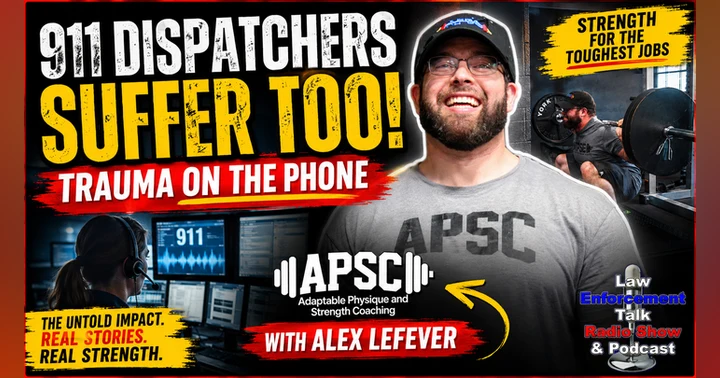
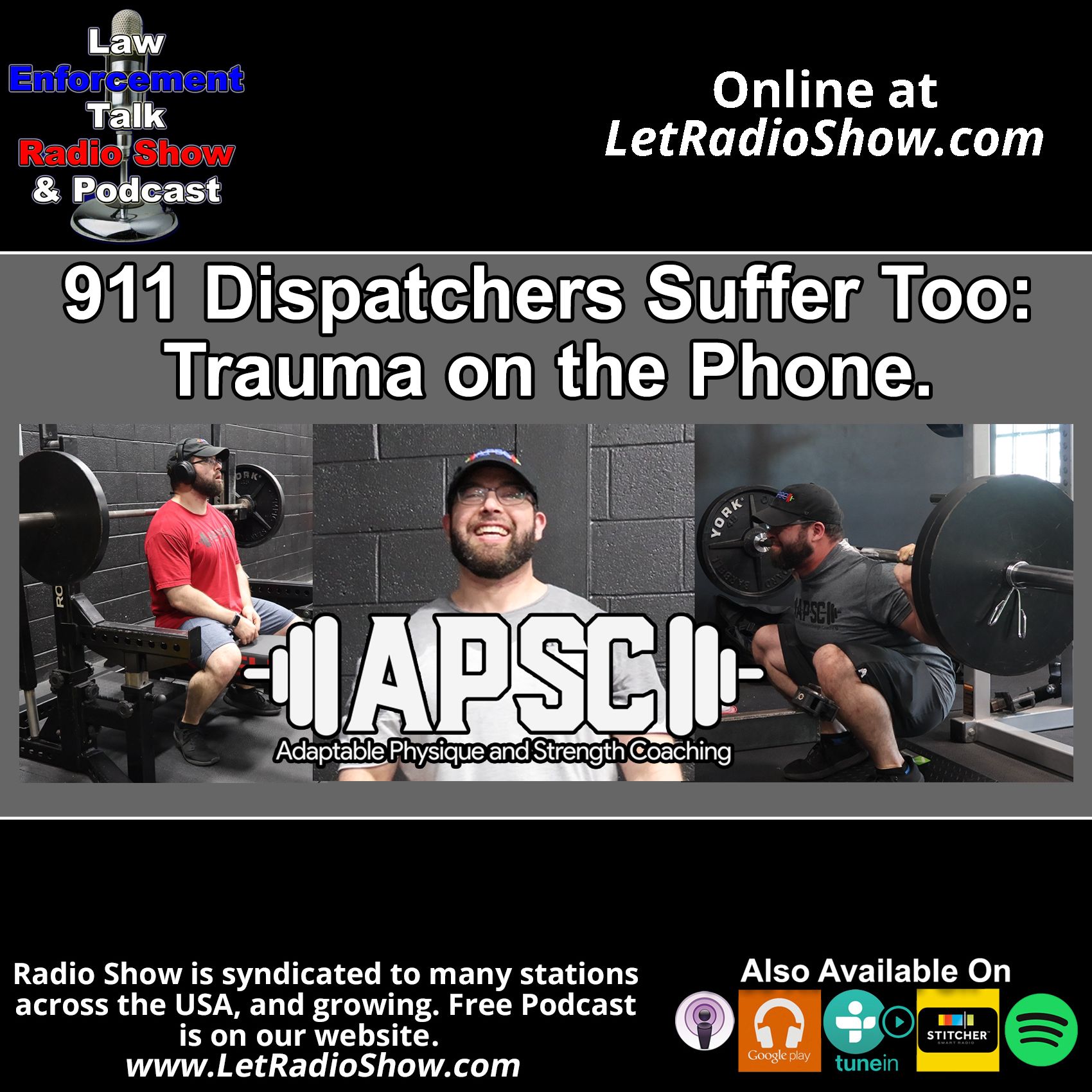
 911 Dispatchers Suffer Too: Trauma on the Phone. Behind Every Emergency Call Is Someone Carrying the Weight of Another Person's Worst Day. When most people think of first responders, they picture police officers racing toward danger, firefighters battling flames, or paramedics fighting to save lives. The episode is available to listen to Free. The Podcast is available for free on the Law Enforcement Talk Radio Show and Podcast website, also on Apple Podcasts, Spotify, YouTube, iHeartradio and most major podcast platforms. #LawEnforcementTalk #Free #Podcast #Radio
But there is another group of heroes who experience unimaginable tragedy every day without ever leaving their chairs. The Law Enforcement Talk Radio Show and Podcast social media like their Facebook , Instagram , LinkedIn , Medium and other social media platforms.
911 Dispatchers Suffer Too.
Their battlefield isn't on the streets. Supporting articles about this and much more from Law Enforcement Talk Radio Show and Podcast in platforms like Medium , Blogspot and Linkedin.
It's Trauma on The Phone.
Every scream...
Every desperate plea...
Every child crying...
Every gunshot...
Every final breath...
It all comes through a headset. 911 Dispatchers Suffer Too: Trauma on the Phone.
On the latest episode of the Law Enforcement Talk Radio Show and Podcast, host John Jay Wiley welcomes Alex LeFever, a veteran 911 dispatcher who shares what many dispatchers have silently carried for years. The episode is available across major platforms including their website, Apple Podcasts, Spotify, YouTube, with highlights shared across their Facebook, Instagram, and LinkedIn profiles.
His story reminds listeners that emotional scars don't require physical danger.
Sometimes the deepest wounds are heard, not seen.
The Calls That Never Leave
Alex worked as a 911 dispatcher in both Arkansas and Pennsylvania.
Like many emergency telecommunicators, thousands of calls blended together over time.
But a few never disappeared.
One involved a three-week-old baby.
Another involved a woman trapped in a violent domestic abuse situation, who shot her attacker.
Alex listened helplessly as the assault unfolded over the phone.
Those voices never truly left him.
"There are calls you never forget," Alex explains.
"They stay with you long after your shift ends."
Unlike police officers or firefighters who eventually arrive at a scene and begin resolving the crisis, dispatchers often experience something mental health experts call truncated trauma. 911 Dispatchers Suffer Too: Trauma on the Phone. Available for free on the Law Enforcement Talk Radio Show and Podcast website, also on Apple Podcasts, Spotify, Youtube and most major Podcast networks.
They hear the terror.
They imagine the scene.
Then the phone disconnects.
Most never learn how the story ended.
Their minds are left to fill in the blanks.
911 Dispatchers Are Often the First First Responders
Whether dispatchers are officially recognized as first responders depends largely on where they work.
Many states, including California, Washington, and Delaware, have passed laws officially recognizing emergency dispatchers as first responders.
Federal classifications have historically categorized them as administrative employees rather than protective service professionals. 911 Dispatchers Suffer Too: Trauma on the Phone. The Podcast is available for free on the Law Enforcement Talk Radio Show and Podcast website, also on Apple Podcasts, Spotify, YouTube, iHeartradio and most major podcast platforms.
That distinction has sparked ongoing bipartisan efforts in Congress to update federal classifications through legislation such as the 9-1-1 SAVES Act and the Enhancing First Response Act.
Regardless of job titles, dispatchers perform life-saving work every day.
They calm panicked callers.
Guide CPR.
Provide emergency childbirth instructions.
Coordinate police, fire, and EMS responses.
Gather critical intelligence.
Save lives.
Long before emergency vehicles arrive, dispatchers are already working to keep victims alive.
"They're often the first voice people hear during the worst moment of their lives."
Trauma on The Phone Is Real
Mental health professionals increasingly recognize that dispatchers experience extraordinarily high rates of Secondary Traumatic Stress (STS) and Post-Traumatic Stress Disorder (PTSD). The Law Enforcement Talk Radio Show and Podcast continues bringing listeners real conversations from the front lines of crime, policing, trauma, survival, and healing.
Unlike field responders, dispatchers experience trauma through sound alone.
The human brain reacts as if it is physically present.
Adrenaline surges.
Heart rate increases.
Stress hormones flood the body.
Yet dispatchers must remain calm.
Professional.
Focused.
They cannot panic.
They cannot cry.
They simply answer the next call.
Hour after hour.
Day after day.
Over time, that emotional weight accumulates.
Symptoms may include:
• Reliving disturbing calls
• Hearing callers' voices long after work
• Difficulty concentrating
• Hyper-vigilance
• Emotional numbness
• Burnout
• Insomnia
• High blood pressure
• Chronic stress
Many dispatchers suffer silently because few people understand what their job truly involves. 911 Dispatchers Suffer Too: Trauma on the Phone. The complete interview is available as a Free Podcast on Facebook, Instagram, YouTube, Apple Podcasts, Spotify, LinkedIn, and major podcast platforms.
Healing Doesn't Always Come Easy
For Alex, recovery became intentional.
He found one powerful outlet inside the gym.
Weight training became more than exercise.
It became therapy.
"Training should enhance your life, not consume it," Alex says.
His fitness journey actually began at just ten years old.
By age seventeen, he had already set four International Powerlifting Association world records in the 198-pound class, including a remarkable 490-pound deadlift that stood for years.
Today his philosophy is much different.
Rather than chasing perfection, Alex helps people create sustainable health around real life. 911 Dispatchers Suffer Too: Trauma on the Phone. Listeners can hear the complete interview on Facebook, Instagram, YouTube, Apple Podcasts, Spotify, iHeartRadio, and other major Podcast, Radio, News, and Media platforms.
"Life still needs to happen," he says.
"Cake at birthday parties. Family dinners. Saturday morning French toast."
Instead of unrealistic fitness expectations, Alex teaches balance.
He specializes in helping first responders, shift workers, and everyday people overcome obstacles traditional fitness programs often ignore.
Irregular schedules.
Old injuries.
Chronic stress.
Sleep disruption.
Mental fatigue.
His coaching adapts to reality instead of demanding perfection.
Supporting the People Behind the Headset
Mental health experts continue emphasizing that dispatchers need the same support systems increasingly available to police officers, firefighters, and paramedics. The podcast is available on Facebook, Instagram, YouTube, Apple Podcasts, Spotify, LinkedIn, and other major podcast platforms.
Peer support.
Critical incident debriefings.
Professional counseling.
Trauma education.
Preventative mental health training.
Organizations dedicated to dispatcher wellness continue advocating for stronger mental health resources while many states are expanding PTSD workers' compensation protections for emergency telecommunicators. 911 Dispatchers Suffer Too: Trauma on the Phone.
Recognizing dispatcher trauma isn't simply about changing job titles.
It's about acknowledging invisible injuries before they become life-changing ones.
A Story Every First Responder Should Hear
Alex LeFever's conversation offers an honest look inside one of public safety's least understood professions. Listen to the full story on the Free Podcast, available on the Law Enforcement Talk Radio Show and Podcast Website, on Facebook, Instagram, YouTube, Apple, Spotify, and more.
His story is about resilience.
Trauma.
Recovery.
Fitness.
Mental health.
And recognizing that heroes aren't always the ones wearing body armor.
Sometimes they're wearing a headset.
Sometimes they're the calm voice who answers when someone dials three simple numbers.
Listen to the Full Conversation
Hear Alex LeFever's remarkable story on the Law Enforcement Talk Radio Show and Podcast, available on their website, Facebook, Instagram, YouTube, LinkedIn, Apple Podcasts, Spotify, iHeartradio and most major Podcast platforms. 911 Dispatchers Suffer Too: Trauma on the Phone.
Watch, listen, and share this Free Audio interview across your favorite Social Media channels and help shine a light on the invisible trauma experienced by emergency dispatchers every single day.
Because 911 Dispatchers Suffer Too, and understanding Trauma on The Phone may be the first step toward helping those who spend their careers helping everyone else. The episode is available to listen to Free. The Podcast is available for free on the Law Enforcement Talk Radio Show and Podcast website, also on Apple Podcasts, Spotify, YouTube, iHeartradio and most major podcast platforms.
Learn and get access to money saving tips and how to increase your net worth at www.LetSavings.com
Listen to this powerful #Free Podcast episode featuring Marci Hopkins on Facebook, Instagram, Youtube, Apple Podcasts, Spotify, and major Podcast platforms nationwide.
Download the Free Ebook about ways and tips to improve your health. You can get the ebook for free at www.LetHealthy.com
Get the Free Clubhouse App, it is Drop In Social Audio. Think of it as your own talk radio show on your phone, and best of all it is free. Be sure to look for me and follow me, that’s John J Wiley or @letradioshow you can do all that here.
The Law Enforcement Talk Radio Show and Podcast social media like their Facebook , Instagram , LinkedIn , Medium and other social media platforms.
You can contact John J. “Jay” Wiley by email at Jay@letradio.com , or learn more about him on their website .
Find a wide variety of great podcasts online at The Podcast Zone Facebook Page , look for the one with the bright green logo.
Be sure to check out our website .
Be sure to follow us on X , Instagram , Facebook, Pinterest, Linkedin and other social media platforms for the latest episodes and news.
911 Dispatchers Suffer Too: Trauma on the Phone.
Attributions
Wikipedia
Hosted by Simplecast, an AdsWizz company. See pcm.adswizz.com for information about our collection and use of personal data for advertising.
Unknown Speaker (0:00): There's a feeling a lot of homeowners share right now. Mortgage, always on time. Lots of equity. On paper, you're doing fine. But then the insurance bill lands.
Unknown Speaker (0:10): Property taxes, health care, child care, tuition. The math just isn't mathing. Unlock wants to talk about the squeeze American homeowners are feeling and what you can do about it. Start at unlock.com/equity. Unlock Home Equity Solutions Inc, NMLS 2657081.
John Jay Wiley (0:29): He was a nine eleven dispatcher. He was dispatched on a three week old baby call that still bothers him. He was gonna talk about a domestic violence call where a victim shot her attacker. He overheard it, the frustrations, how he dealt with the trauma before, during, and after on the law enforcement talk radio show. Welcome to the law enforcement talk radio show.
John Jay Wiley (0:51): In the law enforcement talk radio show, we are joined by special guest talking about their experiences, the realities of investigating crimes, plus those who have experienced horrendous trauma, police, first responders, military, and victims of crime share their stories. Hi, I'm John Jay Wiley. In addition to being a broadcaster, I'm also a retired police sergeant. Be sure to check out our website, letradio.com, and also like us on Facebook. Search for the law enforcement talk radio show.
John Jay Wiley (1:21): If you're on the clubhouse drop in audio chat app, be sure to look for me and follow me. My name's John, the letter J, Wiley, W I L E Y. You can also search for LETradioshow. That's John J Wiley, w I l e y, at LET radio show on the clubhouse drop in audio chat app. Conte is from Pennsylvania.
John Jay Wiley (1:49): We have Alex Afiva on the law enforcement talk radio show. Alex is a former nine eleven dispatcher in Arkansas and Pennsylvania, and he's here to talk about two calls in particular. They're really they're really troublesome. Is like what we don't hear about. We get never get to hear the stories.
John Jay Wiley (2:06): Number one was a call involving a three week old baby that he'll talk about. Another one was the domestic violence call where the victim shot an attacker. He overheard that. His dispatching calls, all that had profound impact on him. His website is adaptablestrength.com.
John Jay Wiley (2:21): That's adaptablestrength.com. Alex, thanks for your service, and thanks for being a guest on the law enforcement talk radio show, but very much appreciate it.
Alex Afiva (2:28): Yes. No problem. This should be a very interesting time, and I hope it helps a lot of people who may be struggling with their own issues.
John Jay Wiley (2:34): And by the way, this is something I always thought, and until I had some dispatches on, I've never really gave much thought. As a police officer, I never thought they went through anything, until we had someone talking about this, and I began to realize how frustrating it can be because I just know me. I wanna help. I wanna do something. And when you have to hear something and you can't physically get involved, it's gotta be tough on you.
Alex Afiva (3:00): Yes. Especially for me and the way my personality is. The fun story is that the first time I went into a dispatch center to kinda look around, you obviously can't see me, but I'm a pretty built guy. Like, I've I've been training myself, like, twenty four years. I have a lot of muscle.
Alex Afiva (3:18): I was a world record power lifter, all this stuff. I walk into the dispatch room for the first time, and I immediately hear someone yell out, don't hire him. She's immediately gonna become a cop. And my personality is very much hands on. I wanna do something.
Alex Afiva (3:34): There is a whole aspect of dispatching with the struggles of not being able to be hands on that was something that was contributed to me grieving, actually.
John Jay Wiley (3:42): I had a dispatcher on the phone, and she developed chronic post traumatic stress disorder, CPTSD. And part of it was dispatching a call where a deputy got involved in a gunfight, a shootout, and was shot and killed. And she had a really difficult time. And and that was like I I say this all the time. It that's a straw that broke the camel's back because there's a lot of other stuff that occurs.
Alex Afiva (4:05): Yeah. There's a ton, though. And one of the biggest struggles that people don't understand unless they've been in it is a dispatcher rarely ever gets a conclusion for what's happening. It's one of the big difference to differences between someone who's actually on scene. If a cop goes in, he's there for the resolution.
Alex Afiva (4:24): But what we do is we hand off the situation while it's occurring. And so, like, the stories that I'm about to be talking about, I have no idea what the outcomes were. I don't know if anyone lived or died, and that wears on you, especially when you think about the volume of calls that dispatchers get. An officer, a firefighter, an EMT, they are limited by the fact that they can only be in one place at one time. But calls come in constantly, so I may end up in a day where, on average, I might be receiving a 150 calls.
Alex Afiva (4:58): That's a lot more than just the maybe five to 20 depending on the busyness of a person's area that they may be handling if there's someone who goes on scene. So there's a lot more opportunity for me to have trauma.
John Jay Wiley (5:11): The other thing too is that and I guess I'm gonna phrase this in a formal question is that there's no escaping the calls for service, and you have no control over what kind of calls you get.
Alex Afiva (5:26): Yep. And you can't control the timing of it either. So depending on the organization you work with, it may actually be an automatic pickup that you're set up for. So you could be laughing with someone telling a raunchy story, And next thing you know, your headset beeps and you're hearing someone die. Mhmm.
John Jay Wiley (5:49): Yeah. And I I I used to deal I need to speak from my end. I didn't think that this the dispatchers really cared about what we did, and thank God for a lot these dispatchers. That's the reason why I'm still alive today. But it was never ending our on our end, and I sit there and say, on busy nights, we had thirty, forty calls, and our district was a very busy district.
John Jay Wiley (6:16): And they're oftentimes stacked up, and we try to handle all the calls on our post, but I never thought there was any break for the dispatchers. I never really gave that any consideration whatsoever.
Alex Afiva (6:29): Yeah. No. It's it's it's something that a lot of dispatchers have frustrations with, and it's understandable. You don't know what's happening on the other end. So I can I've had conversations with police officers especially who are are they saying, well, you don't see what I see.
Alex Afiva (6:49): You can't have the issues that I have. Yet the toll magnifies. There's no there's no conclusion that we get. There's no break. We are going from one call even to the next.
Alex Afiva (7:05): We don't have something like a drive to a scene or a drive away from a scene to decompress. And so, like, I'll get into a little bit more with the specific calls later, but I'll end up having to go right from hanging off that call into handling the next one without a single break. I don't get time to decompress, and so it would take me hours after the end of my rotation to just recoup mentally because I I was so amped up. I was just waiting. I perpetually at the edge of my seat waiting for the next shoe to drop and have it be a catastrophe.
John Jay Wiley (7:43): Yeah. And that's and I I think that I'm more open than most people that I think about what they go through. But at the time, I was pretty selfish and self centered. And I'm not saying it's a negative. I'm just saying I was more concerned with what I went through than not thinking what how it affected them.
John Jay Wiley (8:01): I'm particularly and particularly dispatchers.
Alex Afiva (8:05): Yeah. It's completely understandable. And you are one of the more I would say, on average, one of the more reasonably receptive people to this kind of information because you would be surprised at some of the kickback I've had when I've tried to talk to some of the on-site first responders about my own struggles. And you can also look at it in terms of what happens after a major incident. Oftentimes, the dispatchers are forgotten, and you may end up collecting the police officers, the firefighters, the EMTs, the paramedics, and have them all in a room together to decompress and talk about the toll that that case had on them.
Alex Afiva (8:45): And you'll have the dispatchers who were trying to hear their friends in danger potentially if it's a dangerous scene. It's like an officer involved shooting or something or even something where, you officers were harmed or it doesn't matter. The point is a lot of the times dispatchers just get disregarded because they're just off in the radio room. They don't see anything. They're they're fine.
John Jay Wiley (9:09): What what a lot of people think is that most of the calls are routine and most of them are let's be honest. Police work is basically boring. It's about I saw a quote somewhere recently. It's about ninety first 95% sheer boredom and 5% adrenaline dump life and death scenarios, you name it. But it's the life and death things that that a lot of people struggle with.
John Jay Wiley (9:30): And I always say this, Alex, and we'll return. I wanna get your feedback when we turn or break. For me, it's not the big things, the the so called critical incidents as much as this daily grind. That's the one that wore on me the most. This is law enforcement talk radio show, return our conversation with Alex the fever in a few moments.
John Jay Wiley (9:47): He was a a nine eleven dispatcher. He's a former dispatcher in two states, Arkansas and Pennsylvania. We're attorneys gonna talk about a call involving a three week call three week call baby, and then eventually we'll talk about a domestic violence call he had, both of which had huge impacts on him. His website is adaptablestrength.com. That's adaptablestrength.com.
Unknown Speaker (10:07): This is law enforcement talk radio show. We'll take a short break. We'll be right back.
Unknown Speaker (10:14): Someone asked, what's the catch? What's the cost? There is no cost for anything on the law enforcement talk radio show and podcast website, letradio.com. Letradio.com. Again, that's letradio.com.
Unknown Speaker (10:35): There's a feeling a lot of homeowners share right now. Mortgage, always on time. Lots of equity. On paper, you're doing fine, but then the insurance bill lands. Property taxes, health care, childcare, tuition.
Unknown Speaker (10:50): The math just isn't mapping. Unlock wants to talk about the squeeze American homeowners are feeling and what you can do about it. Start at unlock.com/equity. Unlock Home Equity Solutions Inc, NMLS two six five seven zero eight one.
Unknown Speaker (11:05): Grainger knows when you're a procurement manager for an office park, you're not managing one building. You're managing all of them. And to stay ahead, you need to see through walls and around corners. Lights about to fail, filters ready to clog, HVAC on its last leg. If you wait until something breaks, you're already behind.
Unknown Speaker (11:23): Count on Grainger for quality products, easy reordering, and 247 support. Call 1800, click grainger.com, or just stop by. Granger, for the ones who get it done.
Unknown Speaker (11:34): We all do it. You have a night for yourself but don't like the sound of the silence, so you turn on the TV just for the ambiance. It's a little trick that helps you feel like you've got company and aren't alone. And other insurers, well, they may make you feel alone. But when you switch to GEICO, you've got claims reps available around the clock.
Unknown Speaker (11:52): So whenever you need, you'll have people around to help. And let's turn on the washing machine just for good measure. Isn't that soothing?
Unknown Speaker (12:01): It feels good to have support. It feels good to GEICO.
John Jay Wiley (12:05): During conversation with Alex LaFever on the law enforcement talk radio show, he is a former nine eleven dispatcher in two states, Arkansas and Pennsylvania. He was the dispatcher in a three wheel three week old baby call, which we'll talk about a few moments. Also, a domestic violence call where the victim shot the attacker. He overheard that, and it both of those calls had huge impacts on him. His website, to get more information about him, what he does now, adaptablestrength.com.
John Jay Wiley (12:33): It's adaptablestrength.com. By the way, you mentioned earlier you work out of way. I go to the gym quite a bit. I'm a gym rat. I'm a lot older than you, but I go for different reasons now.
John Jay Wiley (12:45): When I was on the job, it was to maintain body strength. It was to so I could manhandle people when needed. Now it's more about mindset and and focusing on breathing and repetitions and meditation and prayer and all that stuff. I'm the guy who doesn't talk to a soul when I'm at the gym.
Alex Afiva (13:01): Yeah. No. I I respect that to no end, and it's something that has been the if I had to put a strong word on it, it's it's been basically my savior when it comes to mental health, physical health, and my ability to just cope with all of the PTSD and everything that I've experienced in my life. I've been lifting myself, like, twenty four years. I was a world record power lifter.
Alex Afiva (13:29): And now I'm kind of combining all of my experience lifting, my experience with trauma and the first responder world, all of the calls that I've been a part of, all of the friends and coworkers that I've talked to with their experiences, and the health status of first responders in today's world is honestly abysmal. So I've kind of taken all of that to mean that, you know what? It's time to move on with my life and try to do more to prevent emergencies than react to them. And so I've basically now created my entire business around taking all that I know and helping people be functional and better. And there's a reason why adaptable is the first word in what I do.
Alex Afiva (14:14): It's because I make sure that everything is adapted to the individual, and I truly, truly care because I've been through so many different situations. And if if I didn't have the gym and I had to deal with this three year old call, I don't know what kind of happened. Would have.
John Jay Wiley (14:33): It's part of the and I I can't explain why, but there's something simple and we use one of the most simplest exercises, bicep curls. There's something about focusing on my breathing, focusing on repetitions that my mind cannot allow intrusive thoughts when I'm doing that, and I become less reactionary. Is that fair for you?
Alex Afiva (14:55): Oh, totally. Totally. I completely get it. It's the only way that I can reach a kind of zen state where it
Unknown Speaker (15:05): I neither say that.
Alex Afiva (15:06): One thing to focus on one activity, and I can just disregard everything else.
John Jay Wiley (15:10): Let's talk about the the three week old baby call. Tell us about that.
Alex Afiva (15:15): Alright. Everyone who has been in the first responder world or is just a decent human being knows that when something bad happens to a child, it is worse than an adult. There is something about it happening to a child that makes it really difficult to deal with. And with the surprise of working and answering the phone for 911, you never know what's gonna be on the other end of that line. And I got hit on this call, and the first sign was probably something like my my baby's not breathing.
Alex Afiva (15:54): And you hear that and your heart just drops. There's there's no you know nothing is going to be good about this call even if it has a good outcome. And I was talking to the mother, and she she was phenomenal. She was amazing. Like, I there is so much bad that you you get on, like, on these calls.
Unknown Speaker (16:27): Mhmm.
Alex Afiva (16:27): As the amount of stupidity, anger, hate, frustration, everything is insurmountable. But this mom, I had to walk her through giving CPR to her three week old baby. And you know that at that point, she's not in the best physical or mental state, and her entire life is revolving around this little human that's completely dependent upon her for life. And I'm and I'm hearing in her voice how much she's trying to hold it together while she is also unraveling at the same time and and fighting so hard because this little piece of her is is in such a bad state. So it's I mean, this call was, at this point, probably five years ago.
Alex Afiva (17:25): And like I'm like just thinking about it and everything that goes around it is incredibly hard. I'm sure pretty if I look at my watch, my heart rate right now is Yeah. My heart rate right now like, skyrocketing.
John Jay Wiley (17:40): Look. There's things I I I don't talk about with people because I I can't keep I have two sides of me. One is, like, testify in court. I can talk about this about anything as long as I'm testifying like, talking and testifying in court. When I get in the emotional side, it's a different story.
John Jay Wiley (17:54): There's certain things situations I will not talk about with people because I don't like the stupid questions.
Alex Afiva (18:01): Oh, those bug me so much. Oh, the the amount of people that said, like, oh, what's your worst call you've had? And I just I just look at them, and I just say, you don't want to know. You are happier not knowing that this side of possibilities exist.
John Jay Wiley (18:21): One of the things I used to say was and people would ask me questions at the barbecue, for example. And I I got the point where I'm like, why do you think I would they would say, you ever shot anybody? And I'm like, yes. And then turn around and not talk to anybody about it. And they were like, that was a rude response.
John Jay Wiley (18:38): Well, then I'd say, what makes you think I wanna have this conversation with a total stranger over a beer? Mhmm.
Alex Afiva (18:45): Yep. I I have had very similar interactions, and it it's sad how few people when I tell them, like, oh, do you wanna talk about one of the worst experiences of your life with someone you barely know? And sometimes they're like, oh, well, I didn't mean it like that. But the amount of people that responded with, oh, that's a really good point. I'm sorry, is in the single digits of percent, and it's really sad.
John Jay Wiley (19:13): And we're we're to close on this. We just got a break coming up. One of the things that I I know that there is a point of contention with, and I love police. Trust me. I really, really do.
John Jay Wiley (19:24): And we'll talk about dispatchers. They're they're a unique breed in and of themselves. But one of the things that I will say is the judgmentalism that comes from these some of these people is just out of control. And whether dispatchers are first responders or not, that's one question that will guarantee to get people going. And personally, I feel they are.
John Jay Wiley (19:46): They may not show up by the call, but they're there.
Alex Afiva (19:49): Yes. I lived that initial experience with that mother in true 100% investment. And we talked about how I like to be hands on. The fact that I could not be there to basically say, go sit down the corner. I'll take care of this.
Alex Afiva (20:10): It hurts me to such a deep level. It is one of the that look back on and I know it contributed to my end.
John Jay Wiley (20:17): One of the things that is very frustrating for me in my old age now is that there's nothing I can do about it. Before when I was younger, I could, and quite often, I couldn't resolve the issue successfully the way I wanted. We're talking with Alex Fever. He's a former nine eleven dispatcher in Arkansas and Pennsylvania. He talked about a call involving a three week old baby that was not breathing.
John Jay Wiley (20:38): We'll return that conversation in a few moments. And we're also talking about a domestic violence call that he handled where the victim shot her attacker. He overheard it, and it both of these things caused tremendous impacts on him. His website is adaptablestrength.com. It's adaptablestrength.com.
John Jay Wiley (20:53): This is law enforcement talk radio show. We'll We're take a short break. I promise you, we'll be right back. Of all the radio stations in The United States, there are no other shows like the law enforcement talk radio show. On Facebook, there's only one official page.
John Jay Wiley (21:10): Do a search on Facebook for the law enforcement talk radio show and be sure to like the law enforcement talk radio show Facebook page.
Unknown Speaker (21:18): New England summers don't exactly ease you in. One minute, the windows are open, the next your apartment feels unbearable. Well, meet Windmill Air. Windmill window ACs are sleek, they're quiet, and cool your space fast without the bulky eyesore. Rated the number one easiest AC to install, Windmill lets you adjust temperatures right from your phone and unlike traditional units, cools your room more evenly like central air.
Unknown Speaker (21:43): Shop Windmill online at windmillair.com or pick up an AC at your nearest Target or Home Depot. Windmill, modern air care, your room deserves.
Unknown Speaker (21:52): When you're a maintenance engineer in a beverage manufacturing plant, you keep production lines moving and quality on track because there is no room for slowdowns. With Grainger's vast selection of high quality motors, sensors, belts, and hard to find parts, you can get what you need fast and all in one place, so nothing gets in the way of getting the job done. Call 1800, click grainger.com, or just stop by. Grainger, for the ones who get it done.
Unknown Speaker (22:22): We've all been there. You pop into the shop for five minutes and all of a sudden you've forgotten where you parked. Car. Car. Unfortunately, that lost feeling is what it's like to manage your policy with other insurers.
Unknown Speaker (22:35): Here, car. Come out.
Unknown Speaker (22:37): Come out wherever you are, please.
Unknown Speaker (22:39): With GEICO, you can use the app to easily manage all your policies in one place.
Unknown Speaker (22:44): Did this parking lot have a waterfall?
Unknown Speaker (22:46): I think you've wandered too far, mate.
Unknown Speaker (22:49): It feels good to find what you're looking for. It feels good to GEICO.
John Jay Wiley (22:59): Internal conversation with Alex Fever. He's a former nine eleven dispatcher in Arkansas and Pennsylvania. He was a dispatcher involving a call on a three week old baby, which we'll return to in a few moments, get some some conclusion on that call. Another call that he handled was a call for domestic violence where the victim shot her attacker, both of which caused tremendous problems for him. His website now is adaptablestrength.com.
John Jay Wiley (23:22): It's adaptablestrength.com. Check it out and get more information about Alex and what he does and what he offers. The three week old baby call, there there were you able to determine and I know you're not on scene. Were you able to find out whether there's any criminal action involved in it?
Alex Afiva (23:41): No. No. So I'm I really like the fact that actually there's a commercial break before we got to this end because anyone who is listening to this show, you're thinking, oh my god. What happened? What was the what was the end result?
Alex Afiva (23:57): What what is the state of the beat? Like, are they still alive? And now you get to be on the edge of your seats for the rest of your life just like me because I do not know. A that's a frustrating part because,
John Jay Wiley (24:12): as a dispatcher, we don't know. We do the best we can. I I was never a dispatcher, but as a police officer, do the best you can. And I'll give you a classic example, and I'm sure you handle lots of calls like this. We have a a 15 year old, a 16 year old shot, and you're taking your last breaths.
John Jay Wiley (24:27): And you're you're and I wrote an article @LETRadio.com about I lied many times to police officers. It's not what you think, but usually I would say, you're gonna be alright. You're gonna hang in there because the ambo's on the way, all that stuff. And you never know whether or not, as a police officer, whether or not they survived. A lot of people you think are survived, they don't.
John Jay Wiley (24:47): And a lot of people we think they got no chance, they make it. And we there's no rhyme or reason to it. And they some of them turn out to be great people and some of them not so much. There's no justice in the world.
Alex Afiva (24:59): Yeah. That that feeling is that the justice should be right is unfortunately unfounded in reality.
John Jay Wiley (25:10): I I I love when people say that, well, at least they got justice in court. No. There there's no justice. There's no closure. It it doesn't bring that person back.
John Jay Wiley (25:18): It doesn't bring love on back. It doesn't take the pain and suffering and that violent assault away. None of that stuff goes away.
Alex Afiva (25:25): Yeah. It would be great if there was a movie perfect ending where it's like, ah, yes. Justice was served. The attacker's now in jail, and the family gets to feel good about their future. No.
Alex Afiva (25:38): That doesn't happen. No. They're still missing the person that was victimized and they're forever gonna carry that hollowness.
John Jay Wiley (25:46): And as a dispatcher, you've got that hollowness because you've got a job to do, and it's it's ultimately, it's about saving lives and and running assistance as you can, getting help there. I've been listening. We don't have we didn't have this back in my day, but those calls recorded all that stuff. But now you hear a lot of these calls on television. You'll hear the inspector say, please be at your door in a moment or EMT's be at door in a moment.
John Jay Wiley (26:09): They're here. Open up the door. All those other things. We didn't have that. We didn't have that kind of capability.
John Jay Wiley (26:15): And one of the most annoying things I got was the dispatcher would say, by the way, how are you doing? The the one dispatcher, I'll tell you a story later on. He'd say, how are doing? I'm good. What he said, call me.
John Jay Wiley (26:27): And that was never a good sign. Never a good sign because they couldn't put on the radio what they're gonna talk about. It usually made a death notification.
Unknown Speaker (26:33): Yeah.
John Jay Wiley (26:34): Or you get a call for to to investigate the disturbance or a welfare check, and you walk up and there's flies in the eyeballs, flies in inside of the door. And you're like, oh my goodness. You you know it's not gonna be good.
Alex Afiva (26:50): Yeah. Yeah. That that feeling of just dread, I would have that throughout. Like, the way that we did it was two day shifts followed by two night shifts. And by the end of that last night shift, my feeling of dread was just perpetual.
Alex Afiva (27:10): It it would take me like, I would get home, and I would just have to, like, sit down getting off at 7AM. Like, you'd think all I wanna do is go to bed, but I couldn't go to bed. Like, I was so amped up after some of those rotations that if I closed my eyes for more than about a second or two, I would start to get motion sick because I was my brain was so active, and I couldn't give it feedback to let me know that I was stationary because I was just waiting for another bad thing. Like, that's insane. I'm sitting still, and my eyes are closed.
Alex Afiva (27:42): I should not be getting motion sick.
John Jay Wiley (27:45): Another thing was and I I didn't talk about wife, and that was something that now regret I should have. But my thoughts were admirable at times. I didn't want them to worry about me anymore than they did. And I'll be honest with you, Alex, I didn't give any thought or concern to dispatchers. It was very their life was in danger.
John Jay Wiley (28:06): Our life was in danger. I didn't think about what they went through, but I can relate to the sleep disturbances. I can relate to so many things you talked about that I was not able to unwind when I got home.
Alex Afiva (28:19): Mhmm. Yep. Yeah. It's, everyone everyone thinks about the phrase that grass is greener on the other side, but when you go into the world of first responder, there is no green grass. It doesn't matter which flavor of first responder you are.
Alex Afiva (28:37): Every single one has their own difficulties that the other ones are just not going to experience. And I'll give you a funny example because, frankly, we've talked a lot of stuff that's that's, like, upsetting, but what I do a lot is health, fitness, coaching, and being capable for the job. And one of my guys is a firefighter. And I remember I was talking to him one day, and he's like, oh, I'm so sorry. I didn't get to work out this day.
Alex Afiva (29:00): And I was just like, alright. Well, why? He's a firefighter, and he was hit on a house fire, and he fell through a collapsing floor. And he decides to apologize to me. I'm like, dude, you were in a fire, and you fell through a building.
Alex Afiva (29:15): If there's ever a reason to not work out, that's it.
John Jay Wiley (29:19): Yeah. Oh, and speaking of not working out, I've not been in the gym for, almost a week because I dropped a 45 pound plate on my toe, my right big toe. And what did it do? It aggravated the compensation for walking. It aggravated my back.
John Jay Wiley (29:32): So I got a double whammy going on. And what does my mind think about? I'm gonna lose all the gains I made.
Alex Afiva (29:39): Yeah. Well, here, I'll give you a little respite from that fear. There was a study done about how much needs to be done to maintain your your, like, health, strength, and everything. And the very short version of it is that you can maintain your strength and muscle progress by doing one ninth of the volume that you did before.
John Jay Wiley (29:58): But see, that doesn't satisfy my mind. My mind is the ultimate culprit. That's the bugaboo. It's my mind. The more I can I tell people this all the time, and it's a great secret that someone taught me, the less thinking I do on a daily basis, the happier I am?
Alex Afiva (30:14): Oh, totally. I totally get that. 100%, I understand that.
John Jay Wiley (30:19): I wanna go very quickly to this call, domestic violence calls, and this is something I I struggled with quite a bit. We would get the calls and quite often a repeat offenders, but you had a a repeat victims, you name it. It is constant. You could tell, oh, it's Friday night. They're drinking.
John Jay Wiley (30:37): We're gonna get three calls at this house. It it's never gonna end. And sometimes those victims, they pay with their life. Sometimes, the the so called suspects or perpetrators paid for with their life as well. But you had a call where a domestic violence call that didn't go as most people would think.
Alex Afiva (30:56): Oh, no. Not at all. So, generally, you think there is a clear victim in a situation, and it can be very simple. You can go by the stereotypical boyfriend beats girlfriend. Mhmm.
Alex Afiva (31:09): Okay? This one went another layer. So it was a boyfriend who beat the girlfriend. The problem is the girlfriend also had a gun. So boyfriend beats girlfriend.
Alex Afiva (31:20): Girlfriend shoots boyfriend. And now I'm talking to both of them, and he's going like, oh my god. I don't wanna die. And it's this weirdest feeling of someone being, in this case, not a victim or the attacker. It's both of them are both, but only one of them is in a life threatening situation.
Alex Afiva (31:43): And if you want I I this is this is the kind of call where it is just chaos yelling. It's both of them talking at the same time. I'm trying to get enough information to establish where the gun is because I don't want to panic people with one of them being shot and have them still flailing a gun around when the police arrive because you know in a call like this, the ambulance, they're waiting outside.
Unknown Speaker (32:09): They're not By the way,
Unknown Speaker (32:10): they're they're not going in go in there to get
John Jay Wiley (32:11): We gotta take a short break on the note. We're talking with Alex Zafira. He's a former nine eleven dispatcher. We're returning the conversation about a domestic violence called where the victim shot the suspect and how he handled that. His website is adaptablestrength.com.
John Jay Wiley (32:25): That's adaptablestrength.com. This is law enforcement talk radio show. Don't go anywhere. We'll be right back.
Unknown Speaker (32:34): Be sure to subscribe to the law enforcement talk radio show and podcast on youtube.com. Like everything they do, it is free, where you'll find great police videos and episodes of the podcast after they air on radio. Look for and subscribe to law enforcement talk radio show and podcast on YouTube. Best of all, it is free. New England summers don't exactly ease you in.
Unknown Speaker (32:55): One minute, the windows are open. The next, your apartment feels unbearable. Well, meet Windmill Air. Windmill window ACs are sleek, they're quiet, and cool your space fast without the bulky eyesore. Rated the number one easiest AC to install, Windmill lets you adjust temperatures right from your phone and, unlike traditional units, cools your room more evenly like central air.
Unknown Speaker (33:18): Shop Windmill online windmillair.com or pick up an AC at your nearest Target or Home Depot. Windmill, modern air care, your room deserves.
Unknown Speaker (33:27): Grainger knows when you're a procurement manager for an office park, you're not managing one building. You're managing all of them. And to stay ahead, you need to see through walls and around corners. Lights about to fail, filters ready to clog, HVAC on its last leg. If you wait until something breaks, you're already behind.
Unknown Speaker (33:45): Count on Grainger for quality products, easy reordering, and twenty four seven support. Call 1800, click granger.com, or just stop by. Granger, for the ones who get it done.
Unknown Speaker (33:56): When I damaged my car, I was worried it could be a long process to take care of, like a landscaper's first day trimming a hedge maze.
Unknown Speaker (34:03): I've definitely already been here.
Unknown Speaker (34:05): But the GEICO app let me file a claim in under two minutes. It feels good to get help quick. It feels good to GEICO.
John Jay Wiley (34:18): Return to conversation with Alex Zafieber, a former nine eleven dispatcher in Arkansas and Pennsylvania. He talked earlier about dispatching a call for a three year old baby that was in cardiac arrest. We don't know to this day how it ended, and that's part of the frustration. Another call he is involved in was a domestic violence call where the victim shot the suspect and became a life threatening situation. We'll return that conversation in a few moments.
John Jay Wiley (34:46): Both of had a huge impact on him. His website is adaptablestrength.com. It's adaptablestrength.com. I want to go back to the conversation about the the domestic violence call. Did that person, the victim, shoot the suspect while they're on the call with you, is that already before you got involved?
Alex Afiva (35:04): It was just before she called. And so she first called and was like, my boyfriend beat me. And I was like, okay. Like, then I do the whole spiel about, alright. Well, first, I need to know where you are.
Alex Afiva (35:21): And if you wanna talk about one of the great frustrations of people in the radio room answering 911 is that so many people are keyed into what is going on, but they rarely recognize that what does not matter until you know where
Unknown Speaker (35:38): That's the most important thing. And is the suspect still there? All that stuff is really important.
Alex Afiva (35:42): Oh, yeah. Oh, yeah. But it doesn't matter. If I have a location, I could know nothing else, and I can still send somebody. I could have the every bit of information possible about what's happening, why, and what their favorite colors are.
Alex Afiva (35:57): But if I don't have a place to send someone, I can't do a single thing.
Unknown Speaker (36:02): Was this during
Unknown Speaker (36:03): the first struggle.
John Jay Wiley (36:04): Cell phone because life was different before we had cell phones. And I I I remember being in field training and my FTO yelling suddenly, where are we? And I'm like, I don't know. And they say, if you don't know the intersection that we just passed, you can't help save my life. And I was like, oh, you're you're right.
John Jay Wiley (36:22): But but it was different. People called the police from a a landline. We knew where they were. Now they've got cell phones, and they're calling quite often from cell phones, and you don't know where they're at for sure.
Alex Afiva (36:31): Yeah. And, unfortunately, there's also the fact that technology has gotten so good that people calling from a landline is not necessarily a guarantee anymore on their location because it depends on how the landline is set up Right. And if it goes through, like, a VoIP thing or not, like, a VoIP voice over IP, in which case people can actually look like they're calling from a landline, have an address attached to it, Or they could be in, like, a complex of buildings. And even though there's eight different buildings on the complex, every single one of them calls as if they're from the main building's address. So there are so many frustrations.
Alex Afiva (37:13): We can't assume that the location we're getting is accurate. With most cell phones that are very modern and up to date on their their software and everything, those have gotten very accurate. And generally speaking, you can get a location for someone that's probably within about a 10 to 20 meter radius.
Unknown Speaker (37:33): Really?
Alex Afiva (37:34): That's pretty solid, but it's not a guarantee. And especially if you get into someone using an old phone or a phone that does not have a phone plan, sometimes that can muddy things. Because then if they hang up, we don't have a number to call them back on. Like, the the whole discussion about how to get accurate addresses is one of the major, major liabilities for anyone who is in the 9 one one world.
Unknown Speaker (37:59): So you get this phone could you get this this this call for service? And she said her boyfriend's beating her, and did she tell you that she shot him?
Alex Afiva (38:06): It took her a minute. It took her a minute. She was pretty, pretty, keyed up at the fact that he hit her, until I finally get her to, like, to, like, say a little bit more. And she's like, yeah. So I shot him.
Alex Afiva (38:21): I remember that so vividly that she was like, yeah. So I shot him. And I was like in my head, I'm just, like, reeling because it was just a whiplash moment of, wait. So you're you're not you you shot him. So you're not actually the one in the most danger right now.
Alex Afiva (38:37): And then I had to switch gears from thinking, basically, standard assault just occurred for a domestic situation. Now it's going into, alright. Now we're in the realm of a shooting. And there are there are tiers. There are levels of seriousness of calls in terms of responses and everything.
Alex Afiva (38:58): And those are both very high level responses, but they require different mentalities when you approach them.
John Jay Wiley (39:06): One of the first things I tell people is and I learned this as a patrolman and really carried everyone as a sergeant, is that the very first thing you do when you show up for a call for services, you've got usually one or two or three people there. You gotta determine who's what are they a suspect? Are they a victim? Are they a threat to you? Are they a threat to someone else?
John Jay Wiley (39:26): And when they say that they shot them, is there a weapon involved, and where is that weapon?
Alex Afiva (39:32): Exactly. And this is one of the things that I think is, a little hard to grasp unless you've been in it. One of the great things for police officers when they show up, they get to have visual feedback.
Unknown Speaker (39:44): Right. You don't.
Alex Afiva (39:45): They can look and see body language. They can look and see a weapon. But when it comes to only audio, if I'm getting information, most of the time, it's because I had to ask specifically for it. And then based upon the response, I have to then figure out what my flowchart of questioning is going to be to be as efficient as possible to honestly ensure that the officer that arrives first on a scene like that is gonna be in the safest position they possibly can.
John Jay Wiley (40:19): Yeah. And that that's admirable. I I wanted to fast forward. These are just two calls out of career of many calls. But one of the things you said was PTSD, and it became, I imagine, an issue for you.
Alex Afiva (40:33): Oh, totally. Totally. I last night in knowing that this call was coming between us and that we were gonna be talking to all these things, I already started to get into, like, that old headspace that I used to be in for for work. And I had three nightmares and woke up yelling three times when my girlfriend had to comfort me and, like, reassure me, like, okay. You're fine and everything.
Alex Afiva (40:57): And I have to go to bed with red lights on so that way if I do wake up in the middle of the night and I'm coming out of a nightmare, that I can immediately see where I am so that I know that, oh, I'm actually in a safe space. Like, things are good. I'm not I'm not about to deal with a life or death situation that happens with no warning because that's the mindset I had to be in before.
John Jay Wiley (41:23): And you said earlier in the conversation, you left dispatching. Was this part of the reason why?
Alex Afiva (41:29): Completely, completely. Oh, it's people people find things to be usually black or white, and PTSD is one of those categories where people are like, oh, you had a single incident that was very traumatic, and therefore, you got CPTS sorry. Therefore, you got PTSD. Right. Just simple post traumatic stress disorder.
Alex Afiva (41:52): But CPTSD is a whole different category. That's literally complex post traumatic stress disorder where it's not a single single call that did it. It's the accumulation of many, many small things that lead to a very similar response to PTSD. So instead of me flashing back to individual calls, and yes, I do that, like, are two of ones that I do that for. There are others as well.
Alex Afiva (42:18): But for me, the worst culprit is flashing back to that feeling that without warning, I'm about to be responsible for people's lives.
John Jay Wiley (42:27): One of the things that I struggled with for a long time, and I I relate to everything you talked about, especially, look. I don't want to admit to my wife, anybody that I'm struggling with certain things. So I get her bed around the same time every night. I wake up around the same time every day. I eat around the same time every meal of every day.
John Jay Wiley (42:47): I don't consume a lot of ultraviolent content. I don't watch dashcam videos. I don't watch all that stuff because I don't like how I get. And it takes me a long time to get back to what I call my center, but I don't wanna admit to someone that I'm struggling.
Alex Afiva (43:00): Mhmm. Yep. No. It's it's funny you mentioned that about the TV shows because I used to love NCIS. I used to watch law and order.
Alex Afiva (43:06): These were things that I couldn't get enough of when I was younger. Now if I try to watch that for more than two minutes, I start shaking. I start twitching. I I like, my it's gonna sound, like, really funny, but very specifically, my left leg will start bouncing. Like, that's how keyed into my responses to this to these traumas are is that I know specifically which body part is going to behave weirdly because I'm so cute.
Alex Afiva (43:33): Can't watch or listen to any of that stuff anymore.
John Jay Wiley (43:36): Reason why the gym is so important. I want to we're almost out of time. Adaptalstrength.com. That's what you do. Can people contact you for more information about what you do at the website?
Alex Afiva (43:47): Yes. There is that. And, honestly, I'm really open. If you want to send me an email directly, just Alex@AdaptalStrength.com. When it comes to this kind of stuff and helping people in this situation, this is what I do.
Alex Afiva (43:59): And I do it revolving a lot around fitness, and it could be someone who needs a specific outlet, and they're like, okay. I need a goal. I'm like, alright. Well, then let's combine on just trying to knowledge where you are in life and do power lifting.
John Jay Wiley (44:14): I didn't wanna think that that working out, praying, and meditating was part of my solution. It's a big part of my solution. Alex, thanks for your service, and thanks for talking about this on the Law Enforcement Talk Radio Show. Both very much appreciate it.
Unknown Speaker (44:25): Yep. Thank you very much for having me.
John Jay Wiley (44:27): I'd like to thank our guests for coming on the Law Enforcement Talk Radio Show. The Law Enforcement Talk Radio Show is a nationally syndicated weekly radio show broadcast on numerous AM and FM radio stations across the country. We're always adding more affiliate stations. If you enjoyed the podcast version of the show, which is always free, please do me a favor and tell a friend or two or three. I'll be back in just a few days with another episode of the law enforcement talk radio show and podcast.
John Jay Wiley (44:55): Until then, this is John Jay Wiley. See you.