 Apple Podcasts Apple Podcasts
  Spotify Spotify
  Amazon Music Amazon Music
  Audacy Audacy
  Audible Audible
  Castbox Castbox
  Castro Castro
  Deezer Deezer
  Fountain Fountain
  Goodpods Goodpods
  iHeartRadio iHeartRadio
  PocketCasts PocketCasts
  Podcast Addict Podcast Addict
  Podchaser Podchaser
  Podverse Podverse
  Spreaker Spreaker
  Podurama Podurama Apple Podcasts Apple Podcasts Spotify Spotify Amazon Music Amazon Music Audacy Audacy Audible Audible Castbox Castbox Castro Castro Deezer Deezer Fountain Fountain Goodpods Goodpods iHeartRadio iHeartRadio PocketCasts PocketCasts Podcast Addict Podcast Addict Podchaser Podchaser Podverse Podverse Spreaker Spreaker Podurama Podurama
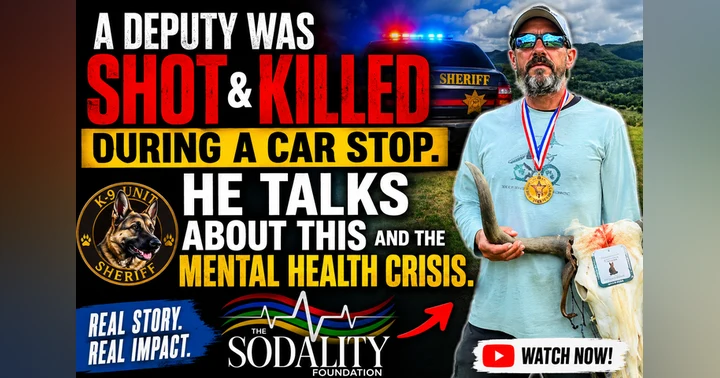
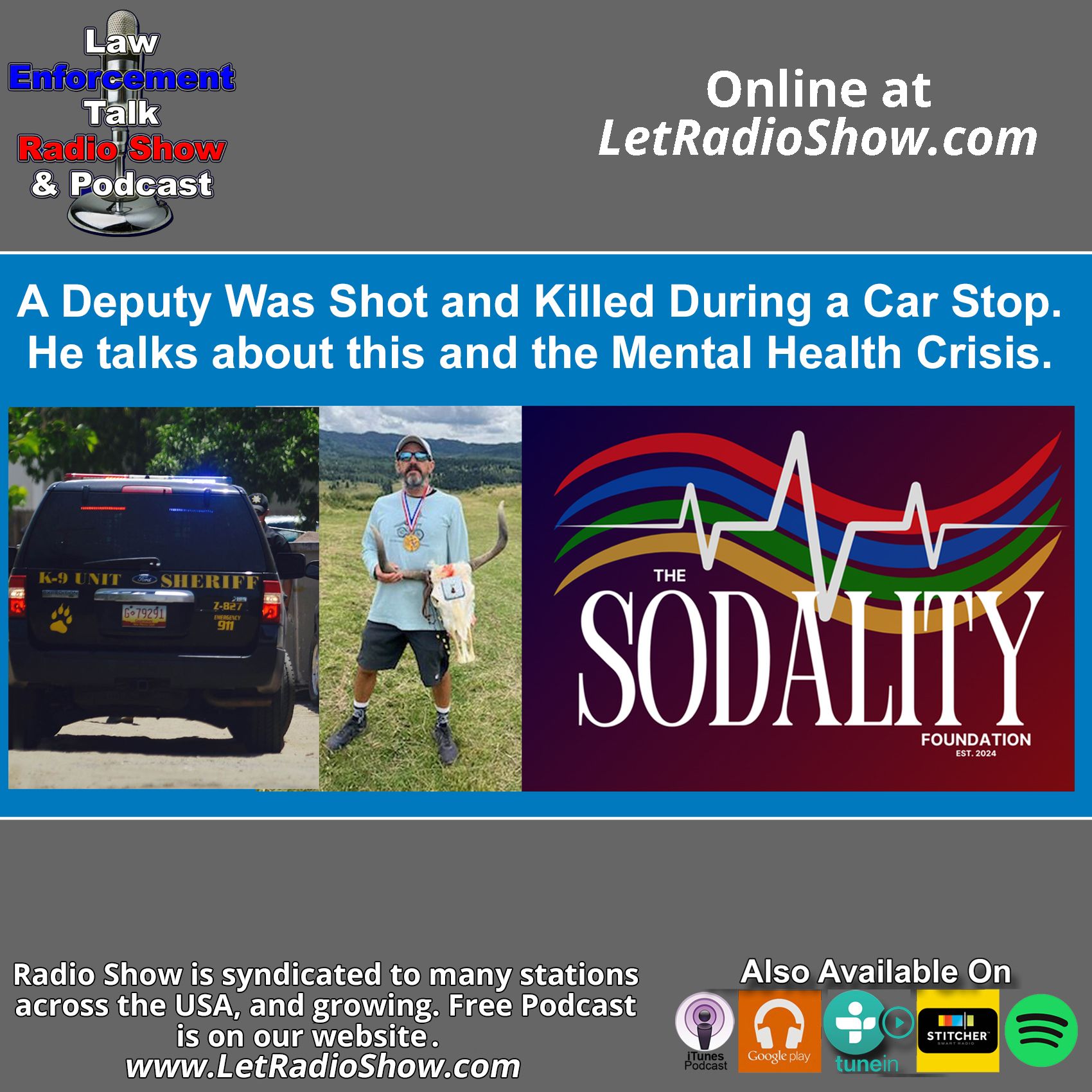
 A Deputy Was Shot and Killed During a Car Stop. He talks about this and the Mental Health Crisis in Law Enforcement. The Hidden Cost of Losing One of Your Own and the Mental Health Crisis in Law Enforcement. A Deputy was Shot and Killed during A Car Stop. Those words instantly capture attention, but they rarely tell the entire story. The Law Enforcement Talk Radio Show and Podcast social media like their Facebook , Instagram , LinkedIn , Medium and other social media platforms.
The headlines focus on the fallen deputy. The criminal investigation follows. Eventually, the suspect is caught, prosecuted, and sentenced. The Podcast is available for free on the Law Enforcement Talk Radio Show and Podcast website, also on Apple Podcasts, Spotify, YouTube, iHeartradio and most major podcast platforms. #LawEnforcementTalk #Free #Podcast #Radio
Then the news cameras leave.
What often goes untold is what happens to the officers, supervisors, families, and entire law enforcement agency left behind. Supporting articles about this and much more from Law Enforcement Talk Radio Show and Podcast in platforms like Medium , Blogspot and Linkedin.
For retired Bernalillo County Sheriff's Lieutenant Van Eldridge, that painful reality became part of his life forever when one of his deputies, Deputy Sheriff James McGrane, was murdered during what appeared to be a routine traffic stop.
Years later, Eldridge shares not only what happened that tragic night but also how the experience shaped his understanding of trauma, resilience, and the urgent need to improve mental health resources for first responders.
His emotional conversation is featured on the Law Enforcement Talk Radio Show and Podcast, available on their website, on Apple Podcasts, Spotify, YouTube, iHeartradio, Facebook, Instagram, LinkedIn, X, and most major podcast platforms worldwide. A Deputy Was Shot and Killed During a Car Stop. He talks about this and the Mental Health Crisis in Law Enforcement. The episode is available across major platforms including their website, Apple Podcasts, Spotify, YouTube, with highlights shared across their Facebook, Instagram, and LinkedIn profiles.
When Routine Turns Deadly
Every deputy begins a shift understanding that danger can appear without warning.
Most traffic stops end with a warning, a citation, or an arrest.
Occasionally, however, they become something far more devastating.
Shortly after midnight on March 22, 2006, Deputy Sheriff James McGrane stopped a white pickup truck on Highway 337 in New Mexico.
At approximately 12:46 a.m., he calmly radioed dispatch with the details of the stop.
Nothing in his voice suggested anything unusual.
Nothing indicated that within moments he would lose his life.
Unknown to Deputy McGrane, the driver had allegedly been involved in an unsolved 2005 murder and was determined not to return to prison.
As Deputy McGrane approached the driver's window, the suspect opened fire.
The deputy was struck twice.
He never had the opportunity to defend himself.
Within minutes, nearby witnesses dialed 911 after hearing two gunshots echo through the quiet night and watching a white pickup speed away from the scene. A Deputy Was Shot and Killed During a Car Stop. He talks about this and the Mental Health Crisis in Law Enforcement. Available for free on the Law Enforcement Talk Radio Show and Podcast website, also on Apple Podcasts, Spotify, Youtube and most major Podcast networks.
Emergency responders rushed to help.
There was nothing they could do.
Deputy James McGrane died where he had stopped the vehicle.
The Supervisor's Nightmare
For Sergeant Van Eldridge, the phone call changed everything.
One of his deputies had been murdered.
Every law enforcement supervisor knows the possibility exists.
No one is ever prepared for it to become reality.
A supervisor's responsibility instantly shifts from overseeing patrol operations to managing unimaginable grief.
There are deputies in shock.
Family members who need answers.
Investigators arriving.
Media gathering.
Community members searching for information.
Officers struggling to process what has happened.
Yet the supervisor is expected to remain calm, make sound decisions, and lead everyone through one of the darkest days in the agency's history. The Podcast is available for free on the Law Enforcement Talk Radio Show and Podcast website, also on Apple Podcasts, Spotify, YouTube, iHeartradio and most major podcast platforms.
Those moments become permanently etched into memory.
Van explains that while people often remember the fallen officer, they seldom recognize the emotional burden carried by the partners and supervisors who must continue serving while grieving themselves. A Deputy Was Shot and Killed During a Car Stop. He talks about this and the Mental Health Crisis in Law Enforcement. The Law Enforcement Talk Radio Show and Podcast continues bringing listeners real conversations from the front lines of crime, policing, trauma, survival, and healing.
Justice Took Years
The suspect fled following the murder.
For weeks, investigators worked tirelessly to locate him.
Eventually, authorities tracked him to Juarez, Mexico, where he was apprehended on April 3, 2006, and returned to the United States.
The criminal case moved through the courts over several years.
On June 4, 2010, the suspect was convicted of murdering Deputy McGrane, tampering with evidence, and being a convicted felon in possession of a firearm.
He received a prison sentence totaling 43½ years.
Justice did not stop there.
On August 4, 2012, the same individual was convicted of the unrelated 2005 homicide that investigators believe motivated him to kill Deputy McGrane during the traffic stop. The complete interview is available as a Free Podcast on Facebook, Instagram, YouTube, Apple Podcasts, Spotify, LinkedIn, and major podcast platforms.
He received an additional 28-year sentence, to begin after completing his first sentence.
While the convictions provided accountability, they could never restore what had been taken.
Remembering Deputy James McGrane
Deputy McGrane had devoted his life to public service.
Before joining the Bernalillo County Sheriff's Department, he served with the New Mexico State Police and later with the United States Postal Inspection Service. A Deputy Was Shot and Killed During a Car Stop. He talks about this and the Mental Health Crisis in Law Enforcement. Listeners can hear the complete interview on Facebook, Instagram, YouTube, Apple Podcasts, Spotify, iHeartRadio, and other major Podcast, Radio, News, and Media platforms.
He had accumulated more than a decade of law enforcement experience before joining the Sheriff's Office, where he served for three years.
Friends and fellow deputies remember him as a dedicated professional committed to protecting his community.
He left behind his wife, parents, sister, coworkers, and countless friends.
His sacrifice serves as a sobering reminder that no traffic stop is ever truly routine.
Trauma Doesn't End After the Funeral
For many outside law enforcement, healing begins after the funeral.
For first responders, that is often when the hardest part starts.
Returning to the same patrol car.
Driving the same roads.
Answering the same radio calls.
Making another traffic stop.
Each event can trigger painful memories.
Van Eldridge explains that traumatic incidents like the murder of Deputy McGrane leave lasting emotional impacts that extend far beyond the individual officers directly involved.
Families carry the burden.
Children notice changes.
Marriages feel the strain.
Entire agencies experience a shift in morale.
Communities mourn alongside the officers sworn to protect them.
These invisible injuries frequently become cumulative, building over years of responding to shootings, fatal crashes, child abuse cases, suicides, domestic violence calls, and line-of-duty deaths. The podcast is available on Facebook, Instagram, YouTube, Apple Podcasts, Spotify, LinkedIn, and other major podcast platforms.
Without proper support, many first responders struggle with PTSD, anxiety, depression, substance abuse, chronic stress, and burnout. A Deputy Was Shot and Killed During a Car Stop. He talks about this and the Mental Health Crisis in Law Enforcement.
Changing the Conversation About Mental Health
Rather than allowing tragedy to define him, Van Eldridge chose to become part of the solution.
Today he serves as Director of The Sodality Foundation, a nonprofit charity dedicated to improving mental health support for New Mexico's first responders.
The foundation was created after community leaders, mental health professionals, and public safety personnel recognized a troubling reality.
Many first responders desperately needed help.
Far too many couldn't afford it.
Others feared seeking treatment because of the stigma surrounding mental health.
The organization works to bridge those gaps by helping fund counseling, peer support programs, resilience training, education, wellness initiatives, and other resources that strengthen the emotional health of first responders.
Its leadership includes professionals from public safety, nonprofit management, government affairs, healthcare, and business, all committed to ensuring that those who protect our communities receive the support they deserve.
Supporting Those Who Protect Us
First responders are often called heroes.
Yet heroes are still human.
They experience fear.
They experience grief.
They carry trauma.
They need support just like everyone else.
Organizations such as The Sodality Foundation remind us that investing in first responder wellness benefits everyone. A Deputy Was Shot and Killed During a Car Stop. He talks about this and the Mental Health Crisis in Law Enforcement. Listen to the full story on the Free Podcast, available on the Law Enforcement Talk Radio Show and Podcast Website, on Facebook, Instagram, YouTube, Apple, Spotify, and more.
Healthier officers build stronger agencies.
Stronger agencies build safer communities.
Supporting those who respond to our worst days is one of the most meaningful ways a community can give back.
Listen to Van Eldridge's Powerful Story
On this unforgettable episode of the Law Enforcement Talk Radio Show and Podcast, retired Lieutenant Van Eldridge shares the heartbreaking story of losing Deputy James McGrane, the emotional weight carried by law enforcement leaders after a line-of-duty death, and why improving mental health resources for first responders has become his life's mission.
It is a conversation about courage, sacrifice, healing, leadership, and hope.
Listen now on the Law Enforcement Talk Radio Show and Podcast website, Apple Podcasts, Spotify, YouTube, iHeartradio, Facebook, Instagram, LinkedIn, X, and most major podcast platforms. A Deputy Was Shot and Killed During a Car Stop. He talks about this and the Mental Health Crisis in Law Enforcement. The Law Enforcement Talk Radio Show and Podcast, available on their website, Facebook, Instagram, YouTube, LinkedIn, Apple Podcasts, Spotify, iHeartradio and most major Podcast platforms.
If this story moved you, please share it with others. By spreading awareness, supporting first responder charities, and encouraging conversations about mental health, we can help ensure that no officer, deputy, firefighter, dispatcher, or paramedic has to carry the burden of trauma alone.
Listen to this powerful #Free Podcast episode featuring Marci Hopkins on Facebook, Instagram, Youtube, Apple Podcasts, Spotify, and major Podcast platforms nationwide.
Download the Free Ebook about ways and tips to improve your health. You can get the ebook for free at www.LetHealthy.com
Get the Free Clubhouse App, it is Drop In Social Audio. Think of it as your own talk radio show on your phone, and best of all it is free. Be sure to look for me and follow me, that’s John J Wiley or @letradioshow you can do all that here.
The Law Enforcement Talk Radio Show and Podcast social media like their Facebook , Instagram , LinkedIn , Medium and other social media platforms.
You can contact John J. “Jay” Wiley by email at Jay@letradio.com , or learn more about him on their website .
Find a wide variety of great podcasts online at The Podcast Zone Facebook Page , look for the one with the bright green logo.
Be sure to check out our website .
Be sure to follow us on X , Instagram , Facebook, Pinterest, Linkedin and other social media platforms for the latest episodes and news.
Learn and get access to money saving tips and how to increase your net worth at www.LetSavings.com
A Deputy Was Shot and Killed During a Car Stop. He talks about this and the Mental Health Crisis in Law Enforcement.
Attributions
The Officer Down Memorial Page
Hosted by Simplecast, an AdsWizz company. See pcm.adswizz.com for information about our collection and use of personal data for advertising.
John Jay Wiley (0:00): He's a retired sheriff's lieutenant. When he was a sergeant, one of his subordinate officers, a friend, was shot and killed. He's here to talk about the impact on him, what he did during the event, how it affected him afterwards, and what he's doing about it today. Welcome to the law enforcement talk radio show. In the law enforcement talk radio show, we are joined by special guest talking about their experiences, their realities of investigating crimes, plus those who've experienced horrendous trauma, police, first responders, military, and victims of crime share their stories.
John Jay Wiley (0:35): Hi. I'm John Jay Wiley. In addition to being a broadcaster, I'm also a retired police sergeant. Be sure to check out our website, letradio.com, and also like us on Facebook. Search for the law enforcement talk radio show.
John Jay Wiley (0:50): One of the
Unknown Speaker (0:50): questions I get all the time
John Jay Wiley (0:51): is how can I show my support for a law enforcement? We're all busy. We've got busy lives, but there's something oh so simple you can do with our Facebook page. Search for Law Enforcement Talk Radio Show Facebook page. And when you see a post you agree with that resonates with you, share it, especially episodes of the podcast.
John Jay Wiley (1:13): To do all that, just search for us on Facebook. Look for a law enforcement talk radio show, and be sure to click like. Conte is from the great state of New Mexico. We have Van Eldridge on law enforcement talk radio show. He's retired lieutenant sheriff's lieutenant from the Bernalillo County Sheriff's Department.
John Jay Wiley (1:29): During his illustrious police career, he had a subordinate officer where he's a sergeant that was shot and killed. We'll talk about that. He is actively involved with the board I'd I'd say movers and shakers. He's a board of directors of the Sodality Foundation. Their website is sodalityfoundation.com.
John Jay Wiley (1:47): We'll talk about what they do in a few moments. It helps mental health with first responders. Ben, thanks for your service, and thanks for being guest on the law enforcement talk radio show. Both very much appreciate it.
Van Eldridge (1:58): Thank you, sir. I I consider it quite a honor and privilege to be on your show.
John Jay Wiley (2:03): Well, that makes two of us. I'm honored and privileged to talk with you. It's we I I've been doing this since 2017, and some of these people let's be honest. I I love police. They're some of the best people I've ever met, and they're some of the most annoying.
John Jay Wiley (2:19): For example, I always say this. I'll post something on our Facebook page about a horrendous shooting, and someone that's a tactical expert say, well, if I was there, I'd done this. And I'm going, you're not there, so shut it. And one thing that in particular is we're we're talking about is when a subordinate officer is killed, people love to to voice their opinions about what they did, what they would do, what you did wrong, and none of them were there.
Van Eldridge (2:46): Absolutely. Absolutely. That was a little bit of what I I did face in in in my situation. Yes.
John Jay Wiley (2:54): And and part of it is, and I hate to say this, but another interview I did, I don't like talking to people about it, even other police about stuff because they ask stupid questions, and I get aggravated.
Van Eldridge (3:04): Right. Yeah. And and I appreciate the experience that many other law enforcement officers have had. But if I wasn't there, I'm I'm not gonna second guess their decisions. And so I'd I'd really prefer if they weren't there that they don't second guess mine.
John Jay Wiley (3:20): I would use a word. I like the word prefer, but, you're much more admirable and politically correct than I am. I would just, like, say, shut your pie hole because you don't know what you're talking about.
Unknown Speaker (3:31): Yeah. You weren't there. During your career. I was. Or maybe you were there and I wasn't.
John Jay Wiley (3:35): Right. That's the other thing. It's like there's there's so many times where, I'll just say this. I was a very proactive, officer, a very aggressive sergeant, and it would annoy me when I was not there and hot calls would happen, and I was not part of it. I would be annoyed.
Van Eldridge (3:55): It it's still a stressor of mine, John. I I will tell you. I've been retired seven years now, sir. And sometimes the stress is sitting on the sidelines can can be a little rough. I I right?
Van Eldridge (4:08): I was a guy that that ran the same direction as the sirens were going. Yep. And, yeah, every once in a while, a siren goes blaring down my street, and there's part of me that thinks, oh, maybe I'll head that way too. It's somebody else's turn, and I appreciate that, but you're right. I I I had the privilege of doing some really fun stuff during my career as a canine handler for better part of it.
Van Eldridge (4:30): So I cop for a lot of it. Yeah. So I was a guy that raced towards all the crazy stuff every chance I got.
John Jay Wiley (4:37): Of the things that my wife would tell me now, and she has to remind me, and it bugs me that she has to remind you is you you're not a police. It's not your job anymore. It's someone else's job.
Van Eldridge (4:47): Right. But it it's not that easy, is it? It's just not that easy to sit back and and and no disrespect to all the men and women that are doing it right now. I I appreciate the people in my community that are still keeping me and my family safe, but I still have a little bit of a desire to to do it. I I retired when I was ready, but the it doesn't mean in the back of my mind, I still think, wow.
Van Eldridge (5:12): That was fun.
John Jay Wiley (5:13): Part of the problem for me is I retired much earlier than I wanted to. I wasn't prepared to I was 33 when I retired. I and it was a physical injury that I could not do anything about. I thought I sprained my wrist. I had multiple surgeries, And and it was a guy who tried to shoot me as a typical unarmed man who tried to shoot me in my service revolver and stole my hand.
John Jay Wiley (5:32): And the force of the struggle has destroyed my wrist. And I'm right handed, and that's where all the damage was.
Van Eldridge (5:38): Yeah. I and I I I I just can say. I I I can't understand that. I'm not even gonna pretend to be able to say that I can. I respect everything you did, and you're and you're continuing to give us a voice.
Van Eldridge (5:51): I guess that's a little bit of my goal as well. I retired because I was at that point in my life. It is a young person's profession. Yeah, I'm over 60. I got two bad knees, significant hearing loss from decades standing on the firearm range.
Van Eldridge (6:06): And so it is somebody else's turn. You're given a voice. Can't even tell much. I appreciate that. My goal now too is to try and support the profession from the spot that I can do it.
Van Eldridge (6:17): Having seen and done some of the things I've seen and done, and in particular, the mental health stressors that they have in this profession. So maybe that's just the role I'm gonna accept.
Unknown Speaker (6:33): That's not a bad role.
Unknown Speaker (6:33): You've done an outstanding job.
John Jay Wiley (6:35): That's not not a bad role to have. Part of the reason why I do this is because I want to it drives it adds a purpose to the pain I went through. Is what you've gone through in your own, for lack of better words, recovery after policing that drives you do what you do today?
Van Eldridge (6:52): Right. That's that's that's what I'm trying. It got me to this point. Right? All the bad decisions in my life got me right here right now.
Van Eldridge (6:59): Kind of a thought process. So let's see what we can do moving forward because we gotta keep moving forward. Right? We all gotta keep moving forward.
John Jay Wiley (7:06): Well, there's a a funny thing that me and a lot of my guests have, and and this is going back years ago. It's like, we admit that we're damaged goods. Doesn't mean we're useless. It means that I'm not the same guy I was when I was 18. I've been through.
John Jay Wiley (7:20): I've been through. I went through. I went through, we're okay with that. And then we laugh and laugh. Would you say that you're kinda damaged from policing?
Van Eldridge (7:29): I've got ADD, ADHD, OCD, and PTSD.
Unknown Speaker (7:34): You got nothing in this soup
Van Eldridge (7:36): of mental health issues, sir. I I yeah. Some of that was what brought me into policing. My ADD, ADHD, I think, is what drew me to the profession. Some of the best cops I know can't sit still right.
Van Eldridge (7:48): But then the the rest of it that came afterwards. Yeah. The sleepless nights, the the the the memories of of the haunting things that you've seen, those don't go away.
John Jay Wiley (8:01): No. They don't. And by the way, they they tend to resurface for me when I least expect them when I'm not doing the things I'm I'm should be doing to take care of myself.
Van Eldridge (8:10): Certainly. I gotta keep moving. I I try and stay as active as I can. If I'm out for a a hike in the woods or a or a bike ride or something else physically demanding that I can still do, that will at least put the focus on that activity for a little while. Wandering around in my own thoughts is not good for me.
Unknown Speaker (8:28): No. I I I jokingly say this, but it is so true. The less thinking I do on a daily basis, the happier I am.
Unknown Speaker (8:35): Absolutely. Yeah. I'm a whole better a whole lot better off if I don't think and just do.
Unknown Speaker (8:40): I don't I don't know about you, but it's like one of the things that my my wife and I'll take it with a long drive and usually I'm driving because I'm a control freak. But, she'll she'll turn to me and say, what are you thinking? I have to make up stuff because I'm not thinking of anything.
Van Eldridge (8:52): No. Absolutely. Yeah. That's kind of my brain as well. It's better off that I'm not thinking about anything.
Unknown Speaker (8:57): Yeah. What do you think about right now?
John Jay Wiley (8:58): Nothing. I'll I'll I'll come up with some wild stories. We're talking about Van Eldridge. He's a retired lieutenant from the Bernalillo County Sheriff's Department or Sheriff's Office in New Mexico. During his career, a long career, he, as a sergeant, had a supporting officer who was shot and killed.
John Jay Wiley (9:15): We'll talk about it in a few moments, the impact on him, what he does about today. And he's the one of the movers and shakers for the sodalityfoundation.com. That's the sodality, sodalityfoundation.com.
Speaker 1 (9:27): Be sure to subscribe to our YouTube channel. Look for law enforcement talk radio show and podcast on youtube.com. And be sure to subscribe. Like everything we do, it is free. Look for and subscribe to law enforcement talk radio show and podcast on YouTube for great police videos and episodes of the podcast.
John Jay Wiley (9:44): And this is the law enforcement talk radio show. Don't quote it where we'll be right back. How would you like to improve your health? Let's get healthy. Tips you can use today for free.
John Jay Wiley (9:58): They don't require any money at all. You can download a free ebook, 15 tips to improve your health at lethealthy.com. That's lethealthy.com. Again, it's lethealthy.com, and let's get healthy for free. Current conversation with Van Eldridge on the law enforcement talk radio.
John Jay Wiley (10:22): He's a retired sheriff's lieutenant from the Bernalillo County Sheriff's Office in New Mexico. And during his, long law enforcement career, he, as a sergeant, had a subordinate officer who was shot and killed, which I'll tell him a few moments and talk about the impact on him. Not just that incident, but multiple incidents, him and his agency. He's one of the movers and shakers for the sodalityfoundation.com. Their website is the sodality, sodality,foundation.com.
John Jay Wiley (10:53): Ben, I I look. I I went through this, and and I did police week for the first time in a very long time. I've actually, for the first time ever. And I was one of the readers of the list names have fallen, and I was shocked at the amount of people that did that. I didn't go to the police memorial of the wall because I went there years ago, and it it was cathartic.
John Jay Wiley (11:17): It was very healing, but it was a very emotionally disturbing day. And I went there with my wife, and I was no good for anyone afterwards, so I purposely did not go. One of the difficult things is someone asked me, how many police did you lose? How many killed during your career? And the numbers, I can't keep track of how many there were.
Van Eldridge (11:37): No. And and at some point, it's also important to point out every one of those was was a story in and of itself. Every one of those people was somebody's partner, son, daughter, husband, wife, father, son, grandson, nephew, uncle, etcetera. Every single one of those people. Yeah.
Unknown Speaker (12:00): We look at it as a collective. We look at it as individually. The numbers are daunting either way.
John Jay Wiley (12:06): It's it's a it's a terrible burden. And one of the things I had when I was promoted from police officer to sergeant, I was it's a a kind of a unique situation, but I'm sure it's the same for you. You had to make sure they did their job, and the people got the best service they could, but you also took care of them. You you want them going harm's way, and I worried about them immensely. Did you have that same scenario?
Van Eldridge (12:31): Almost definitely. Yeah. You're right. As a as a sergeant on the night shift, I'm I'm the one that's that's telling the the troops. Let's get out there and and do our job.
Van Eldridge (12:41): You know? Stop some cars. Write some tickets. Take some bad guys to jail. Knowing that directive, it puts them in danger.
Van Eldridge (12:48): Everyone of them signed up for it. I I get that, but nobody signed up to be assaulted, to be shot, to be murdered. I didn't know what we signed up for.
John Jay Wiley (12:56): No. I I thought I knew what I was signing up for, but it was far more violent and dramatic than I realized. And I no nothing prepared me for that.
Van Eldridge (13:04): No. And it can't. It can't. I've also had the opportunity to do a lot of teaching and training throughout my career as well to teaching rookie cops, teaching veteran cops. You try and tell some stories.
Van Eldridge (13:13): You try and show them some videos. You try and expose them to some things until you're there. You you're not really truly.
John Jay Wiley (13:20): The other thing and I I say this all the time is and it's inherently a very dangerous job, but if I never thought anything bad happened to me. And when someone shot at me, I'm like, dude, you don't even know who I am. And that doesn't matter at all, but my reaction was very different than I thought. And when people, when the old timers and I I was trained by a lot of combat veterans or Vietnam veterans, and we had a few command staff there were Korean War veterans, and they had a totally different outlook on policing. But one of the things they said was that when they would talk about the dangers, the trauma, all that stuff, I was like, yeah.
John Jay Wiley (13:57): That happens, but it's never gonna happen to me. I thought if that was the case, I'd never leave the station.
Van Eldridge (14:03): Right. And and and you probably like me. I I grew up with a desire to do this. So as a little kid, I I I had a idea. I wanna be a police officer when I grow up.
Van Eldridge (14:13): That looks really fun, and it was a lot of fun. But, yeah, you don't you don't have any idea what what you're up against.
John Jay Wiley (14:20): It's one until it's not fun anymore.
Van Eldridge (14:23): Right. Yeah. There's aspects of it I certainly enjoyed. The night deputy James McGrane was murdered, I have a distinct memory standing on the side of the road after after the kinda it was cold and it started to snow or the mountainous regions of Bernal County. And for the first time in my entire life, I remember standing on the side of the road thinking I don't wanna do this anymore.
Van Eldridge (14:46): Yeah. I I don't wanna do this anymore. And I had that thought had never ever ever entered my mind. I spent my whole life training and preparing to do it, and all of a sudden, there's a a thought in my mind that I won't do it anymore. That was daunting.
Unknown Speaker (15:00): Absolutely daunting to me.
John Jay Wiley (15:02): This was, one of your supporting officers that that was shot and killed. Right?
Van Eldridge (15:06): Correct. 03/22/2006, sir. I was, yeah, the on duty surgeon on the night shift and the first one to the scene of the traffic stop where where Jimmy McGreen was murdered. Unbeknownst to him, the the truck he'd stopped was being driven by a wanted felon in in the community who had not sent any warrant for homicide that had occurred a couple months prior to that. Stuck a pistol out the window and and shot and shot and killed Jimmy.
Van Eldridge (15:33): I, you know, watched in vain as as rescue efforts were attempted. And and and later on, the officer medical examiner confirmed what I knew when I got there. Unfortunately, deputy McGrandon was was dead before he hit the ground.
Unknown Speaker (15:48): Yeah.
Van Eldridge (15:49): Bullet pierced his chin, so over to his spine, and and and it was it was over immediately. Not only was he a deputy that that was assigned to my squad that worked for me, and you're right, who I'd an hour prior to that said, hey. Let's get out there and and do some work. I grew up with him. He was his oldest sister and I went to school together, kindergarten through the twelfth grade.
Van Eldridge (16:11): He lived a couple blocks from me. His mom and dad went to the same church as my mom and dad for many, many, many years. This was a deputy on my department and someone I'd known my whole life. That that is not, I don't think, unique to my situation. I think a lot of law enforcement officers work the communities they grew up with in, work with people that they've known for a long time.
Van Eldridge (16:38): It's a multi generation kind of career. I've had lots of coworkers who same agency as their parents, siblings, etcetera. So I know that's not unique to my story. I just know that also had a significant impact on me and my role in in that whole scene in addition to, you know, managing the scene. You talk about the, you know, the cops that weren't there asking me what I could have done differently, what I should have done, blah blah blah.
Van Eldridge (17:10): There was that grumbling behind my back for a while.
Unknown Speaker (17:16): It's awfully hard not to
Unknown Speaker (17:17): respond. Sergeant of our squad team?
John Jay Wiley (17:18): It's also difficult not to respond to that.
Van Eldridge (17:22): Sure. Yeah. And there there's some where you wanna just tell these people. Yeah, go take a flying leap. What's that do?
Van Eldridge (17:32): Some of them are just venting as well. I know that now years later, right? I look back at some of that. At the time again, was sergeant of the SWAT team as well and there was a manhunt, right? We had to catch this bad guy, which took several weeks.
Van Eldridge (17:49): And in there during that two week period of time, we we had a funeral. I had to eulogize Jimmy, didn't have to, got to. I had the privilege of talking to his funeral and still trying to find the person who had done this. Didn't sleep for two weeks. The person was actually apprehended later.
Van Eldridge (18:06): He fled to Mexico. The U. S. Marshals Service had to help us catch him. So maybe at that point in time, there wasn't really even a chance to process some of that.
Unknown Speaker (18:14): I was back to that and I realized that.
Unknown Speaker (18:16): That's why the problem
Unknown Speaker (18:17): was neat. I was just gonna
John Jay Wiley (18:18): sneak break on that note. We're talking we're retired sheriff's lieutenant Van Eldridge from Bern alillo County Sheriff's Office in New Mexico, talking about the the murder of one of his subordinate officers, one of his friends, the impact on him, his agency. He's one of the movers and shakers for the sodalityfoundation.com. That's the sodality, sodality,foundation.com. It's law enforcement talk radio.
John Jay Wiley (18:40): Don't quit anywhere. We'll be right back.
Speaker 1 (18:43): Be sure to subscribe to our YouTube channel. Look for law enforcement talk radio show and podcast on youtube.com. And be sure to subscribe. Like everything we do, it is free. Look for and subscribe to law enforcement talk radio show and podcast on YouTube for great police videos and episodes of the podcast.
John Jay Wiley (19:08): We're doing conversation with Ben Eldridge, a retired sheriff's lieutenant from the Bernalillo County Sheriff's Office in New Mexico when he was a sergeant on duty. One of the subordinate officers was shot and killed on a traffic stop. We're talking about the impact on him. He's one of movers and shakers for the sodalityfoundation.com. Their website is the sodality,sodality,foundation.com.
John Jay Wiley (19:33): I'll give you a hint. We'll talk about it a little bit later on. They really work towards mental health awareness and treatment for first responders. I I want to go back to the conversation about, your coworker being shot and killed. One thing you said that really kind of echoed in my mind was you sat on the side of the road, and you if there's over with you, it's like, don't wanna do this anymore.
Van Eldridge (19:59): Right. Yeah. And and for a whole lot of reasons, not what impacted me the most is I knew the next few things I was gonna have to do was talk to his family, talk to my family, talk to my friends. I don't know that it was a fear of myself getting hurt so much as just an overwhelming anxiety and guilt for what all that meant and what it meant for some of my coworkers, some of the the deputies that were also on duty that night versus some of the deputies that weren't on duty that night that they were friends of of Jimmy's, coworkers of Jimmy's, but worked a different squad, worked a different day, whatever that I was gonna have to call these guys and tell them what happened. Yeah.
Unknown Speaker (20:45): That's that's a part where you just look and go, oh my gosh. I I wanna do this anymore. I haven't done a surgery very long, a little bit less than a year. Same kind of thing. Right?
Van Eldridge (20:52): You test, you promote, you got this great idea of how you can manage people.
John Jay Wiley (20:56): I'm gonna make a difference. How about that one? Gonna be somebody. Yeah.
Van Eldridge (21:01): We're gonna serve and protect, and I'm gonna be that supervisor that motivates the squad to be productive. And and look at the numbers we're gonna send upstairs to the sheriff. Right? Look at us, boss. We're we're kicking butt and taking names.
Van Eldridge (21:15): Yeah. And and I guess, again, for me, looking back on it, fortunately, it's because of my other reciprocal duties that do it. While that thought was going through my mind, my phone was ringing. My pay we carried pagers back then. Right?
Van Eldridge (21:27): On the Yeah. Cops all carry pagers. My pager's going off because now we're starting to get some intel on who this bad guy was and now we're starting to get some intel on where he is. And so I was able to kick into that. Okay.
Van Eldridge (21:40): Never mind. I am gonna do this. I'm only gonna do this. I'm gonna go catch the bad guy that did this and and and that focus. But in the weeks, months, and years that that followed when when that focus had been handled, we got the bad guy, took him to prison, took him to trial, etcetera.
Van Eldridge (21:57): That's when I started to recognize some of the what I call collateral damage.
Unknown Speaker (22:01): Yep.
Van Eldridge (22:02): So what what I call the the impact that it had on on me and some of my coworkers and the struggles that some of them were having that I look back on now and realize, oh my gosh. We here I was so worried about, yeah, bad guys getting, you know, shooting and and and those still those still get us, sir. Car crashes, bad guys trying to hurt us. Those are still getting cops. We're more we're more likely to to do something to ourselves.
Unknown Speaker (22:30): That's that's
Unknown Speaker (22:31): the reality of numbers. We can talk about those numbers.
John Jay Wiley (22:33): One of the things that I talk about all the time, not as often as I should, is the four s's of law enforcement and sunscreen, seat belts, soft body armor, and then survive because car accidents are far more deadly. And then with the other s that we don't talk about hardly anywhere near enough is suicide. Right. And all this stuff is preventable.
Van Eldridge (22:57): My career, just me, my agency, and my career, and I look at those raw numbers again, and it dawned on me. Yeah. Car crashes, you know, killed some of my coworkers, and, yeah, gunfire. Jimmy got shot and killed. More of my coworkers took their own lives, sir, than than those things, and that continues.
Van Eldridge (23:16): That that that that's just not my agency. That's unfortunately nationwide. And that's that also doesn't count the divorces, the chemical injections, the the other things that may maybe we didn't take our life, but maybe it cost us our career. It cost us our marriage. It cost us and that's some of what I saw too.
Van Eldridge (23:36): These people, again, who were like me. They grew up on to be a cop. Right? So they ever wanted to do. And now these other peripheral things are impacting their their job.
Van Eldridge (23:44): They're not able to do their job anymore because of these other things or their their family life is starting to fall apart Cause we didn't we didn't recognize that. You're right. I tell guys all day long and it's easy for me to look over and see whether or not whether whether in a seat belt, right? I can check, you know, we did every day that my squad would come in. I'd know whether or not they're wearing a soft body armor.
Van Eldridge (24:06): Like, where the heck's your best. Right? The mental health issues are not they're not as visible. They're they're not right there in front of me.
John Jay Wiley (24:15): And if you're like me, you wouldn't tell people anyway. It it wasn't obvious. And one of the things I did in roll call training inspection of people, we look at the vest, we look at their guns, we look at all the stuff, and we smell their breath. We do little things and make it a point to try to talk to them, you know, once a week if you could. What's going on?
John Jay Wiley (24:35): How's your family life? Because here's a scenario. And I I don't know about New Mexico, but in Baltimore, we were recruiting everywhere. We had a lot of police from Ohio, Pennsylvania, New York. They they couldn't get jobs or agencies.
John Jay Wiley (24:46): They come to our agency. They come out of the academy. They're happily married. They have three kids. They're choir boys.
John Jay Wiley (24:51): They're awesome. Within three years, they're living in a basement of a house with a stripper, and they're drinking a case of beer a night.
Van Eldridge (24:58): Right. Yeah. That's that's not unique to Baltimore, sir. That's that's the profession. Yeah.
Van Eldridge (25:04): And you look and you say, what what the heck happened? Right. You know, what what happened? And and we're not again, is is, you know, first responders, cops, firefighters, same kind of thing. Right?
Van Eldridge (25:14): You you you your your boss, your buddy, whatever, ask you, how's it going? Good. Good.
Unknown Speaker (25:17): Oh, I'm gonna tell you. I'm I'm gonna tell you. If you if you ask me right now how I'm doing Ben, I would tell you honestly, I'm doing okay.
Unknown Speaker (25:25): How are you doing? Good. I'm fine. I got this. I got this.
Van Eldridge (25:28): We're we're we're our profession is part of that. Right? As as a supervisor, I look back on it and some of the mistakes I made because my role was to not just ask him. My role is to really look and see because there's there's gonna be you look back. Hindsight's twenty twenty.
Van Eldridge (25:49): I look back at some of the signs, and they were there. They were there. I I I should have been the guy that said, no. You're not okay. Let's go.
Van Eldridge (25:57): And and and pull them in. Take them they whether it's a hike in the wood, grab a cup of coffee, or whether we really need to talk to somebody that's a professional, that has true training and experience on how to help first responders address mental health issues?
John Jay Wiley (26:15): And I I don't to this day, I don't know the answers to the any of those questions. One of the things that I always said was and I look at I very, very rarely ever watch police videos, but someone will send me one and say, this cop is mouthing off, and he's doing all kinds of I'm like, what was he like six months before that? Was he okay? That's usually a sign that person is not doing well.
Van Eldridge (26:37): Yes. And that's that's what you know, we are more and more scrutinized as a profession. I I appreciate that. I, you know, I I know society has an expectation of performance, and I don't I don't necessarily disagree with that expectation. But you're right.
Van Eldridge (26:52): I also when somebody points out something that maybe wasn't inappropriate use of force or maybe it looks like it on the video. I don't know. But you're right. What what led to that? What what what's going on?
Van Eldridge (27:04): I'm I'm not necessarily gonna make an excuse for someone else, but maybe an explanation for an officer again who had stellar performance and all of a sudden does does flap a handle or something like, oh, okay. Why? What what kind of stress and trauma was was that person exposed to previously that as an agency that as as an agency head, we neglected to support them through. I think I think that's part of what we have an obligation of supervisors to do. I look back again.
Van Eldridge (27:36): I some of my, you know, sleepless nights are could I have done more for the deputies in in my agency whose mental health issues were were not there? I I was the guy at the academy. I was a fitness yeah.
John Jay Wiley (27:48): I I really don't know the answer. We'll take a short break in moment. One of the things that when I was in police academy, they had a major came and talked to us, and he said the average life expectancy for a Baltimore police then was 52, and he usually died within two years of retirement. And now the average American police officer, male police officer, the average life expectancy is 58, and the average male is 73. So we're still dying very young, and we don't have the answers.
John Jay Wiley (28:15): We just know there's problems. We're talking about Van Eldridge. He retires lieutenant from the Bernalillo County, New Mexico Sheriff's Office, and during his career as a sergeant, he he had a supporting officer who was shot and killed. We talked about that. Talk about the impact on him and his agency.
John Jay Wiley (28:29): We'll talk about it a little bit more. He's one of the movers and shakers for the Sodality Foundation. Their website is the sodalityfoundation.com. That's the sodalityfoundation.com. This law enforcement talk ratio don't go anywhere.
John Jay Wiley (28:44): We'll be right back.
Speaker 1 (28:50): Please stop me if any of this sounds familiar. I'm too old to start investing in stocks. I'm too old to learn about investing. I don't have the time and energy to learn about investing. Suppose an app existed that did everything for you automatically.
Speaker 1 (29:04): There is, and I've been using it. Get more details about it at letsavings.com. Letsavings.com. That's the letter l. Lettere, lettertsavings.com.
Speaker 1 (29:15): The information is not personal financial advice, that past performance does not guarantee future results and that investment involves risk, including the loss of principal.
John Jay Wiley (29:30): Attorney conversation with Van Eldridge on the law enforcement talk radio show. He's a retired lieutenant from the Bernalillo County Sheriff's Office in New Mexico. He's gone days from Mexico. Beautiful area. I've never been there.
John Jay Wiley (29:42): I I hear great things about it. Seeing all kinds of movies about it. I'm like, yeah. I wanna go there someday. One of his subordinate officers was shot and killed in the line of duty, and we're talking about the impact on him and his agency.
John Jay Wiley (29:53): He's one of the movers and shakers for sodalityfoundation.com. That's the sodality, sodalityfoundation.com. One of one of the things I think is a big difference. I got hurt and retired at the rank of sergeant. I didn't make it to lieutenant.
John Jay Wiley (30:10): That's where the real changes, and I thought in my mind, you can make a real difference. I wanted to go into command staff, and that's where I think it'd make the biggest difference for not just the people, but the the subordinate officers who worked under me. Their welfare, I was always very aware of their physical welfare and their mental welfare because quite honestly, for example, and I'm sure you can relate to this. As a sergeant, you get that call for a supervisor's complaint. You're like, oh, no.
John Jay Wiley (30:36): What did you do now? He talked to the officer involved first. And quite often, I was more of a problem than the officer was, but I I'm trying to soothe her feelings, and quite often, the officer is right. And that it's difficult because you're not gonna give them what they wanna hear, the the bad guy.
Van Eldridge (30:57): No. No. Because we're not gonna change our minds. The the an officer made a decision that's affecting arrest, write citation, etcetera, and it's no different. I I relate it to the home plate dump.
Van Eldridge (31:07): Right? I've never seen a manager come out and get the home plate dump to change his mind. And same thing. Somebody calls and complains and the deputy was rude, blah blah blah. Okay.
Van Eldridge (31:16): You you still did something wrong. So we're not gonna not take enforcement action just because you're not happy. You're right. That's a big part of being a sergeant. Motivating your officers to go do stuff and then recognizing the more stuff they do, the more complaints they're probably gonna generate.
John Jay Wiley (31:31): Well, I it's so funny you bring it up. I I thought at the time when I was newly promoted to sergeant, I thought I wanna have a squad of people like me. They take names and they do their work there. Then I realized it didn't take very long either I couldn't have it because I'd be writing all day. I needed report takers.
John Jay Wiley (31:48): I needed the mobile secretaries. I needed everybody.
Van Eldridge (31:51): Sure. Yeah. It's a it's a the profession has has lots and lots of different needs. People people in the community call call us for a whole bunch of different things, and you're right. You're you always find those people on the squad that are that are good at that, that they can go over there and and and just, you know, kinda help quell a little bit of a neighbor dispute or whatever.
Van Eldridge (32:09): Right? Two neighbors who just aren't getting along about barking dog or whatever. Yeah. And you need that as well. Certainly.
Van Eldridge (32:14): Sure.
John Jay Wiley (32:15): When you you were a sergeant and you were tired of the tenant. And after this incident, you started talking about some impacts on you, but you you mentioned several times impacts on the agency. And and we kinda glossed over, but suicide, mental health issues are a real problem with our first responders, all law enforcement in particular. How aware was how aware did you become of the problem in your agency?
Van Eldridge (32:40): Unfortunately, later than I would have liked to. And it really one of the ones that that that came about wasn't wasn't a suicide. The the the the person still you know? But he his his issues resulted in him losing his career. This person no longer a law enforcement officer.
Van Eldridge (33:00): And and looking back on it, I have no doubt that it was the impact of of this and some other stressors in in that person's life that led to and this, again, second generation officer that grew up this, you know, was a aspiration. Now now they're they're no longer in the profession. And and I look back at that one in particular and I think what I I looking back hindsight, I see all the scenes. I I should have noticed what was going on in this person's life and I I did. And that's when I realized, okay.
Van Eldridge (33:29): I I need to take a more active role in when we talk about survival. I've been again, I've been the academy instructor. I've been a fireman instructor. I taught people how to shoot their guns and do more push ups and run faster at a stopwatch. You could do exactly how fast your your time was.
Van Eldridge (33:44): I'd go score the target either hit the bullseye or didn't. I needed some training and education on how to recognize some of these other things going on because that's the survival that matters the most and and you nailed it. I mean, one of those kind of every cop I know is counting the days, hours, and minutes till retirement. Right? Oh, I can't wait till I can retire.
Unknown Speaker (34:01): Right.
Van Eldridge (34:02): And then what? The numbers are showing we're not getting our time back by any stretch of the imagination. I don't like those numbers either. No. They're to me.
Van Eldridge (34:11): I yeah. I'll What what am I pension for twenty six years. I want that out of it. Right?
John Jay Wiley (34:16): I tell people all time, when I was an active police officer, the drama, the trauma, all that stuff, I knew my job. I knew what was supposed to do is when things got quiet, the the real problem started.
Van Eldridge (34:25): Yeah. We're we're adrenaline junkies. And and so, you know, I'm trying to meet a lieutenant. Lieutenants of my agency were I'm a former agency. We're we're paper pushers.
Van Eldridge (34:37): Right? We dress like cops. We read about what cops do. We don't really get into a whole lot of cop stuff anymore. So that's when I also first started to realize, okay.
Van Eldridge (34:47): I've gotta look for some other activities and some other things to do because I'm I'm not handcuffing bad guys. I'm not driving really fast. I'm sitting behind a desk. Right? And and that can be enormously stressful because we're used to these other things.
Van Eldridge (34:59): So I started looking for activities that that I could at least be involved in. I'd I'd get some other people do that. Hike in the woods. Go you you come to New Mexico, sir. I'll take you to some beautiful places and show you our outdoors because I can climb to a a peak with 10,000 feet, and the view is incredible and gets my heart pumping.
Van Eldridge (35:17): Okay? Not the same as chasing bad guys. It isn't, but at least it's something. Now look for those. I'm trying I try and guide some of my retired coworkers towards that.
Van Eldridge (35:28): Let's get our our drive, our adrenaline from some of these other things and watch watch your I want my time back. You know, I don't I don't like this. Like these numbers you just quoted, those are, you know, those are daunting to me. Why can't why can't I get all this time back that I put in? Well, because of the mental health and the services and and that's what we you know, I wanna try and help.
Unknown Speaker (35:51): When we talk about officer survival and we look at the numbers, it isn't just car crashes.
John Jay Wiley (35:57): It is. It's not. And and and fortunately, you said something that a lot of people suffer. And and and without going into a lot of details, my daughters are very young when I retired. They still bear the the scars of what I went through.
John Jay Wiley (36:11): And there's there's no denying that. And even though I did my best to to shield them from that, but we look at broken families, we look at broken relationships, and we look at failed careers. And as a sergeant, I got this speech when I was in the academy. I had it almost every year. Two things that will derail a police career more than anything else, alcohol and women.
John Jay Wiley (36:34): Forget you're going to you're going to wind up in a short end of the stick with both of those. And what do we do? Both.
Van Eldridge (36:41): Yeah. And and and then we watch it, and then we wonder. But what led to that? Again, what led to that People who prior to that, their whole life, they're hiring a bunch of adults or young adults, but they're still adults. And we've reviewed their background, and they never showed tendencies towards those kind of behaviors before we wouldn't have hired them.
Van Eldridge (36:59): Right? Right. So now here they are, whatever, five, seven, eleven years into their career. And, yeah, they're they're they're drinking too much. They're they're not, you know, faithful to their families.
Van Eldridge (37:12): And and that impact if you're not faithful to your family, probably not faithful to your job either.
Unknown Speaker (37:16): Right.
Van Eldridge (37:17): And and I saw some of Yeah. There those kinds of things. And, yeah, what what happened? Well, maybe it was this buildup. Maybe it was for some people, it was.
Van Eldridge (37:27): I can point back to a critical incident, one in particular, Jimmy getting killed. Obviously, that one's right there in front. Not everyone's gonna have that particular call, but they may very well have a buildup of multiple, multiple, multiple things over years and years and years and years. Cops are gonna see more traumatic incidents probably in one year than most people will see in an entire lifetime. So then you add up that.
Van Eldridge (37:55): Now I've got a a ten, fifteen, twenty year career. You've been exposed to an enormous amount, an enormous amount of trauma.
John Jay Wiley (38:03): So what are you doing about today? And I I know your website, Sedality Foundation, is a big part of what you do. What is it you do about it today?
Van Eldridge (38:11): What we do now is, one, give the first thing we do is we provide peer support training. We bring in current first responders, cops and firefighters, and give them some training on how to support their coworkers. Because there's everything I I noticed, and you mentioned in the very beginning. Cops, we're all a bunch of we're all a bunch of skeptical, cynical, sarcastic, leaning away.
Unknown Speaker (38:35): If you're not that way to start with, you won't become that way later on.
Van Eldridge (38:38): Yeah. We're more likely to at least lean on a coworker than we will anyone else. We do trust our buddies because they had our backs. Right? And so if we can give some peer support training, that's a big part of our model at Sedality Foundation, is peer support training.
Van Eldridge (38:57): The people that are in the trenches right now, giving them some guidance on how to support their coworkers, first and foremost. And then with the part of this peer support training is also giving them some awareness of, okay, there are some things as a coworker you can help out with. Hey, buddy. Let's yeah. Let's let's go talk about this.
Van Eldridge (39:15): But then there's some other things where we we do need we do need professional help. We do
John Jay Wiley (39:20): need I people to gotta treat close things out. It's sodalityfoundation.com. That's the sodality, sodality, foundation.com. By the way, I'd imagine that you're like many people, the fundraising is the other f word. So if you wanna help, go to sodalityfoundation.com, get information about Vann and what they do right there.
John Jay Wiley (39:40): Vann, thanks for your service, and thanks for talking about on the law enforcement talk radio show. Both very much appreciate it.
Van Eldridge (39:45): Truly an honor and privilege, sir. Truly, truly a privilege.
Speaker 1 (39:48): I'd like to thank our guests for coming on
John Jay Wiley (39:50): the law enforcement talk radio show. The law enforcement talk radio show is a nationally syndicated weekly radio show broadcast on numerous AM and FM radio stations across the country. We're always adding more affiliate stations. If you enjoyed the podcast version of the show, which is always free, please do me a favor and tell a friend or two or three. I'll be back in just a few days with another episode of law enforcement talk radio show and podcast.
John Jay Wiley (40:16): Until then, this is John Jay Wiley. See you.