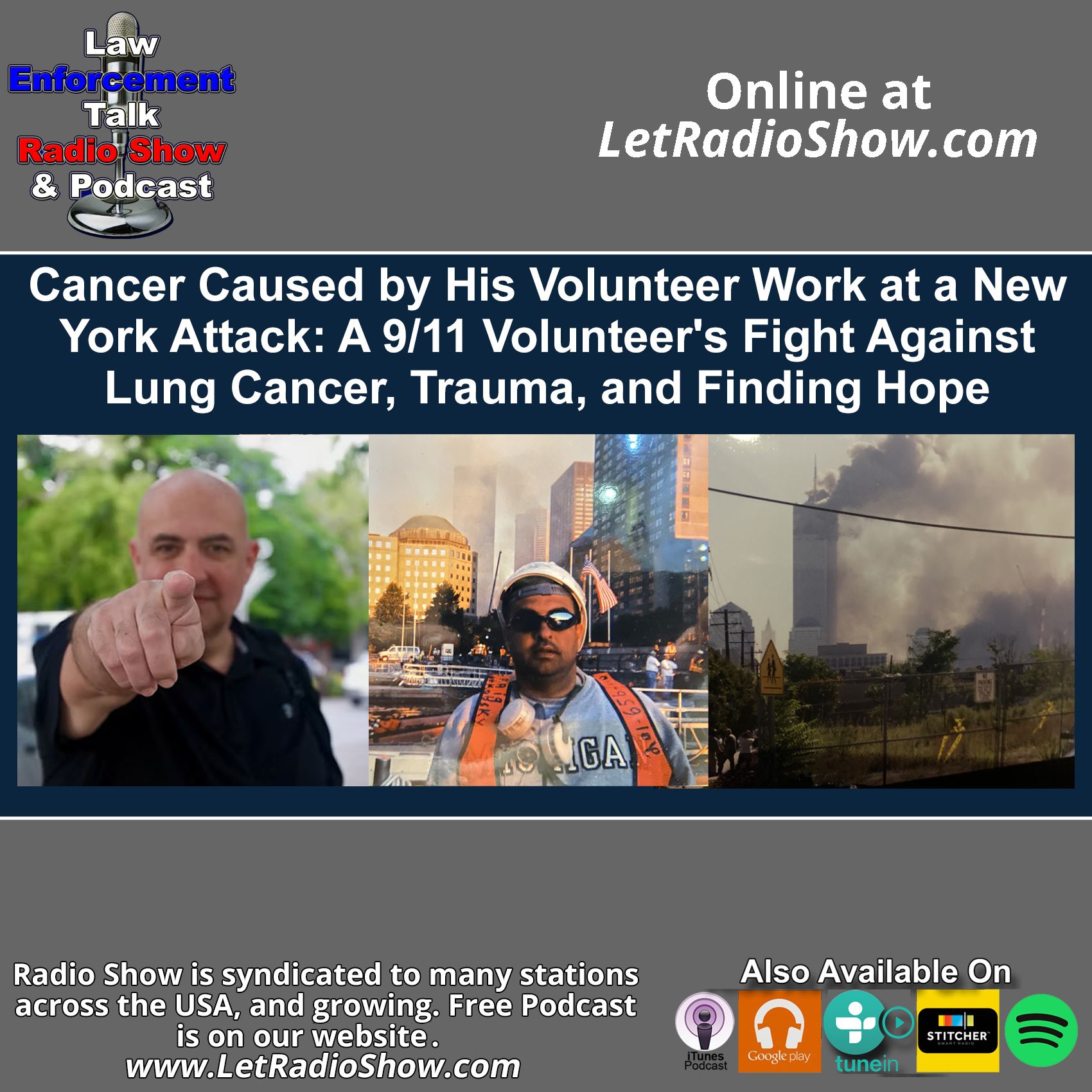
Beyond the Diagnosis: Craig Sotkovsky's Journey to Finding Purpose After 9/11 Illness
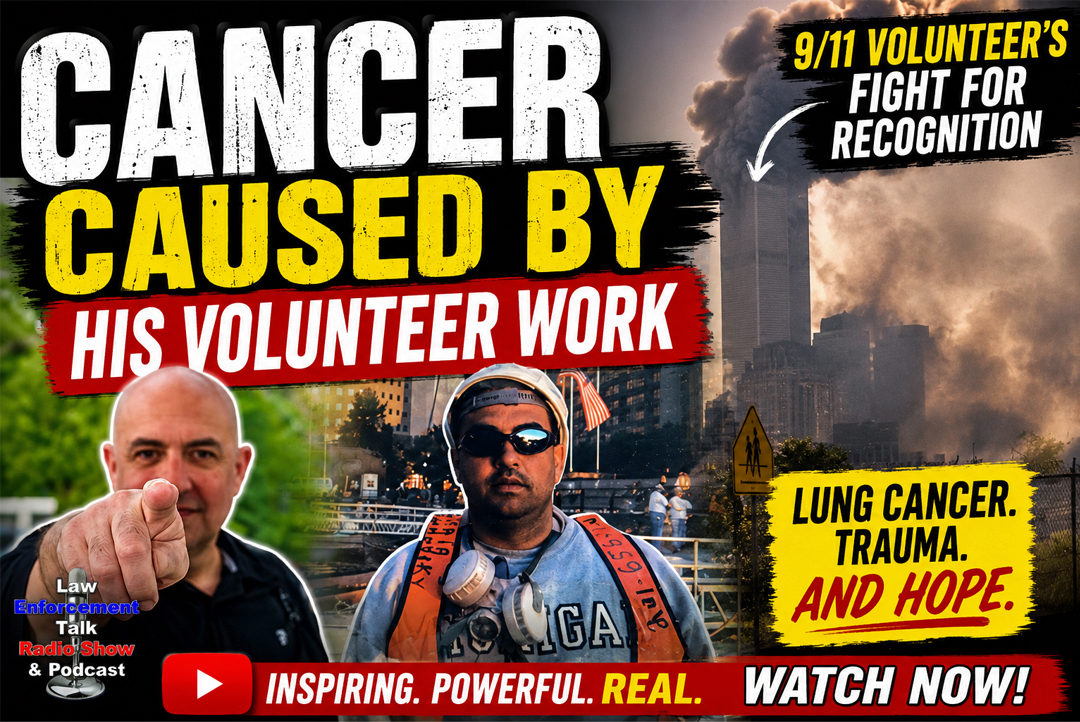
Facing a life-altering illness after an act of selfless service can be profoundly disorienting. Craig Sotkovsky's story, however, demonstrates how a 9/11 illness can become a powerful catalyst for discovering new meaning and purpose, transforming personal tragedy into a source of inspiration.
Learn about his remarkable journey and his fight for hope, listen to the full episode on the Law Enforcement Talk Radio Show and Podcast.
Key Takeaways
- Illness following heroic acts can lead to an identity crisis, necessitating a redefinition of self beyond physical limitations.
- Transforming personal trauma into advocacy offers a powerful avenue for finding renewed purpose and healing.
- Sharing one's experience of overcoming adversity can empower others to seek their own path to recovery and meaning.
- Finding purpose isn't about erasing the past, but about integrating its lessons into a meaningful future.
- The journey of finding purpose often involves embracing unexpected roles and contributions.
Redefining Self After a 9/11-Related Illness
Craig Sotkovsky, a skilled carpenter and mason, answered the call to help in the aftermath of the September 11th attacks. His volunteering at Ground Zero was an act of profound civic duty, driven by a desire to contribute to the recovery efforts. However, this selfless act carried an unforeseen and devastating consequence: a diagnosis of aggressive lung cancer decades later, a direct result of the toxic exposure he endured. This illness didn't just present a physical challenge; it threatened to unravel his very identity.
For years, Craig's sense of self was intrinsically linked to his ability to build, to create, and to provide through his physical labor. When a serious illness rendered him unable to perform the work that defined him, he faced an existential crisis. The transition from a physically capable volunteer and tradesman to a patient battling a life-threatening disease was jarring. He had to confront who he was when his established identity was challenged by his physical limitations and the constant threat to his health. This struggle to reconcile past capabilities with present realities is a common, yet often overlooked, aspect of dealing with severe or chronic illnesses, especially those stemming from extraordinary circumstances like 9/11.
The process of finding oneself again after such a profound shift is rarely straightforward. It involves acknowledging the loss of what was, grieving the limitations imposed by illness, and then actively seeking out new avenues for self-expression and contribution. Craig's journey highlights the critical importance of internal resilience – the capacity to adapt, to find meaning, and to rebuild a sense of self-worth that is not solely dependent on physical ability or former roles. It’s about understanding that while a diagnosis can change one’s circumstances, it doesn't have to extinguish one's essence or one’s capacity to lead a purposeful life.
Get more information listen to the full episode on the Law Enforcement Talk Radio Show and Podcast.
From Trauma to Advocacy: A New Path
The years following Craig's diagnosis were marked by immense personal struggle. The physical pain, the numerous surgeries, and the persistent uncertainty surrounding his health presented a formidable battle. Yet, within this crucible of adversity, Craig began to forge a new path. His experience, rooted in a selfless act that ultimately led to his own suffering, began to transform into a different kind of service: advocacy. This pivot from being a victim of circumstance to becoming a champion for others is a powerful testament to the human spirit's drive to find meaning even in the darkest times.
Recognizing that his story was not unique among 9/11 first responders and volunteers, Craig found a new calling in sharing his experience. By speaking out about his illness, its origins, and his ongoing fight, he became an advocate for awareness and support for those affected by 9/11-related diseases. This transition to advocacy offered more than just a way to occupy his time; it provided a profound sense of purpose. It allowed him to leverage his personal trauma into a force for good, contributing to a larger cause and connecting with a community of individuals who understood his unique challenges. The act of sharing his story became a form of healing, not just for himself, but for others who might have felt isolated in their struggles.
This shift highlights how personal adversity can be channeled into constructive action. Advocacy requires courage, resilience, and a deep commitment to a cause. For Craig, it meant embracing a role he never anticipated, one that stemmed directly from the health consequences of his past heroism. It demonstrated that even when physical capabilities are diminished, the capacity to make a difference and find purpose remains. His journey underscores the idea that purpose can be found in unexpected places, often emerging from the very challenges that seem designed to extinguish it. It's about finding a new way to serve, a new way to contribute, and a new way to define oneself beyond the confines of illness.
The Power of Sharing Your Story
Craig Sotkovsky's decision to share his journey publicly is a significant aspect of his story and a powerful example of how personal narratives can inspire and inform. In a world often focused on immediate news cycles, the long-term health consequences faced by 9/11 responders and volunteers can sometimes be overlooked. By recounting his experiences, Craig brings attention to a critical issue, raising awareness about the lasting impact of exposure to the toxic environment at Ground Zero.
His narrative serves multiple crucial functions. Firstly, it offers solace and validation to others who may be suffering from similar 9/11-related illnesses. Hearing Craig’s story can help them feel less alone, fostering a sense of community and shared understanding. Secondly, it educates the wider public and policymakers about the ongoing health crisis affecting this group of heroes. This increased awareness can drive support for necessary healthcare, compensation, and research. Finally, Craig’s resilience in the face of such profound challenges provides a powerful source of hope. His willingness to be vulnerable and open about his struggles, even when discussing a difficult diagnosis like lung cancer, demonstrates an extraordinary level of courage.
The act of storytelling itself can be therapeutic, allowing individuals to process their experiences, reframe their perspectives, and reclaim agency over their lives. For Craig, sharing his story likely became an integral part of his healing process, helping him to find meaning in his suffering and reaffirm his purpose. It’s a reminder that our stories have power, not only to inform but also to connect, to heal, and to inspire change. The legacy of 9/11 continues to unfold, and through individuals like Craig sharing their truths, the sacrifices and ongoing struggles of those who served are kept alive and honored.
Craig Sotkovsky's journey, from volunteer at Ground Zero to a survivor battling lung cancer, is a profound illustration of resilience and the enduring human capacity to find purpose. His story is a testament to the fact that even after facing immense personal hardship and life-altering illness, a meaningful path forward can be discovered, often through service and advocacy. To hear more about Craig's remarkable journey and his fight for hope, listen to the full episode on the Law Enforcement Talk Radio Show and Podcast.
Frequently Asked Questions
Q: What specific role did Craig Sotkovsky play at Ground Zero?
A: Craig Sotkovsky, a skilled carpenter and mason, volunteered with the bucket brigade during the initial days following the September 11th attacks, working directly in the debris field at Ground Zero.
Q: How did volunteering at Ground Zero lead to Craig's illness?
A: The collapse of the World Trade Center released a complex mixture of toxic substances. Craig's prolonged exposure to this hazardous dust and debris is directly linked to his subsequent diagnosis of aggressive lung cancer.
Q: What does it mean to find purpose after a 9/11-related illness?
A: Finding purpose after such an illness involves redefining one's identity beyond physical capabilities or past roles. It often includes advocacy, raising awareness, and connecting with others who share similar experiences, transforming personal hardship into a source of meaning and contribution.
Q: Is Craig's story unique among 9/11 responders and volunteers?
A: While Craig's specific journey is personal, his experience with 9/11-related illnesses is unfortunately not unique. Many first responders, volunteers, and survivors continue to face significant health challenges decades after the attacks.

Radio Show Host and Producer
Retired from the Baltimore Police Department at the rank of Sergeant. He was retired early due a permanent line of duty injury that occurred during an act of violence. The injury resulted in 3 surgeries, two steel plates and a fusion of his right wrist and thumb.
About 8 years after retiring from police work, he began a career in the audio broadcasting space. Starting with "audio-blogs" in 1999. Which progressed into a brokered once a week radio show and then led to broadcasting school.
After graduating he has been a full time FM radio personality and launched the Law Enforcement Today Show as a podcast in March of 2017. This was in a partnership with Law Enforcement Today's Robert Greenberg. The show was quickly recruited by radio and is a nationally syndicated radio show, broadcasting weekly on many US Radio Stations to millions of people.
The partnership with them ended in the Summer of 2023 and the show was renamed the Law Enforcement Talk Radio Show and Podcast.
The radio show is syndicated by Talk Media Network. Go to the Radio Page of the site for more information.

What It Was Like Being a Teenage Police Officer in 1980s South Africa