 Apple Podcasts Apple Podcasts
  Spotify Spotify
  Amazon Music Amazon Music
  Audacy Audacy
  Audible Audible
  Castbox Castbox
  Castro Castro
  Deezer Deezer
  Fountain Fountain
  Goodpods Goodpods
  iHeartRadio iHeartRadio
  PocketCasts PocketCasts
  Podcast Addict Podcast Addict
  Podchaser Podchaser
  Podverse Podverse
  Spreaker Spreaker
  Podurama Podurama Apple Podcasts Apple Podcasts Spotify Spotify Amazon Music Amazon Music Audacy Audacy Audible Audible Castbox Castbox Castro Castro Deezer Deezer Fountain Fountain Goodpods Goodpods iHeartRadio iHeartRadio PocketCasts PocketCasts Podcast Addict Podcast Addict Podchaser Podchaser Podverse Podverse Spreaker Spreaker Podurama Podurama
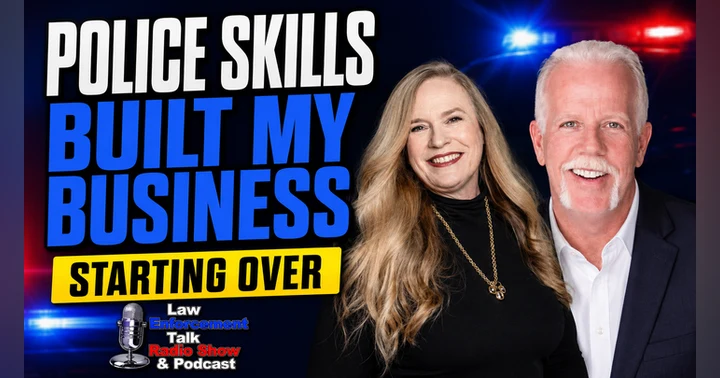
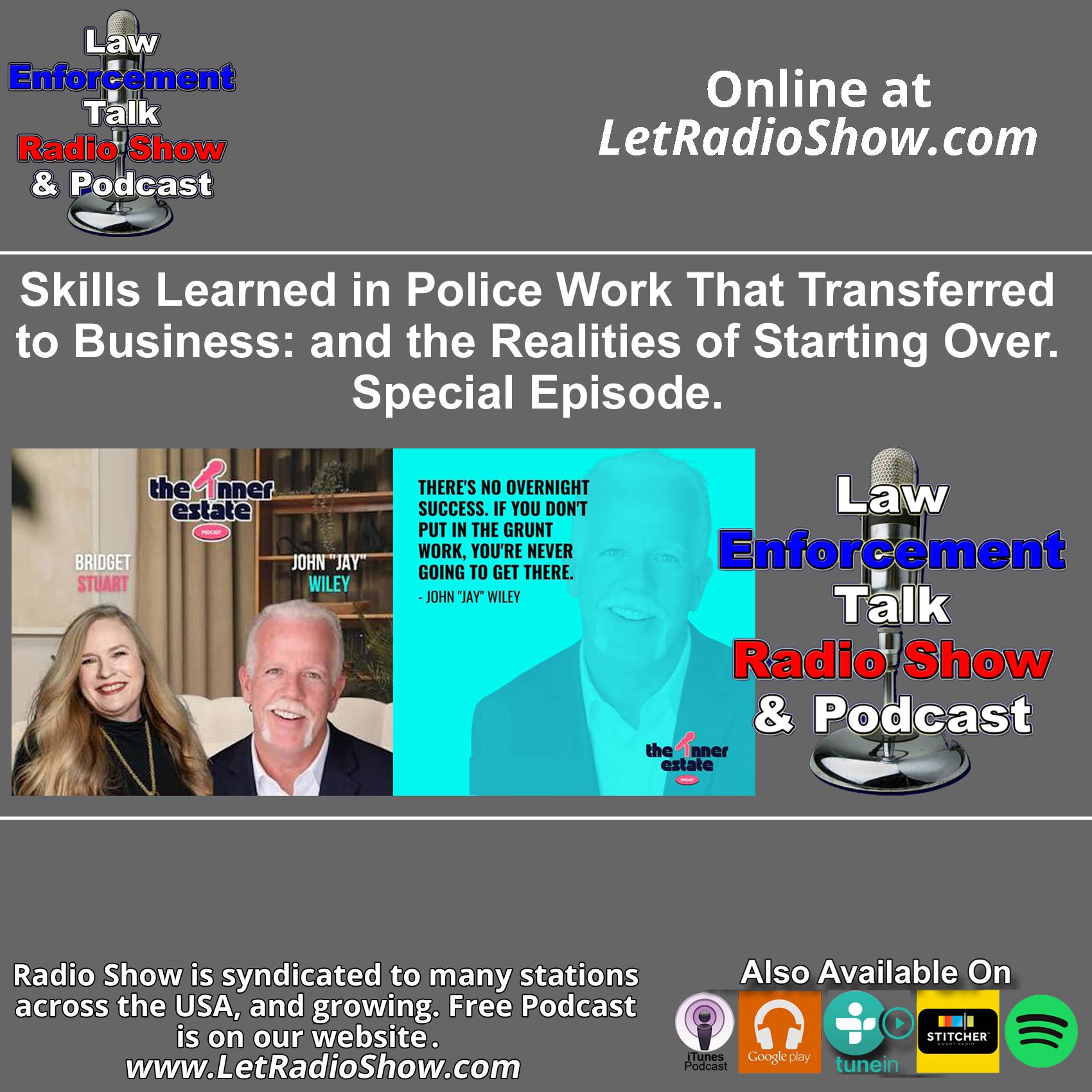
 Skills Learned in Police Work That Transferred to Business: and the Realities of Starting Over. Special Episode. What happens when the career a person believed would define the rest of his life ends in a single day? For John “Jay” Wiley, that question was not hypothetical. The Podcast is available for free on the Law Enforcement Talk Radio Show and Podcast website, also on Apple Podcasts, Spotify, YouTube, iHeartradio and most major podcast platforms. #LawEnforcementTalk #Free #Podcast #Radio
This is a special episode where John "Jay" Wiley is a guest on The INNER Estate Podcast. The Law Enforcement Talk Radio Show and Podcast social media like their Facebook , Instagram , LinkedIn , Medium and other social media platforms.
Wiley was serving as a Baltimore Police Sergeant when line-of-duty injuries, from an act of violence while on duty, forced him into medical retirement. He did not leave policing because he had discovered an exciting new career opportunity or carefully designed a retirement plan. His law enforcement career ended because his injuries made continuing impossible. Supporting articles about this and much more from Law Enforcement Talk Radio Show and Podcast in platforms like Medium , Blogspot and Linkedin.
The sudden change affected his health, income, identity, confidence, and sense of direction.
Yet that painful ending eventually became the beginning of an entirely new life.
Today, Wiley is the host of the nationally syndicated Law Enforcement Talk Radio Show and Podcast. The program is carried by 148 affiliate AM and FM radio stations across the United States, reaching markets with a combined population of approximately 48 million. Skills Learned in Police Work That Transferred to Business: and the Realities of Starting Over. Special Episode.
His story demonstrates how skills learned in police work can transfer to business, broadcasting, sales, leadership, interviewing, and digital media. More importantly, it reveals the realities of starting over when the future looks nothing like the life a person originally planned.
The conversation is available on the Law Enforcement Talk Radio Show and Podcast website, Facebook, Instagram, YouTube, Apple Podcasts, Spotify, iHeartRadio, and most other major podcast platforms, where audiences continue discovering firsthand accounts from those who have lived them.
When Line-of-Duty Injuries Ended His Police Career
Police work is more than a job for many officers. It becomes part of their identity.
The badge represents authority and responsibility, but it also represents membership in a close professional community. Officers develop routines, relationships, and a sense of purpose built around protecting others.
When injuries forced Wiley into medical retirement, he gained far more than a reduced paycheck.
He lost the career he expected to continue. He lost the familiar structure of police work and the identity he had developed as a Baltimore Police Sergeant.
That kind of transition can be difficult for people outside law enforcement to understand. Friends may see retirement as freedom, but forced medical retirement can feel more like something valuable was taken away. Skills Learned in Police Work That Transferred to Business: and the Realities of Starting Over. Special Episode. The episode is available across major platforms including their website, Apple Podcasts, Spotify, YouTube, with highlights shared across their Facebook, Instagram, and LinkedIn profiles.
Wiley confronted a difficult reality: the career that had helped define him was over, but he still had to determine what came next.
His experience raises a question faced by many injured police officers, military veterans, first responders, and professionals whose careers end unexpectedly:
“Who are you when you can no longer do the job that became part of your identity?”
Finding an answer required Wiley to separate his abilities from his former title.
He was no longer working as a police sergeant, but he had not lost the experience, judgment, communication skills, discipline, and resilience developed during his years in law enforcement.
The Realities of Starting Over
Starting over is often presented as an inspiring adventure.
The reality is usually far less glamorous.
Reinvention can involve financial uncertainty, damaged confidence, unfamiliar technology, rejection, and the uncomfortable experience of becoming a beginner again. Skills Learned in Police Work That Transferred to Business: and the Realities of Starting Over. Special Episode. Available for free on the Law Enforcement Talk Radio Show and Podcast website, also on Apple Podcasts, Spotify, Youtube and most major Podcast networks.
Wiley had already reached a position of leadership within the Baltimore Police Department. After medical retirement, he had to enter new industries where his former rank did not automatically establish his value.
He had to learn new systems, expectations, and professional language. He also had to prove that his police experience could benefit employers and audiences outside law enforcement.
That required humility.
Starting over did not mean abandoning everything he learned as a police officer. It meant discovering how those skills could be applied in a completely different setting.
Wiley’s journey illustrates a truth that many people eventually confront:
“A career can end without a person’s value ending with it.”
Why He Moved Into Sales After Law Enforcement
After leaving police work, Wiley moved into sales.
At first glance, law enforcement and sales might appear to have very little in common. One involves enforcing laws and responding to emergencies, while the other involves understanding customers and presenting solutions.
But successful police officers and successful sales professionals rely on many of the same abilities.
Both must communicate with people from different backgrounds. Both must quickly evaluate personalities and situations. Both must ask effective questions, listen carefully, recognize concerns, and establish trust. Skills Learned in Police Work That Transferred to Business: and the Realities of Starting Over. Special Episode. The Podcast is available for free on the Law Enforcement Talk Radio Show and Podcast website, also on Apple Podcasts, Spotify, YouTube, iHeartradio and most major podcast platforms.
Police work taught Wiley to speak with people during some of the most stressful moments of their lives. He learned how tone, timing, body language, and word choice could change the direction of an encounter.
Those lessons transferred naturally into business.
Sales was not simply about talking. It was about listening closely enough to understand what another person actually needed.
Wiley discovered that some of the most valuable skills learned in police work had little to do with arrests or criminal investigations. They involved human behavior.
“The ability to listen can be more valuable than the ability to speak.”
That principle served him in sales and later became essential to his work as a radio host and podcast interviewer.
Communication Skills Police Officers Bring Into Business
Police officers regularly interact with victims, suspects, witnesses, attorneys, business owners, medical personnel, families, and members of the public.
Each conversation requires a different approach.
An officer may need to calm an angry person, comfort a grieving parent, question a reluctant witness, explain a complicated procedure, or persuade someone to make a safer decision.
That work develops communication skills that can transfer to nearly every business environment.
Former officers may bring strengths such as:
Active listening
Conflict management
Clear verbal communication
Emotional control
Situational awareness
Rapid decision-making
Leadership under pressure
Team coordination
Detailed documentation
Public speaking
Interviewing and questioning
Recognizing nonverbal communication
These abilities can be valuable in sales, security consulting, management, customer service, media, training, and entrepreneurship. Skills Learned in Police Work That Transferred to Business: and the Realities of Starting Over. Special Episode. The Law Enforcement Talk Radio Show and Podcast continues bringing listeners real conversations from the front lines of crime, policing, trauma, survival, and healing.
Wiley’s success demonstrates why former police officers should not limit themselves to jobs that look like traditional law enforcement.
The title may change, but the underlying skills remain valuable.
Beginning a Broadcasting Career at Age 44
Wiley began working in radio broadcasting at age 44.
Many people might assume that entering media at that age would be too difficult. Broadcasting rewards experience, but it also requires technical knowledge, performance skills, and confidence behind a microphone.
Wiley had to learn how to communicate with an audience he could not see.
Speaking into a microphone is different from having a normal conversation. The host must maintain energy, control pacing, organize thoughts, and make listeners feel included.
Confidence did not appear automatically. It developed through repetition.
Wiley learned by working, making adjustments, and continuing to show up. He gradually became more comfortable with his voice and his role as a broadcaster.
His career challenges the belief that professional reinvention has an expiration date.
“Starting later does not mean starting too late.”
People often postpone a new goal because they believe everyone else has a head start. Wiley’s journey demonstrates that age can also bring valuable advantages: maturity, experience, patience, perspective, and a deeper understanding of people. Skills Learned in Police Work That Transferred to Business: and the Realities of Starting Over. Special Episode. Supporting articles about this and much more from Law Enforcement Talk Radio Show and Podcast in platforms like Medium , Blogspot and Linkedin.
Knowing His Role Behind the Microphone
Police officers are trained to take control when necessary. Radio hosts and interviewers must develop a different discipline.
A powerful interview is not primarily about the host.
It is about creating the conditions that allow the guest’s story to emerge.
Wiley learned the importance of knowing his role whenever he stepped behind the microphone. He needed to guide the conversation, ask thoughtful questions, listen for important details, and recognize when to stop talking.
That final skill can be especially difficult.
Some interviewers focus so heavily on their next question that they miss what the guest is actually saying. Wiley’s police experience helped him listen closely, notice changes in tone, and pursue important details.
His goal became making the program about the people he served.
That included police officers, first responders, military veterans, crime survivors, family members, and people rebuilding their lives after trauma.
“The strongest interviews happen when the guest feels heard.”
The host may guide the discussion, but the guest’s experience remains at the center.
Launching the Law Enforcement Talk Radio Show and Podcast
After years of developing his broadcasting skills, Wiley launched the Law Enforcement Talk Radio Show and Podcast in 2017.
The program focuses on real stories involving law enforcement, true crime, trauma recovery, first responders, crime survivors, and resilience after violence, loss, and life-changing events.
The interviews go beyond headlines and statistics.
They explore the human consequences of police work and violent crime. Guests discuss traumatic calls, shootings, injuries, investigations, wrongful accusations, family struggles, recovery, leadership, and life after the badge. Skills Learned in Police Work That Transferred to Business: and the Realities of Starting Over. Special Episode.
The show is distributed through Apple Podcasts, Spotify, YouTube, iHeartradio and other podcast platforms. Its interviews are also promoted across Facebook, Instagram, and other social media channels.
Wiley’s work combines the different stages of his career.
His police background helps him understand law enforcement culture. His sales experience helps him communicate value and build professional relationships. His broadcasting work helps him transform deeply personal conversations into compelling programs.
What initially appeared to be separate careers ultimately became parts of the same journey.
Turning a Podcast Into a Nationally Syndicated Radio Program
Launching a podcast is relatively easy. Building one that lasts and expanding it into a nationally syndicated radio program is much more difficult.
Wiley did not rely on one viral video or a sudden burst of attention.
He built the program through consistent work.
That meant regularly preparing interviews, recording episodes, editing content, promoting guests, developing relationships, learning social media, and improving the show’s distribution.
The Law Enforcement Talk Radio Show and Podcast eventually grew into a nationally syndicated program heard on 148 affiliate AM and FM radio stations across the United States. Those stations serve markets with a combined population of approximately 48 million.
That growth did not happen overnight.
It came from treating broadcasting as a profession rather than waiting for a lucky break.
“Consistency builds what viral success can only briefly expose.”
A viral post can create an impressive spike in attention, but lasting growth requires a library of meaningful content and a reason for audiences to return.
Wiley concentrated on producing stories that remained valuable long after their original publication date.
An interview about trauma, recovery, courage, or rebuilding a life can continue reaching people for years. Someone may discover an episode months after it was released and hear exactly the message they needed at that moment.
Learning Social Media and Technology Later in Life
Modern broadcasting requires far more than speaking into a microphone.
Hosts must often understand websites, podcast distribution, video, audio editing, search engines, email, Facebook, Instagram, YouTube, Apple Podcasts, Spotify, and other digital platforms. Skills Learned in Police Work That Transferred to Business: and the Realities of Starting Over. Special Episode. The episode is available across major platforms including their website, Apple Podcasts, Spotify, YouTube, with highlights shared across their Facebook, Instagram, and LinkedIn profiles.
Wiley had to learn many of these skills later in life.
That process did not always come naturally. Technology changes rapidly, and every platform has its own terminology, algorithms, and best practices.
The lesson was not that one person must master everything alone.
It was that successful reinvention requires a willingness to learn, and the wisdom to recognize when someone else can help.
Hiring the right person can shorten the learning curve. An experienced professional may accomplish in hours what a beginner struggles with for weeks.
That does not remove the need to understand the business. It allows the business owner to focus more attention on the work that only he or she can do.
For Wiley, that meant interviewing guests, telling stories, building relationships, and creating programs that served the audience.
“Knowing when to ask for help is a business skill, not a weakness.”
The Shared Love of Music, Radio, and Vinyl
Wiley’s journey also reflects the enduring power of audio.
His shared appreciation of music, radio, and vinyl with Bridget connects the traditional world of broadcasting with modern podcasting.
Vinyl records require listeners to slow down and experience the program differently. Traditional radio creates a sense of connection between the person behind the microphone and people listening across a wide geographic area.
Podcasts extend that connection by allowing audiences to listen on demand.
The technology has changed, but the power of the human voice remains.
A sincere conversation can reach listeners through an AM or FM radio station, Apple Podcasts, Spotify, YouTube, Facebook, or Instagram. The delivery method may differ, but audiences still respond to authenticity.
Excellence in Media Award
Wiley’s work received national recognition when he was honored with an Excellence in Media Award from the National Law Enforcement Officers Memorial Fund.
The award represented more than professional achievement.
It recognized his commitment to sharing stories connected to law enforcement officers, first responders, survivors, and families affected by crime and trauma.
Awards can validate the quality of a person’s work, but they rarely show the years of uncertainty, repetition, and quiet effort behind the achievement.
Wiley’s broadcasting success was built after the unexpected end of his police career.
The recognition demonstrated how a person forced to leave one profession can still make a significant contribution through another. Skills Learned in Police Work That Transferred to Business: and the Realities of Starting Over. Special Episode.
Everybody Has a Story Worth Telling
At the center of Wiley’s work is a simple belief:
“Everybody has a story worth telling.”
Not every guest is famous. Not every story has received national media attention. Some involve moments known only to the people who experienced them.
Yet those stories can still change lives.
A police officer discussing trauma may help another officer seek treatment. A survivor describing recovery may give hope to someone trapped in a similar situation. A family member discussing loss may help another family feel less alone.
Effective storytelling is not about turning people into entertainment. It is about treating their experiences with respect and helping others understand what those experiences cost.
That focus has helped the Law Enforcement Talk Radio Show and Podcast create content that continues reaching audiences across radio, podcast platforms, and social media.
Career Reinvention Is Possible at Any Age
Wiley’s story does not suggest that starting over is easy.
Forced retirement affected his health, finances, identity, and sense of direction. Entering sales required adaptation. Beginning in radio at age 44 required courage. Building a podcast and turning it into a nationally syndicated program required years of consistent work.
His journey shows that an unexpected ending does not have to become the end of a person’s useful life.
Skills learned in police work transferred to business because the most valuable lessons were not limited to wearing a badge. They included communication, listening, leadership, preparation, resilience, and service.
Those skills helped Wiley rebuild.
Today, John J. “Jay” Wiley is a retired Baltimore Police Sergeant, nationally syndicated radio host, podcaster, interviewer, and media professional. He has worked in radio for more than 20 years and has hosted the Law Enforcement Talk Radio Show and Podcast since 2017. Skills Learned in Police Work That Transferred to Business: and the Realities of Starting Over. Special Episode. Follow the Law Enforcement Talk Radio Show and Podcast on their website, on Facebook, Instagram, YouTube, Apple Podcasts, Spotify, and other social media platforms for more compelling interviews with police officers, investigators, authors, and first responders who reveal the realities behind the badge.
His career did not follow the path he originally expected.
It became something entirely different, and far larger than he could have imagined on the day his police career ended.
Wiley’s experience leaves a powerful message for anyone facing an unwanted transition: “Starting over does not erase the life that came before it. It gives those hard-earned lessons somewhere new to go.”
Learn and get access to money saving tips and how to increase your net worth at www.LetSavings.com
Download the Free Ebook about ways and tips to improve your health. You can get the ebook for free at www.LetHealthy.com
Get the Free Clubhouse App, it is Drop In Social Audio. Think of it as your own talk radio show on your phone, and best of all it is free. Be sure to look for me and follow me, that’s John J Wiley or @letradioshow you can do all that here.
The Law Enforcement Talk Radio Show and Podcast social media like their Facebook , Instagram , LinkedIn , Medium and other social media platforms.
You can contact John J. “Jay” Wiley by email at Jay@letradio.com , or learn more about him on their website .
Find a wide variety of great podcasts online at The Podcast Zone Facebook Page , look for the one with the bright green logo.
Be sure to check out our website .
Listen to the Law Enforcement Talk Radio Show and Podcast on their website, Facebook, Instagram, YouTube, Apple Podcasts, Spotify, iHeartRadio, and most major podcast platforms.
Be sure to follow us on X , Instagram , Facebook, Pinterest, Linkedin and other social media platforms for the latest episodes and news.
Listeners can find the show across Apple, Spotify, YouTube, Facebook, Instagram, and other podcast and social media platforms.
Skills Learned in Police Work That Transferred to Business: and the Realities of Starting Over. Special Episode.
Attributions
Wikipedia
Amazon
National Law Enforcement Officers Memorial
Hosted by Simplecast, an AdsWizz company. See pcm.adswizz.com for information about our collection and use of personal data for advertising.