
 Apple Podcasts Apple Podcasts
  Spotify Spotify
  Amazon Music Amazon Music
  Audacy Audacy
  Audible Audible
  Castbox Castbox
  Castro Castro
  Deezer Deezer
  Fountain Fountain
  Goodpods Goodpods
  iHeartRadio iHeartRadio
  PocketCasts PocketCasts
  Podcast Addict Podcast Addict
  Podchaser Podchaser
  Podverse Podverse
  Spreaker Spreaker
  Podurama Podurama Apple Podcasts Apple Podcasts Spotify Spotify Amazon Music Amazon Music Audacy Audacy Audible Audible Castbox Castbox Castro Castro Deezer Deezer Fountain Fountain Goodpods Goodpods iHeartRadio iHeartRadio PocketCasts PocketCasts Podcast Addict Podcast Addict Podchaser Podchaser Podverse Podverse Spreaker Spreaker Podurama Podurama
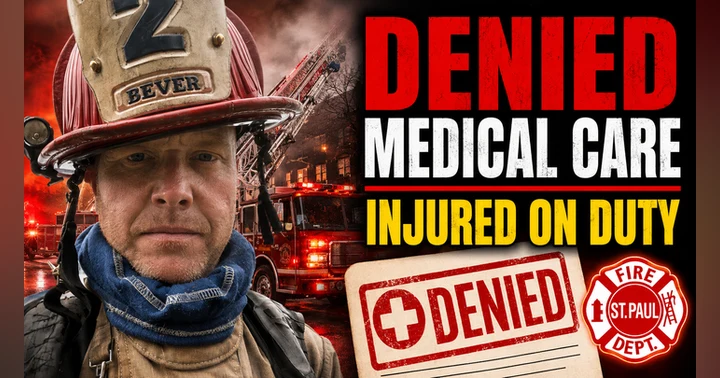
 Denied Medical Care After a Firefighter’s Line-of-Duty Injuries: It Happens More Often Than You Think. Retired St. Paul Fire Captain Tom Bever dedicated his career to protecting people during their most frightening moments. When homes and businesses were burning, he ran toward the danger. When lives and property were threatened, he accepted the risks that came with wearing the uniform. The Podcast is available for free on the Law Enforcement Talk Radio Show and Podcast website, also on Apple Podcasts, Spotify, YouTube, iHeartradio and most major podcast platforms. #LawEnforcementTalk #Free #Podcast #Radio
But after Bever suffered serious line-of-duty injuries while fighting a commercial fire, he said the system he trusted to care for him became another battle, one that eventually cost him his career, his health, his financial security, and his family’s home. The Law Enforcement Talk Radio Show and Podcast social media like their Facebook , Instagram , LinkedIn , Medium and other social media platforms.
Bever’s experience raises a troubling question: What happens when a firefighter gets injured while protecting the public but is denied the medical care needed to recover? Supporting articles about this and much more from Law Enforcement Talk Radio Show and Podcast in platforms like Medium , Blogspot and Linkedin.
Denied medical care following a firefighter’s line-of-duty injuries happens more often than many people think. Bever’s heartbreaking story reveals the physical, emotional, and financial consequences that can follow when necessary treatment is delayed, disputed, or classified as “elective.”
Today, the former captain lives with extensive nerve damage after undergoing surgeries on his shoulder, hip, and both knees. He medically retired from the St. Paul Fire Department in 2024, ending the career he loved after approximately 12 years of service.
Tom Bever shares the full story as a guest on the Law Enforcement Talk Radio Show and Podcast, available on Apple, Spotify, YouTube, and other major podcast platforms. The interview is also featured across Facebook and Instagram.
A Firefighter Injured in the Line of Duty
Bever’s life changed in March 2020, during the early and uncertain days of the COVID-19 pandemic.
He was working at a commercial fire in St. Paul, Minnesota, when icy conditions caused him to fall from a ladder. Bever was serving in a command role on the fireground, and despite being injured around midnight, he remained at the scene and continued working until the end of his shift at 8 a.m. Denied Medical Care After a Firefighter’s Line-of-Duty Injuries: It Happens More Often Than You Think. The episode is available across major platforms including their website, Apple Podcasts, Spotify, YouTube, with highlights shared across their Facebook, Instagram, and LinkedIn profiles.
“We were fighting a commercial fire, and I fell from the ladder. It was icy,” Bever recalled. “I was working the Delta Division as command, and I wasn’t able to leave the fire, so I got hurt around midnight and worked the rest of my shift until 8 a.m.”
His decision to remain at the fire reflected the commitment found throughout the first-responder community. Firefighters are trained to complete the mission, protect their crews, and serve the public, even when they are hurt.
Unfortunately, Bever could not have known how serious his injuries were or how difficult it would become to obtain treatment.
After finishing his shift, he attempted to seek emergency medical care. Under ordinary circumstances, a firefighter injured in a fall would expect to be evaluated promptly, especially when the accident happened during an active fire.
Instead, Bever said he encountered another obstacle.
Turned Away From the Emergency Room
Bever initially wanted to visit one of the hospitals close to St. Paul. However, hospitals were operating under COVID-era restrictions and diversions. He eventually traveled to an emergency room in Woodbury, still wearing his firefighting clothing and carrying the unmistakable smell of smoke from the commercial fire. Available for free on the Law Enforcement Talk Radio Show and Podcast website, also on Apple Podcasts, Spotify, Youtube and most major Podcast networks.
“I wanted to go to the closest hospital. We had lots of them in St. Paul, but unfortunately, because of COVID, they were on divert,” he explained. “So I ended up going to a Woodbury emergency room, and when I got there, I still had my jumpsuit and smelled of smoke and fire, and they turned me away.”
For Bever, the rejection was difficult to comprehend. He had been injured while serving the public and arrived directly from a fire scene, yet he said he could not receive the immediate evaluation he needed. Denied Medical Care After a Firefighter’s Line-of-Duty Injuries: It Happens More Often Than You Think.
“I was kind of shocked by that,” he said. “So I had to call my chief and explain what was happening.”
According to Bever, his chief intervened and contacted the medical facility.
“He called and told them, ‘Hey, this guy literally just got hurt in the line of duty. You need to help him,’” Bever recalled.
That initial struggle to obtain medical attention foreshadowed what he said would become years of disputes, delays, denials, surgeries, chronic pain, and financial hardship.
Serious Injuries That Went Undiagnosed and Untreated
A fall from a ladder can cause damage throughout the body, particularly when a firefighter is wearing heavy protective equipment. The effects may involve the shoulders, hips, knees, back, head, and nervous system.
Bever said multiple serious injuries were not properly diagnosed and treated following the accident. In the years after the fall, he underwent four surgeries involving his shoulder, hip, and both knees. He continues to live with significant nerve damage. The Podcast is available for free on the Law Enforcement Talk Radio Show and Podcast website, also on Apple Podcasts, Spotify, YouTube, iHeartradio and most major podcast platforms.
His doctors reportedly determined that the surgeries were medically necessary. Bever said, however, that officials classified the procedures as “elective,” creating barriers within the workers’ compensation process.
“Over the past four years, I’ve had four surgeries and had to fight tirelessly for the medical care I was promised, only to be met with constant obstacles and denials,” he said.
“Even though my injuries were sustained in the line of duty and my doctors said the surgeries were necessary, state officials labeled them ‘elective,’ and my workers’ comp claims were denied.”
For Bever, these were not optional procedures chosen for convenience. They were attempts to repair injuries he said occurred while fighting a fire and serving the citizens of St. Paul. Denied Medical Care After a Firefighter’s Line-of-Duty Injuries: It Happens More Often Than You Think.
The dispute ultimately left Bever and his family facing overwhelming medical bills.
“This left my family and me responsible for the overwhelming medical debt from injuries I sustained while protecting others,” he said.
The Loss of a Firefighting Career
Being a firefighter is rarely viewed as simply a job. For many, it becomes a calling, a community, and a central part of their identity.
Firefighters train together, eat together, respond to emergencies together, and depend upon one another in dangerous and unpredictable conditions. When injuries abruptly end that career, the loss can extend far beyond a paycheck.
Bever retired in 2024 because the cumulative damage prevented him from continuing to serve. His retirement brought an end to approximately 12 years with the St. Paul Fire Department, including service as a captain. The Law Enforcement Talk Radio Show and Podcast continues bringing listeners real conversations from the front lines of crime, policing, trauma, survival, and healing.
“This has been the most difficult challenge I have ever faced,” Bever said. “The loss of a career I loved, and the city I thought would take care of me, has put my family in financial ruin.”
His statement captures the sense of betrayal that can arise when injured first responders believe the agencies or systems they served have abandoned them.
The badge, rank, fire station, camaraderie, and daily mission can disappear almost overnight. Yet the injuries, medical appointments, insurance disputes, and household bills remain.
“It’s a weight that’s hard to put into words,” Bever said.
Fighting Three Battles at Once
Physical recovery is demanding under the best circumstances. It becomes far more difficult when an injured person is also battling the loss of a career and the possibility of financial collapse.
Bever described his struggle as a war on three connected fronts.
“It’s nearly impossible to heal physically when you’re fighting a battle on three fronts: the pain of the injuries, the mental toll of losing your calling, and the constant stress of financial survival,” he explained.
Each problem intensifies the others.
Chronic pain can interfere with sleep, concentration, mobility, and emotional health. Losing a meaningful career can create grief and uncertainty. Medical debt adds fear about housing, food, transportation, and the family’s future. Supporting articles about this and much more from Law Enforcement Talk Radio Show and Podcast in platforms like Medium , Blogspot and Linkedin.
“These struggles are all connected, making true recovery feel out of reach,” Bever said.
His experience shows why line-of-duty injuries cannot be examined as isolated medical events. The consequences can spread through every part of a first responder’s life.
He and His Family Now Live In A Barn
As Bever’s medical bills grew, his family faced a decision no injured firefighter should have to make.
Bever said he and his family now live in a barn as they attempt to manage the financial damage.
“We’ve already had to make the heartbreaking decision to sell our home just to try to keep up, but the bills are overwhelming,” he said.
The image is difficult to ignore: A fire captain who spent years protecting other people’s homes lost his own while attempting to pay for treatment related to injuries sustained on duty.
The financial burden has not only changed where the family lives. It has also affected the time and experiences Bever can share with the people closest to him. Denied Medical Care After a Firefighter’s Line-of-Duty Injuries: It Happens More Often Than You Think.
The Hidden Cost at Home
Before his injuries, Bever described himself as an active husband and father. Outdoor activities such as hiking with his wife and fishing with his sons were important parts of their family life.
Now, even those simple moments can be physically agonizing.
“This burden affects my home life every day,” Bever said. “I’ve always been an active husband and father, but now, even simple things like hiking with my wife or fishing with my boys have become agonizing challenges.”
The losses associated with a line-of-duty injury are not always visible on an X-ray or listed in a workers’ compensation file. They include missed family outings, altered relationships, lost independence, disrupted plans, and the emotional pain of being unable to participate in activities once taken for granted.
“It breaks my heart not to have these moments with them, because the energy required to fight these battles leaves so little left for the things that matter most,” Bever said.
Behind every injured firefighter or police officer is often a family carrying part of the burden. Spouses may become caregivers while also managing finances and household responsibilities. Children see a parent in pain and watch the family’s stability change. The show is distributed through Apple Podcasts, Spotify, YouTube, iHeartradio and other podcast platforms. Its interviews are also promoted across Facebook, Instagram, and other social media channels.
These are among the hidden costs of denied or delayed medical care.
It Happens More Often Than Many People Realize
Bever’s story is intensely personal, but it reflects broader concerns raised by injured police officers, firefighters, emergency medical personnel, and their advocates.
First responders can encounter complicated workers’ compensation systems at the very time they are physically and emotionally least prepared to fight them. Necessary treatment may be delayed while paperwork is reviewed, causation is disputed, or authorization is debated.
Physical injury claims can become complicated when insurers, third-party administrators, municipalities, or government agencies question the necessity of treatment or argue that a condition existed before the incident. Denied Medical Care After a Firefighter’s Line-of-Duty Injuries: It Happens More Often Than You Think. The episode is available across major platforms including their website, Apple Podcasts, Spotify, YouTube, with highlights shared across their Facebook, Instagram, and LinkedIn profiles.
Even laws designed to protect first responders do not always prevent disputes. Presumption laws may connect certain cancers, respiratory illnesses, cardiac conditions, or mental health injuries to firefighting or police work, but individual claims can still be contested.
The result is a system that injured first responders may experience as combative rather than supportive.
When “Elective” Does Not Mean Unnecessary
The word “elective” can be misleading in conversations about medical care.
In many medical contexts, an elective procedure is simply one that can be scheduled in advance rather than performed immediately as an emergency. It does not automatically mean the surgery is cosmetic, unnecessary, or optional from the patient’s perspective.
A procedure can be considered elective while still being essential to relieving pain, restoring mobility, preventing further damage, or allowing someone to return to work.
For injured first responders like Bever, that distinction can carry life-changing consequences. When a medically recommended procedure is delayed or denied because it is categorized as elective, the patient may remain in pain while the underlying condition worsens.
For Bever, the disagreement was not an abstract debate over terminology. It affected his ability to heal, work, support his family, and remain in the home they once shared.
A Promise to Those Who Protect the Public
Communities ask firefighters to enter burning buildings, climb icy ladders, work in extreme heat, inhale dangerous contaminants, and make critical decisions in chaotic conditions. Police officers, paramedics, and other first responders accept similar risks.
In return, those public servants reasonably expect access to medical care when they are injured in the line of duty.
Bever’s story challenges communities, government leaders, agencies, insurers, and workers’ compensation administrators to examine whether that promise is being kept. Listeners can hear the full interview through Apple, Spotify, YouTube, and other major Podcast platforms. Additional stories, photographs, and episode updates are available through Facebook, Instagram, LinkedIn, and the show’s other social media channels.
No system can automatically approve every claim without review. However, accountability and review should not create needless delays that worsen injuries or push legitimately injured public servants into financial ruin. Denied Medical Care After a Firefighter’s Line-of-Duty Injuries: It Happens More Often Than You Think.
Tom Bever Tells His Heartbreaking Story
Tom Bever did not expect a fall from an icy ladder to begin a fight that would continue for years. He did not expect to lose the firefighting career he loved, undergo four surgeries, live with nerve damage, sell his family’s home, and struggle to pay medical bills.
His story is about far more than one accident. It is about what can happen after the emergency is over and the injured firefighter is left to navigate a complex system alone.
Bever now speaks publicly because he wants others to understand that denied medical care after a firefighter’s line-of-duty injuries happens more often than many people think.
The full interview with retired St. Paul Fire Captain Tom Bever is featured on the Law Enforcement Talk Radio Show and Podcast. Listeners can hear his story through Apple, Spotify, YouTube, and other major podcast platforms, with additional information available on Facebook and Instagram.
His account deserves attention, not only because of what happened to him, but because the next injured firefighter, police officer, or first responder could face the same battle.
They dedicate their careers to answering calls for help.
When they become the ones who need help, the system should answer theirs.
Download the Free Ebook about ways and tips to improve your health. You can get the ebook for free at www.LetHealthy.com
Listen to the Law Enforcement Talk Radio Show and Podcast on their website, Facebook, Instagram, YouTube, Apple Podcasts, Spotify, iHeartRadio, and most major podcast platforms.
Get the Free Clubhouse App, it is Drop In Social Audio. Think of it as your own talk radio show on your phone, and best of all it is free. Be sure to look for me and follow me, that’s John J Wiley or @letradioshow you can do all that here.
The Law Enforcement Talk Radio Show and Podcast social media like their Facebook , Instagram , LinkedIn , Medium and other social media platforms.
You can contact John J. “Jay” Wiley by email at Jay@letradio.com , or learn more about him on their website .
Find a wide variety of great podcasts online at The Podcast Zone Facebook Page , look for the one with the bright green logo.
Be sure to check out our website .
Be sure to follow us on X , Instagram , Facebook, Pinterest, Linkedin and other social media platforms for the latest episodes and news.
Listeners can find the show across Apple, Spotify, YouTube, Facebook, Instagram, and other podcast and social media platforms.
Learn and get access to money saving tips and how to increase your net worth at www.LetSavings.com
For a community of like minded individuals from all over the planet that want to improve their lives, relationships and business. Learn what they need, and develop the life that they've always wanted.
We host weekly rooms on the Clubhouse Drop In Social Audio App. The App and Your Confident Life rooms are free of charge. You can get more information about Clubhouse and Your Confident Life for free here.
Denied Medical Care After a Firefighter’s Line-of-Duty Injuries: It Happens More Often Than You Think.
Attributions
Wikipedia
Hosted by Simplecast, an AdsWizz company. See pcm.adswizz.com for information about our collection and use of personal data for advertising.