Evolution of Police Body Armor: Why 1970s Undercover Narcotics Agents Worked Without Vests
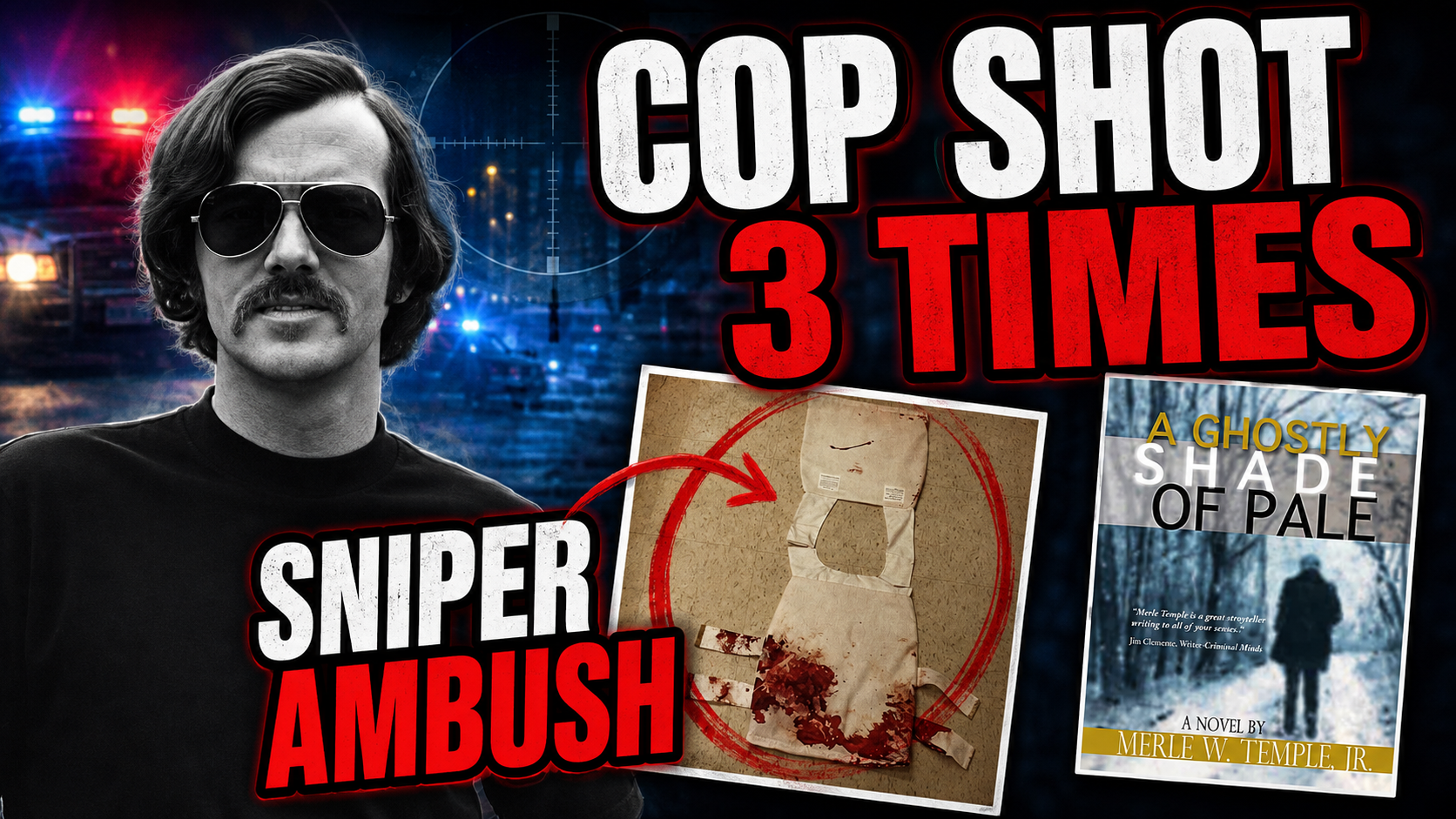
Evolution of Police Body Armor: Why 1970s Undercover Narcotics Agents Worked Without Vests. In the mid-1970s,rarely included ballistic protection. Before bulletproof vests became mandatory police gear, early drug agents routinely faced armed suspects, ambush scenarios, and sniper fire with zero torso protection, relying almost entirely on situational awareness and raw survival instincts.
Key Takeaways
- Bulletproof vests were not standard issue for police officers and narcotics agents during the 1970s.
- Agencies often had limited access to body armor, forcing units to share a small number of vests among multiple officers.
- Undercover drug enforcement operations frequently lacked immediate backup, tactical support, and modern communication tools.
- A last-minute decision to retrieve rare protective vests prevented a fatal outcome during a violent sniper ambush in Mississippi.
- The historical lack of protective equipment heavily shaped the high-risk reality of America's early war on drugs.
The Reality of 1970s Law Enforcement Equipment
When the national war on drugs escalated in the 1970s, federal, state, and local agencies found themselves thrust into a new kind of battleground. For officers on the front lines, the technological and tactical resources available today simply did not exist. Radios were bulky and unreliable, GPS tracking was nonexistent, and specialized tactical units were rarely deployed for routine buy-bust operations.
Perhaps the most glaring deficiency in officer safety equipment during this era was the absence of modern body armor. While woven ballistic materials were beginning to evolve, they had not yet been widely adopted or mandated across police departments. For narcotics agents like Merle Temple with the Mississippi Bureau of Narcotics, working undercover meant stepping into volatile, unpredictable environments completely unprotected against firearms.
The Scarcity of Ballistic Vests
In 1976, protective vests were considered specialized luxury items rather than fundamental safety gear. Many departments simply lacked the budget to outfit their personnel, while others remained skeptical of the weight and practicality of early designs. Temple's unit, for example, had access to only two protective vests for the entire team.
This scarcity meant that officers had to make dangerous calculations before executing high-risk warrants or meeting confidential informants. Most of the time, the vests stayed behind in the office or vehicle, and agents relied strictly on stealth, persuasion, and luck to survive their shifts.
The Sniper Ambush That Changed Everything
The true danger of operating without body armor came to a head during a planned drug arrest in Mississippi. Temple and his team were preparing to execute a buy-bust operation against suspected drug dealers. Knowing the volatile nature of the suspects, tension was already high. However, moments before departing, Temple experienced an overwhelming intuition—what he later described as a divine warning—compelling him to turn back and secure the unit's scarce bulletproof vests.
Hesitant because wearing armor was entirely outside of standard routine, Temple nevertheless retrieved the vests. That hesitation proved life-saving. Upon arriving at the scene, the operation erupted into a deadly ambush. Suspects had positioned a sniper on a nearby hill who rained down heavy gunfire on the unsuspecting officers.
Surviving the Barrage
During the intense firefight, a police officer was struck three times, coming dangerously close to losing his life. Without the heavy protective vests that Temple had insisted on grabbing at the eleventh hour, the outcome of the ambush could have been catastrophic. The incident underscored a brutal truth about early narcotics enforcement: tactical readiness was frequently improvised, and a single split-second decision separated survival from tragedy.
Isolation and Risk in Undercover Work
The lack of ballistic protection was compounded by the intense isolation experienced by undercover agents. Unlike modern operations featuring multi-agency task forces, drones, and immediate perimeter support, 1970s narcotics agents often worked in small, underfunded units. Backup could be miles away, and communication with headquarters during a remote meet was frequently impossible.
Agents routinely drove suspects to remote locations, walked into secluded shacks, and negotiated with violent traffickers while completely on their own. The psychological toll of operating in an environment where a missed cue or a failed bluff meant instant execution was immense. When combined with the absence of standard-issue body armor, every traffic stop and drug buy carried the weight of a life-or-death gamble.
Conclusion
The harrowing experiences of early narcotics officers highlight just how far law enforcement safety equipment has advanced over the decades. Today's mandatory body armor saves countless lives, transforming what used to be fatal sniper ambushes and close-quarters shootings into survivable incidents. To hear firsthand accounts of these high-stakes operations, tactical evolution, and the realities of policing in the 1970s, Listen to the full episode of the Law Enforcement Talk Radio Show and Podcast to explore the gripping true story behind the badge.
Frequently Asked Questions
Were bulletproof vests common for police officers in the 1970s?
No, bulletproof vests were not standard issue or widely worn by police officers and narcotics agents during the 1970s. Most departments lacked the funding or availability to provide ballistic vests to all personnel.
How many vests did Merle Temple's narcotics unit have available?
Merle Temple's unit had only two protective vests available for the entire team, making their use an exception rather than standard procedure during operations.
What made the Mississippi drug arrest operation so dangerous?
In addition to confronting armed suspects during a buy-bust operation, the team was targeted in an ambush by a sniper positioned on a nearby hill who opened fire on the officers.
How did early undercover agents handle backup during operations?
Undercover narcotics agents in the 1970s frequently worked with minimal or no immediate backup, often operating in remote areas without reliable communication technology or rapid tactical support.

Radio Show Host and Producer
Retired from the Baltimore Police Department at the rank of Sergeant. He was retired early due a permanent line of duty injury that occurred during an act of violence. The injury resulted in 3 surgeries, two steel plates and a fusion of his right wrist and thumb.
About 8 years after retiring from police work, he began a career in the audio broadcasting space. Starting with "audio-blogs" in 1999. Which progressed into a brokered once a week radio show and then led to broadcasting school.
After graduating he has been a full time FM radio personality and launched the Law Enforcement Today Show as a podcast in March of 2017. This was in a partnership with Law Enforcement Today's Robert Greenberg. The show was quickly recruited by radio and is a nationally syndicated radio show, broadcasting weekly on many US Radio Stations to millions of people.
The partnership with them ended in the Summer of 2023 and the show was renamed the Law Enforcement Talk Radio Show and Podcast.
The radio show is syndicated by Talk Media Network. Go to the Radio Page of the site for more information.
Beyond 'I'm Fine': How Cops Hide Trauma Behind Extreme Fitness