
 Apple Podcasts Apple Podcasts
  Spotify Spotify
  Amazon Music Amazon Music
  Audacy Audacy
  Audible Audible
  Castbox Castbox
  Castro Castro
  Deezer Deezer
  Fountain Fountain
  Goodpods Goodpods
  iHeartRadio iHeartRadio
  PocketCasts PocketCasts
  Podcast Addict Podcast Addict
  Podchaser Podchaser
  Podverse Podverse
  Spreaker Spreaker
  Podurama Podurama Apple Podcasts Apple Podcasts Spotify Spotify Amazon Music Amazon Music Audacy Audacy Audible Audible Castbox Castbox Castro Castro Deezer Deezer Fountain Fountain Goodpods Goodpods iHeartRadio iHeartRadio PocketCasts PocketCasts Podcast Addict Podcast Addict Podchaser Podchaser Podverse Podverse Spreaker Spreaker Podurama Podurama
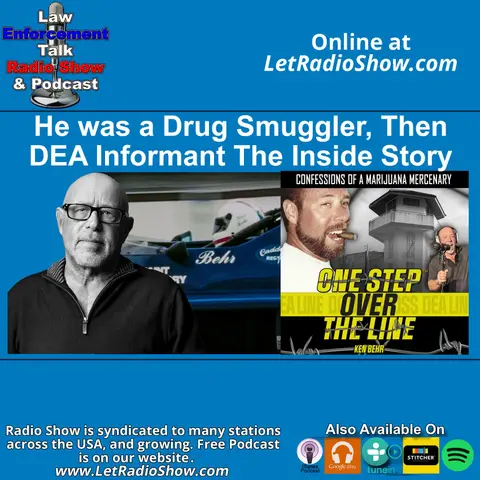
 He was a Drug Smuggler Then DEA Informant, The Inside Story. He Was a Drug Smuggler: The Inside Story and Book Behind his Double Life. Childhood tragedy, international drug shipments, the threat of decades in prison, and two years cooperating with the DEA, Ken Behr shares his journey through South Florida’s smuggling world. The Law Enforcement Talk Radio Show and Podcast social media like their Facebook , Instagram , LinkedIn , Medium and other social media platforms.
Ken Behr once helped move the drugs federal investigators were trying to stop. Later, he became a confidential informant for the DEA, helping investigators pursue trafficking networks he understood from the inside. The Podcast is available for free on the Law Enforcement Talk Radio Show and Podcast website, also on Apple Podcasts, Spotify, YouTube, iHeartradio and most major podcast platforms. #LawEnforcementTalk #Free #Podcast #Radio
The transition came after years of criminal activity, multiple arrests, and the prospect of spending decades behind bars. Before any of that, Behr was a child dealing with family deaths and trauma, experiences that form an important part of the story he tells today. Supporting articles about this and much more from Law Enforcement Talk Radio Show and Podcast in platforms like Medium , Blogspot and Linkedin.
As a guest on the Law Enforcement Talk Radio Show and Podcast, Behr discusses his progression from teenage marijuana dealer to international drug smuggler, his decision to cooperate with federal authorities, and life afterward.
His book, One Step Over the Line: Confessions of a Marijuana Mercenary, explores that journey at greater length. He was a drug smuggler. The inside story and book trace how his involvement grew, what it cost him, and why he eventually agreed to switch sides. The Law Enforcement Talk Radio Show and Podcast, is available on Apple, Spotify, YouTube, and other major podcast platforms. The interview is also featured across Facebook and Instagram.
Childhood Loss Before a Life in Drugs
Behr’s account begins well before the boats, aircraft, and international shipments.
He describes experiencing family deaths when he was young and carrying the effects of those losses into adolescence. Childhood trauma forms part of the background to his involvement with drugs.
Those experiences provide context for his story. They also raise questions about how grief, environment, and personal decisions can intersect during a young person’s development.
“Just a 1970s kid selling drugs out of my mom’s house.”
According to his account, his involvement eventually grew into a criminal life lasting more than 22 years. Small transactions gave way to larger quantities, wider connections, and increasingly serious exposure to prosecution. The episode is available across major platforms including their website, Apple Podcasts, Spotify, YouTube, with highlights shared across their Facebook, Instagram, and LinkedIn profiles.
His story follows a progression that took place over years. Each expansion brought him further into a business that would eventually threaten his freedom.
From Teenage Dealer to International Drug Smuggler
Behr describes moving from street-level dealing into large-scale trafficking and transportation.
His account includes unloading aircraft, working around covert runways in the Everglades, moving thousands of pounds of marijuana, and participating in operations involving Canada, Jamaica, Colombia, and the Bahamas.
The scale of those activities differed dramatically from his early involvement.
A teenager making small sales and an adult participating in international shipments occupy very different positions. By the time large loads and aircraft entered the story, his activities involved people and interests far beyond his original circle. The Podcast is available for free on the Law Enforcement Talk Radio Show and Podcast website, also on Apple Podcasts, Spotify, YouTube, iHeartradio and most major podcast platforms.
“Moving tons of weed and thousands of pounds of Cocaine.”
That growth is central to understanding the consequences.
Larger operations meant more connections, more coordination, and more people whose decisions could affect his future. They also brought greater criminal exposure.
For listeners, one of the interview’s most compelling questions is how early involvement with drugs became a life organized around moving them.
South Florida Beyond the Miami Headlines
For many people, the words Miami drug scene bring to mind conspicuous wealth, speedboats, expensive cars, and the violence associated with the cocaine era.
Behr’s story reaches beyond that familiar image.
He describes a trafficking world connected through coastal waterways, aircraft, remote landing areas, and international routes. Miami was a focal point, but the operations he recounts extended across South Florida and into other countries.
His perspective comes from participating in that world.
Rather than offering a complete history of every organization, Behr shares what he says he saw and did. His account gives listeners a personal view of the people handling the transportation and movement of drugs. The Law Enforcement Talk Radio Show and Podcast, is available on Apple, Spotify, YouTube, and other major podcast platforms. The interview is also featured across Facebook and Instagram.
That distinction matters. A participant’s recollections can provide valuable detail while remaining one perspective within a much larger history.
The Fast Life and Its Growing Consequences
The lifestyle Behr describes could look glamorous from a distance. “Cigarette boats, racing cars, and Learjets.”
Those images suggest money, movement, and access. They help explain why stories about the smuggling era continue to attract attention.
He said he was “Just hanging on for dear life.”
The contrast reveals the direction of his story. What appeared exciting eventually became a situation dominated by consequences and survival.
Repeated arrests made the risk of imprisonment increasingly difficult to ignore. The operations that expanded his world also brought him closer to losing control over his future.
His account invites listeners to examine the attraction of that lifestyle alongside the danger it carried.
The boats and aircraft are memorable. The threat of a long prison sentence is what makes the eventual decision to cooperate understandable.
The Historical Backdrop of the Miami Drug Era
South Florida’s expanding drug trade brought violence and a major federal response.
The DEA’s historical account describes rising crime during the trafficking boom and records the creation of the South Florida Task Force in 1982 under President Ronald Reagan. The response brought additional federal personnel, military participation in interdiction, and greater attention to financial investigations and money laundering. It is available through the website and on major platforms, including Apple Podcasts, Spotify and YouTube.
For investigators, the challenge extended beyond individual shipments to the organizations and finances supporting them.
For people participating in trafficking, arrests could lead to decisions affecting their freedom and their relationships with others in the business.
Behr’s account brings those pressures into the same narrative.
The historical setting explains why the investigations mattered. His personal experience helps explain what agreeing to assist investigators could mean for someone already involved.
Facing Decades in Prison
After multiple arrests, Behr says he faced a serious racketeering case and the prospect of decades behind bars. “Facing a minimum mandatory sentence of 25 years in prison.”
At that point, cooperation with the DEA offered a different path.
He agreed to become a confidential informant, also described as a cooperating source.
The decision changed his relationship with the drug world. Knowledge and connections acquired through criminal activity could now become useful to investigators pursuing trafficking networks.
It also introduced another kind of pressure.
The people he knew did not necessarily know that his role had changed. Cooperation required him to navigate familiar surroundings under very different circumstances. The Law Enforcement Talk Radio Show and Podcast continues bringing listeners real conversations from the front lines of crime, policing, trauma, survival, and healing.
Two Years as a DEA Informant
According to Behr’s account, he worked with the DEA for approximately two years, assisting major international investigations.
He describes a double life marked by pressure and fear of exposure.
His experience could help him understand people and operations that investigators were targeting. But that familiarity did not remove the danger associated with being discovered.
His appearance on the Law Enforcement Talk Radio Show and Podcast explores those years, the cases connected with his cooperation, and how he remembers the demands of operating as an Informant.
The distinction between his role and that of a federal agent is important. Behr was a cooperating source rather than a sworn DEA agent.
Facing imprisonment was a powerful incentive to cooperate. What happened after he made that choice is another substantial part of the story.
His Critical View of the War on Drugs
Behr also offers a critical assessment of the War on Drugs. In his view, the broader campaign has largely failed.
The host of the Law Enforcement Talk Radio Show agrees, but with differing reasons why.
Listeners may agree with his assessment, disagree with it, or find some arguments persuasive while questioning others.
His history gives him a perspective worth hearing. It also gives the audience reasons to listen carefully and ask questions.
The Book Behind the Story
One Step Over the Line: Confessions of a Marijuana Mercenary combines Behr’s autobiographical account with stories about the people and events surrounding South Florida’s smuggling era.
The book follows his progression from teenage dealing to larger trafficking operations, the threat of a lengthy prison sentence, and his decision to cooperate with federal authorities. Supporting articles about this and much more from Law Enforcement Talk Radio Show and Podcast in platforms like Medium, Blogspot and Linkedin.
It offers readers more space to follow developments that a single interview can only cover in part.
For readers interested in Behr’s memoir, it provides a longer account of the choices and circumstances discussed on the show.
More information is available at OneStepOverTheLine.com.
Life After Cooperation
Behr’s story continues beyond his work as a cooperating source.
His appearance also addresses life afterward, the part of the account that extends beyond an arrest, an investigation, or an agreement with authorities.
The experiences he describes span childhood loss, involvement with drugs, years of smuggling, and cooperation with the DEA. Each belongs to the history he now recounts.
Understanding that progression requires attention to what followed as well as what happened during the criminal cases.
The interview gives listeners an opportunity to hear how he discusses his past today and how he describes life after leaving that role.
Why Ken Behr’s Story Still Draws Interest
The enduring interest in Behr’s story comes from the changes in his role.
A young dealer became involved in larger operations. A convicted smuggler became a cooperating source. Experiences acquired through criminal activity later became relevant to federal investigations.
The story also returns to the personal circumstances at its beginning. Childhood grief forms part of the background, while the years that followed involved choices, consequences, and a later decision about cooperation.
For people familiar with Miami’s reputation during the drug era, Behr offers an account from inside that world. For those encountering the history for the first time, his experience provides a personal entry point into a much larger subject.
The book allows that account to unfold at greater length. The Podcast provides another way to hear his recollections, including the cases and his life afterward.
Listen to the Free Podcast and Share His Story
Ken Behr is the guest on the Law Enforcement Talk Radio Show and Podcast, discussing childhood trauma, international drug smuggling, his two years as a DEA Informant, and life after cooperation.
Listen and share the episode with someone interested in Miami’s drug history, the DEA, and the personal consequences of the trafficking world.
The Law Enforcement Talk Radio Show and Podcast continues bringing listeners real conversations from the front lines of crime, policing, trauma, survival, and healing.
Learn and get access to money saving tips and how to increase your net worth at www.LetSavings.com
Download the Free Ebook about ways and tips to improve your health. You can get the ebook for free at www.LetHealthy.com
Listen to the Law Enforcement Talk Radio Show and Podcast on their website, Facebook, Instagram, YouTube, Apple Podcasts, Spotify, iHeartRadio, and most major podcast platforms.
Get the Free Clubhouse App, it is Drop In Social Audio. Think of it as your own talk radio show on your phone, and best of all it is free. Be sure to look for me and follow me, that’s John J Wiley or @letradioshow you can do all that here.
The Law Enforcement Talk Radio Show and Podcast social media like their Facebook , Instagram , LinkedIn , Medium and other social media platforms.
You can contact John J. “Jay” Wiley by email at Jay@letradio.com , or learn more about him on their website .
Find a wide variety of great podcasts online at The Podcast Zone Facebook Page , look for the one with the bright green logo.
Listen to the free Podcast on the Law Enforcement Talk Radio Show website and through major platforms, including Apple Podcasts and Spotify.
Follow the show on Facebook, Instagram, YouTube and other Social Media platforms for more real stories about trauma, survival and transformation.
Listen to the Show, share the episode, and follow the latest Radio, Podcast, and News content from the Law Enforcement Talk Radio Show and Podcast.
Be sure to check out our website .
Be sure to follow us on X , Instagram , Facebook, Pinterest, Linkedin and other social media platforms for the latest episodes and news.
Follow the Law Enforcement Today Radio Show and Podcast on Facebook, Instagram, and Youtube for more powerful interviews with law enforcement officers, survivors, first responders, and others whose lives have been changed by crime and trauma.
This episode of the show is brought to you in part by Mars Men. You hit your 30s and 40s, and things start to feel different. Now that I’m in my 60s, I’ve really noticed the change. My energy drops faster. Recovery takes longer. Workouts don’t have the same impact they once did. Most importantly, what worked for me in my 20s simply doesn’t work anymore. So, I started looking for answers. Honestly, the testosterone-support space can be confusing, and much of it sounded sketchy. I don’t want to become a professional bodybuilder. I just want to look and feel more like the old me. Thankfully, I found Mars Men, and I couldn’t be more grateful. Mars Men is made in the USA, third-party tested, and formulated to support healthy testosterone levels, energy and stamina. It’s now available at GNC stores nationwide.
For a limited time, our listeners get 50% off for life plus Free Shipping AND 3 Free Gifts at Men Go To
Mars dot com. That’s MenGoToMars.com for 50% Off AND 3 Free Gifts when you checkout. After you
purchase, they will ask you where you heard about them. PLEASE support our show and tell them our
show sent you.
Attributions
Amazon
Hosted by Simplecast, an AdsWizz company. See pcm.adswizz.com for information about our collection and use of personal data for advertising.