Can Police Training Ever Be Enough?
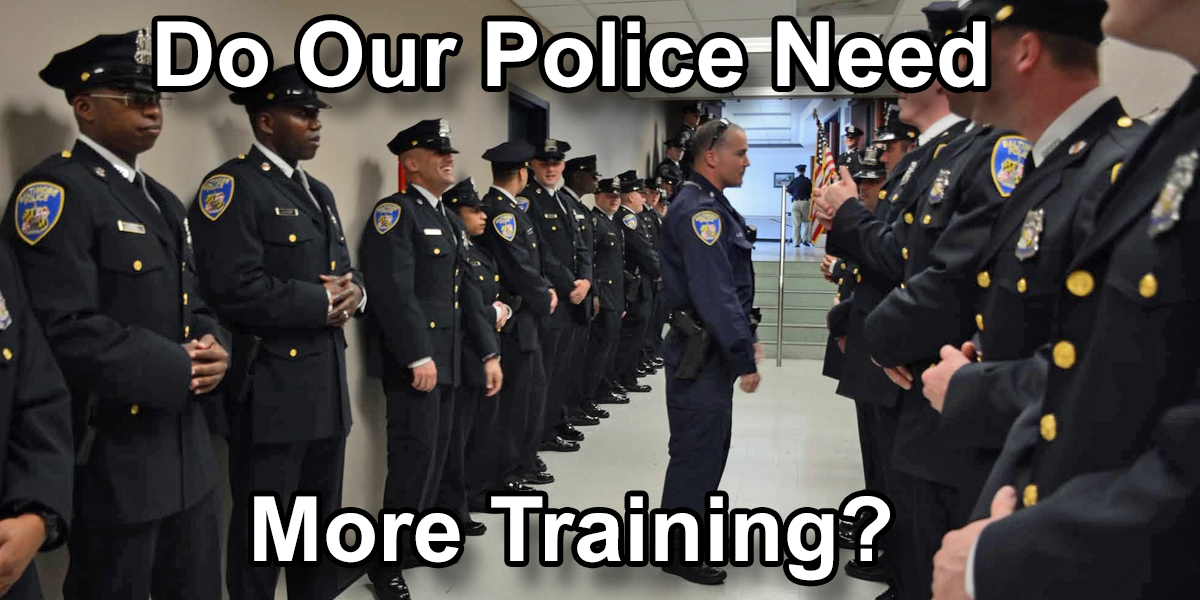
Can Police Training Ever Be Enough? It is nearly impossible to become a great swimmer without getting into the water. You cannot become a great chef simply by reading cookbooks. Books and classrooms provide essential knowledge, but real competence develops when that knowledge is repeatedly applied under real-world conditions.
Police work is no different.
Critics frequently argue that police officers do not receive enough training. In some departments, that criticism may be justified. However, the discussion often overlooks an important question: How much training are communities willing to fund?
Training Requires a Serious Investment
Consider the education required to become an attorney.
The standard path generally includes four years of undergraduate education followed by three years of law school to earn a Juris Doctor degree. After approximately seven years of education, prospective attorneys must still pass a state bar examination before practicing law.
Even with that extensive education, no attorney possesses complete knowledge of every aspect of state and federal law. Most lawyers specialize because the law is simply too large and complex for one person to master completely.
Police officers are also expected to understand and apply an enormous collection of laws, court decisions, departmental policies, constitutional requirements, investigative procedures, and safety protocols. Unlike attorneys, officers may have only seconds to make decisions—often while facing confusion, resistance, danger, or incomplete information.
Despite those responsibilities, relatively few communities appear willing or able to finance a full year or more of basic police training before officers begin working.
My Police Training Experience
In my department, recruits attended a six-month police academy. Most of those 40-hour weeks were devoted to classroom instruction.
The curriculum included laws, departmental procedures, constitutional requirements, investigations, report writing, firearms, defensive tactics, emergency response, and many other subjects. Although practical exercises were included, much of the academy experience involved studying and preparing recruits for situations they had not yet encountered.
After graduating, the education continued.
We completed one week of in-service training every year. Approximately four of those five days, or about 32 hours, were spent in a classroom.
We also attended daily roll calls lasting about 15 minutes. Some of that time was used to review laws, policy changes, recent incidents, departmental procedures, and officer-safety information.
Then came field training and the first probationary year of police work. During that period, new officers received continual instruction from experienced officers, field training personnel, and sergeants.
That field experience was essential because there are limits to what any academy can reproduce.
The Classroom Cannot Recreate the Street
A classroom can explain the law governing a traffic stop. It cannot fully reproduce the uncertainty of approaching a vehicle at night without knowing who is inside.
An instructor can teach domestic-violence procedures. A classroom cannot duplicate the emotions, confusion, frightened children, conflicting stories, and potential weapons officers may encounter inside a home.
Recruits can practice making arrests, using verbal commands, and responding to threats. But controlled exercises cannot perfectly recreate exhaustion, fear, adrenaline, poor visibility, unpredictable behavior, and the pressure of making an immediate decision.
Police officers need both formal education and supervised field experience. One cannot completely replace the other.
Like swimmers, chefs, surgeons, pilots, and other professionals, officers develop greater proficiency through a combination of instruction, repetition, supervision, evaluation, and experience.
“More Training” Must Be Clearly Defined
Calls for more police training sound reasonable, but the phrase is often frustratingly vague.
What kind of additional training should officers receive?
Should departments add more instruction in:
Constitutional law?
De-escalation?
Firearms proficiency?
Defensive tactics?
Mental-health emergencies?
Domestic violence?
Emergency medicine?
Report writing?
Vehicle operations?
Cultural awareness?
Crisis intervention?
Communication skills?
Drug recognition?
Officer wellness and PTSD prevention?
All these subjects have value. However, every ADDITIONAL TRAINING COSTS MONEY and takes officers away from patrol duties. Which can mean slower response, especially in understaffed agencies. And most agencies across the Country are short staffed.
Smaller departments may already struggle to maintain minimum staffing. Sending officers to additional training can require overtime, replacement personnel, travel, equipment, facilities, and qualified instructors.
The question is not simply whether officers should receive more training. THE REAL QUESTION IS WHETHER COMMUNITIES WILL PROVIDE THE MONEY, STAFFING, AND TIME NEEDED TO DELIVER IT PROPERLY.
Training Must Also Be Continuous
Police training should not end at academy graduation.
Laws change. Court decisions redefine what officers can and cannot do. Criminal tactics evolve. Technology changes. Communities develop new expectations, and officers encounter situations that may not have existed when they first entered the profession.
Continuous training is therefore necessary, but it must also be practical, current, and connected to the situations officers face.
Simply adding classroom hours may not be enough. Departments should evaluate whether officers can apply what they learned under pressure. Scenario-based exercises, competent field training, meaningful supervision, and honest reviews of real incidents may provide greater value than another presentation filled with slides.
The quality and relevance of training matter just as much as the number of hours.
Communities Must Decide What They Expect
Americans expect police officers to understand complicated laws, communicate effectively, recognize mental-health crises, provide emergency medical assistance, safely control violent suspects, protect constitutional rights, write accurate reports, operate vehicles under extreme conditions, and make sound decisions in seconds.
Those are enormous expectations.
If communities want officers to receive substantially more training, that is a legitimate position. But the commitment must include the funding and staffing necessary to make it possible.
Better training requires more than criticism. It requires investment.
There will always be lessons that can only be learned in the field, under the guidance of experienced and ethical officers and supervisors. Classroom instruction provides the foundation, but supervised experience turns that knowledge into professional judgment.
So, the question remains:
How much training should our police officers, sheriff’s deputies, state troopers, and federal agents receive and how much are communities genuinely willing to invest to provide it?
LEARN MORE ABOUT YOUR CONFIDENT LIFE

Radio Show Host and Producer
Retired from the Baltimore Police Department at the rank of Sergeant. He was retired early due a permanent line of duty injury that occurred during an act of violence. The injury resulted in 3 surgeries, two steel plates and a fusion of his right wrist and thumb.
About 8 years after retiring from police work, he began a career in the audio broadcasting space. Starting with "audio-blogs" in 1999. Which progressed into a brokered once a week radio show and then led to broadcasting school.
After graduating he has been a full time FM radio personality and launched the Law Enforcement Today Show as a podcast in March of 2017. This was in a partnership with Law Enforcement Today's Robert Greenberg. The show was quickly recruited by radio and is a nationally syndicated radio show, broadcasting weekly on many US Radio Stations to millions of people.
The partnership with them ended in the Summer of 2023 and the show was renamed the Law Enforcement Talk Radio Show and Podcast.
The radio show is syndicated by Talk Media Network. Go to the Radio Page of the site for more information.
Beyond 'I'm Fine': How Cops Hide Trauma Behind Extreme Fitness