From Combat Convoy to Police De-Escalation: How Military Experience Shapes Modern Police Training
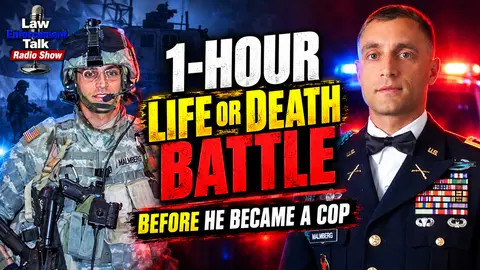
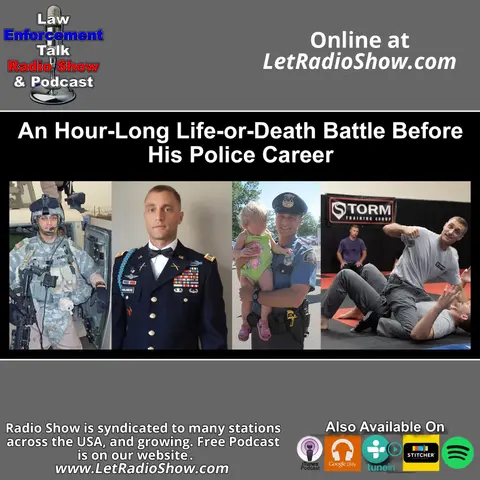
Transitioning from leading combat patrols in Iraq to walking a municipal beat as a police officer requires a complete rethinking of tactical decision-making under intense pressure. This article explores how battlefield leadership principles directly influenced Chad Malmberg's approach to modern police de-escalation tactics and use-of-force reduction through the STORM Training Group.
Listen to the episode for free.
Key Takeaways
- Combat survival principles highlight the critical importance of situational awareness, discipline, and remaining calm when conditions deteriorate rapidly.
- The psychological impacts of military combat mirror the cumulative trauma experienced by law enforcement officers working high-stress urban beats.
- Co-founding the STORM Training Group allowed veteran officers to translate high-stakes tactical stress management into practical law enforcement de-escalation frameworks.
- Agencies that implement structured positioning and control training consistently see measurable reductions in both use-of-force incidents and officer injuries.
- Bridging the gap between military tactical preparation and community policing requires a deliberate focus on stress mitigation and continuous skills refinement.
The Evolution of Tactical Mindsets: From Battlefield to Street
When military veterans transition into law enforcement, they carry a unique set of experiences, reflexes, and tactical conditioning. Serving as a non-commissioned officer or combat leader means making split-second decisions where lives hang in the balance. However, the rule of engagement on a foreign battlefield fundamentally differs from the constitutional and legal frameworks governing domestic policing. Adapting to this shift demands rigorous mental retraining.
In combat, the primary objective is often neutralizing an active, asymmetric threat to ensure group survival and mission completion. In contrast, local policing operates under the guiding principle of preserving life, de-escalating volatility, and effecting lawful arrests with minimal collateral friction. Recognizing this dichotomy is essential for understanding how combat veterans successfully pivot into civilian law enforcement roles while keeping their communities safe.
Translating High-Stress Decisions to Municipal Policing
The human brain responds to extreme stress through physiological reactions such as tunnel vision, auditory exclusion, and adrenaline surges. Whether leading a Minnesota National Guard convoy through dangerous territory south of Baghdad or responding to a violent crisis call in an urban neighborhood, the operational environment is unpredictable. Veterans like Chad Malmberg understand that the secret to surviving these moments lies not in eliminating fear, but in channeling it through structured training.
During his time with the St. Paul Police Department, Malmberg encountered environments where tensions peaked instantaneously. The discipline forged during military deployments provided a steady anchor, allowing him to maintain tactical patience when chaos erupted around him. This ability to slow down a rapidly evolving incident is the exact philosophy that modern tactical educators try to instill in new and veteran police officers alike.
Building a Safer Future: The STORM Training Group Approach
Recognizing the urgent need for better preparation in high-stress environments, Malmberg partnered with Tom Menton to establish the STORM Training Group. Their mission centers on transforming how law enforcement agencies approach defensive tactics, de-escalation strategies, and coordinated team responses. Rather than relying on outdated compliance models, their curriculum emphasizes tactical positioning, spatial control, and proactive communication.
Effective de-escalation is not about backing down; it is about establishing a tactical advantage through superior positioning and calm, authoritative communication. By teaching officers how to recognize pre-attack indicators and manage their own physiological responses to stress, training groups can fundamentally alter the outcome of dangerous encounters.
Reducing Use-of-Force Incidents Through Better Mechanics
Statistics and agency feedback show that departments utilizing modern, stress-inoculated tactical frameworks experience significant drops in use-of-force incidents. When officers feel confident in their ability to physically control a subject using leverage, positioning, and coordinated team movements, they are less likely to rely on reactive escalation. This systematic approach protects both the officers and the members of the public they serve, minimizing injuries during high-risk apprehensions.
Addressing the Hidden Wounds of Service
The journey from a war zone to a patrol car is physical, but the psychological toll is often the most challenging aspect to navigate. Soldiers returning from active combat frequently face unseen trauma, and police officers accumulate critical incident stress over years of service. Unfortunately, the cultural expectation to remain stoic often prevents first responders from seeking help early.
Openly discussing the mental health challenges associated with high-stress careers helps break the stigma. When leaders share their personal battles with anxiety, hypervigilance, and post-traumatic stress, it creates an organizational culture where seeking support is viewed as a sign of strength rather than weakness.
Conclusion
The intersection of military service and law enforcement career paths provides profound insights into resilience, tactical adaptation, and mental health. By examining how veterans turn battlefield survival skills into life-saving municipal policing strategies, we gain a deeper appreciation for the complexities of modern public safety. To hear the full conversation detailing these incredible experiences, Listen to the full episode and discover the powerful stories behind these frontline heroes.
Frequently Asked Questions
How does military combat experience influence a police officer's approach to danger?
Military combat experience instills profound situational awareness and stress inoculation, helping officers remain calm during chaotic, high-stakes municipal incidents.
What is the primary focus of the STORM Training Group?
The STORM Training Group focuses on defensive tactics, advanced de-escalation techniques, spatial positioning, and coordinated team responses to reduce injuries and use-of-force incidents.
Why is mental health support crucial for both combat veterans and police officers?
Both groups face cumulative trauma and high-stress environments that can lead to unseen mental health challenges, making early intervention and open dialogue vital for long-term well-being.
How do tactical positioning and control reduce use-of-force incidents?
By teaching officers how to use leverage and spatial control effectively, they gain confidence to manage physical encounters calmly, minimizing the need for reactive escalation.
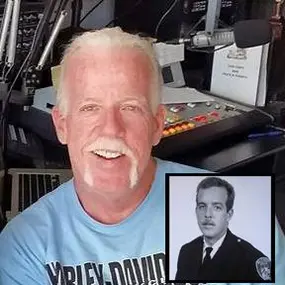
Radio Show Host and Producer
Retired from the Baltimore Police Department at the rank of Sergeant. He was retired early due a permanent line of duty injury that occurred during an act of violence. The injury resulted in 3 surgeries, two steel plates and a fusion of his right wrist and thumb.
About 8 years after retiring from police work, he began a career in the audio broadcasting space. Starting with "audio-blogs" in 1999. Which progressed into a brokered once a week radio show and then led to broadcasting school.
After graduating he has been a full time FM radio personality and launched the Law Enforcement Today Show as a podcast in March of 2017. This was in a partnership with Law Enforcement Today's Robert Greenberg. The show was quickly recruited by radio and is a nationally syndicated radio show, broadcasting weekly on many US Radio Stations to millions of people.
The partnership with them ended in the Summer of 2023 and the show was renamed the Law Enforcement Talk Radio Show and Podcast.
The radio show is syndicated by Talk Media Network. Go to the Radio Page of the site for more information.
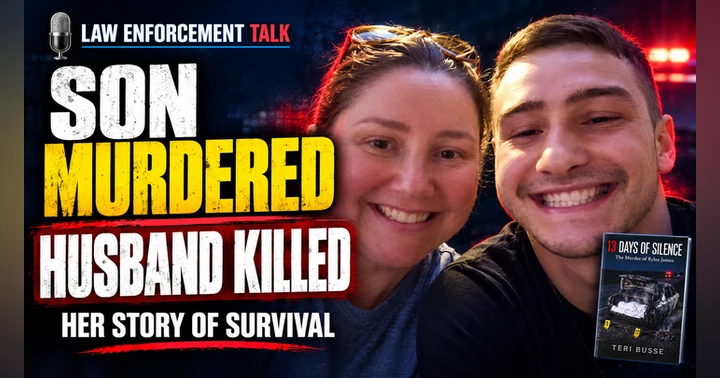
Navigating the 13 Days of Silence: Emergency Responder Perspectives on Waiting for Crisis News