Life After the Badge: How Veterans Transition From Military and Police Uniforms to New Missions
When a career in uniform ends, the transition into civilian life is rarely as simple as turning in a badge or packing up a locker. For military veterans and law enforcement officers alike, navigating life after the badge requires redefining personal identity, rediscovering purpose, and channeling decades of high-stakes experience into entirely new avenues of community impact, mentorship, and leadership.
Read more or Listen to to the full episode
Key Takeaways
- Retiring from uniform service often brings a profound question: what happens when the mission ends?
- Service does not stop when a career changes; many veterans channel decades of experience into teaching and public speaking.
- Kevin Coble's 'Three Uniforms. One Mission' framework highlights how military, police, and classroom roles all center on leadership.
- Transitioning professionals must look beyond their immediate job titles to find enduring purpose in civilian life.
The Reality of Leaving the Uniform Behind
Hollywood loves a clean conclusion. In movies and television dramas, a character's career path is neatly contained within the boundaries of a script. When the case is closed or the tour of duty wraps up, the character simply walks away into the sunset. In reality, the end of a long-standing career in high-stress professions marks the beginning of an entirely different kind of challenge.
For individuals who have spent twenty, thirty, or more years wearing a uniform, the transition involves much more than updating a resume. It requires confronting a fundamental question: Who am I outside of this uniform? When your daily routine has been defined by protecting communities, serving in the armed forces, or responding to unpredictable emergencies, civilian life can sometimes feel remarkably quiet, disconnected, and difficult to navigate.
Read more or Listen to to the full episode
Three Uniforms, One Mission: A Blueprint for Continued Service
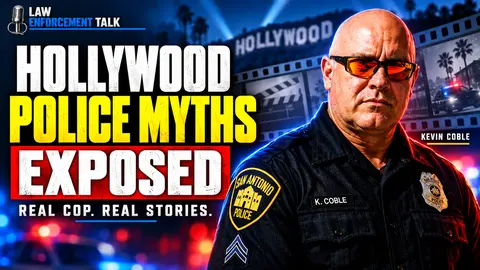
Transitioning out of law enforcement or the military does not mean that a person's capacity for service has expired. Instead, it often serves as a catalyst for reinvention. Consider the career path of retired San Antonio Police Officer Kevin Coble, whose professional life spans nearly eleven years in the U.S. Air Force Security Police, twenty-six years on the streets with the San Antonio Police Department, and eight years teaching high school students.
Spanning these distinct chapters, Coble developed a unifying philosophy encapsulated by the phrase: "Three Uniforms. One Mission." While the environments changed dramatically, from military installations to urban police beats and finally to educational classrooms, the core responsibility remained identical: taking care of people, exercising sound judgment, and providing steady leadership under pressure.
Translating Skills From the Streets to the Classroom
One of the greatest hurdles for retiring first responders is recognizing how transferable their hard-earned skills truly are. The ability to remain calm in a crisis, de-escalate volatile situations, make split-second ethical decisions, and mentor younger colleagues are invaluable assets in the civilian workforce.
When police officers and military veterans step into roles such as teaching, public speaking, or corporate leadership, they bring a level of real-world resilience that cannot be taught in a textbook. By sharing lessons learned from decades of public service, they help guide the next generation, proving that education and mentorship are simply extensions of the protection and guidance they provided while on active duty.
Read more or Listen to to the full episode
Navigating the Emotional Weight of Past Service
Another critical aspect of life after the badge is processing the accumulated memories and emotional weight carried from years of service. Real police work does not offer tidy cinematic resolutions. Officers frequently respond to critical incidents, tragic accidents, and profound human trauma that leave enduring impressions long after the shift has ended.
Successfully transitioning into retirement requires acknowledging this emotional backpack rather than ignoring it. Former service members who find successful second acts often do so by openly discussing their experiences, mentoring younger officers on the mental realities of the job, and advocating for wellness and peer support within the emergency services community.
Finding a New Purpose After Retirement
Retirement from law enforcement or the military should be viewed not as a full stop, but as a comma. The end of a specific operational mission opens the door to creative reinvention. Whether through public speaking engagements focused on leadership and ethics, community volunteering, or classroom education, veterans possess a unique platform to influence society positively.
The transition reminds us that while uniforms may change, a commitment to character, integrity, and service to others remains lifelong. By embracing this mindset, retiring professionals can successfully rewrite their post-career chapters with clarity, dignity, and renewed purpose.
Conclusion
Understanding the true nature of public service requires looking past Hollywood stereotypes and listening directly to those who have lived the experience. To dive deeper into these themes of career transition, dealing with trauma, and discovering life after the badge, Listen to the full episode of the Law Enforcement Talk Radio Show and Podcast. Join the conversation and explore how real-world experiences shape resilient leaders long after they retire their uniforms.
Frequently Asked Questions
What is the 'Three Uniforms. One Mission' concept?
It is a guiding philosophy developed by Kevin Coble representing his career across the U.S. Air Force, the San Antonio Police Department, and the classroom, showing that leadership and service continue regardless of the specific role.
Why is career transition difficult for retired law enforcement officers?
Many officers have an identity deeply intertwined with their uniform and agency. When retirement arrives, finding a new sense of purpose and navigating civilian career paths can present unique emotional and practical hurdles.
How do former police officers find new careers after retirement?
Many retired law enforcement professionals leverage their extensive experience in crisis management, judgment, and mentorship into fields like public speaking, education, corporate security, and community leadership.
From Police Academy Recruit to Counterterrorism Advisor in Iraq