Finding Purpose After Medical Retirement: How a Retired Juvenile Officer Rebuilt His Life Through Tech
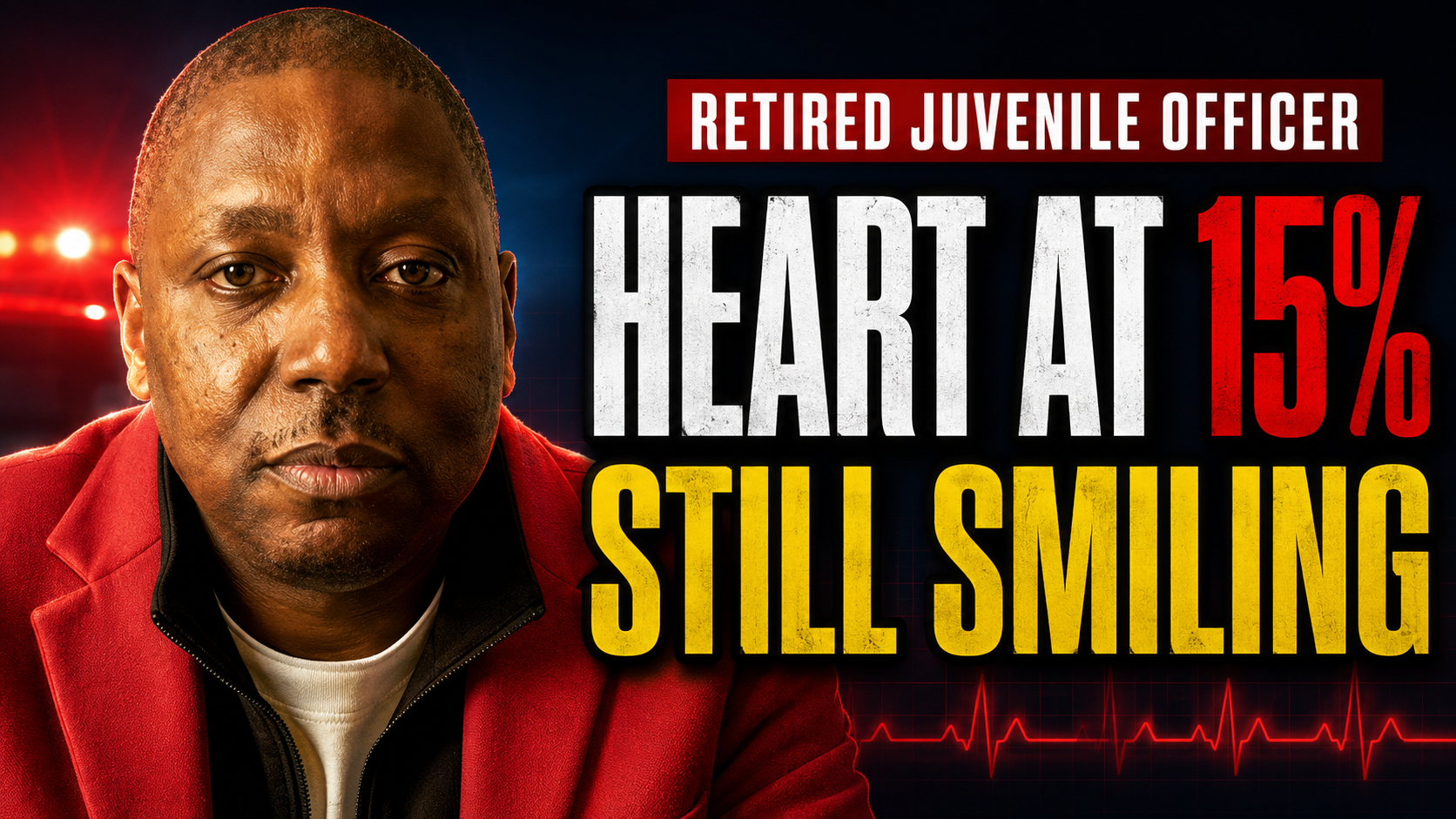
Medical retirement forces a sudden loss of career, routine, and identity. For retired California Juvenile Hall Officer Tyrone Armstrong Sr., this shock was compounded by congestive heart failure and bone marrow cancer. Discover how he transformed his post-retirement reality by embracing web development and building a digital video platform to reclaim his sense of purpose.
Listen to the full episode here.
Key Takeaways
- Forced medical retirement creates an identity crisis that goes far beyond the loss of a paycheck.
- Severe diagnoses like heart failure and myelofibrosis often trigger secondary psychological hurdles like anxiety and sleep-disrupting nightmares.
- Creative outlets and new learning endeavors provide vital psychological anchors when physical stamina is limited.
- Technology and digital entrepreneurship offer accessible avenues for retired first responders to continue contributing to society.
- Resilience is not about ignoring pain or illness, but about choosing where to direct your remaining energy and agency.
The Abrupt End of a Demanding Career
Most civilian workers transition into retirement gradually, planning their exit strategies years in advance. They scale back responsibilities, tie up professional loose ends, and step away on their own terms. For law enforcement officers, corrections staff, and juvenile detention personnel, however, retirement is frequently involuntary. A sudden injury in the line of duty can instantly sever a person from their daily routine, their colleagues, and their professional community.
Tyrone Armstrong Sr. experienced this exact reality when a serious foot injury forced him to leave his career as a Juvenile Hall Officer in California. Working inside a juvenile detention facility demands intense physical stamina, emotional control, and hyper-vigilance. Officers manage young people dealing with severe trauma, anger, gang involvement, and unstable home lives. When that high-stakes environment is suddenly removed from an officer's life due to an injury, the resulting void can feel insurmountable. The loss of structure is abrupt, and the sudden quiet can be far more deafening than the chaos of the cell block.
Compounding Health Crises and the Mental Toll
As if losing a hard-earned career were not enough to navigate, Armstrong's transition out of uniform was closely followed by a cascade of severe medical emergencies. First came congestive heart failure, which severely restricted his heart's pumping capacity down to approximately 15 percent. Shortly after, doctors diagnosed him with myelofibrosis, a rare and aggressive form of bone marrow cancer.
Living with chronic, life-altering illnesses introduces a completely different kind of battle. Beyond the physical manifestations of fatigue, shortness of breath, and mobility limitations, severe medical diagnoses take a heavy psychological toll. Armstrong began experiencing persistent anxiety and disruptive nightmares. For first responders and corrections officers, admitting to psychological vulnerability can be culturally difficult. Years spent projecting strength and maintaining absolute control in dangerous environments can create internal resistance to asking for help when dealing with fear, medical trauma, and the haunting uncertainty of chronic illness.
Yet, Armstrong's journey illustrates that experiencing anxiety and maintaining emotional resilience are not mutually exclusive. A person can feel deeply afraid and exhausted by their medical reality while still choosing to face the next day with determination.
Rebuilding Identity Through Web Development and Creativity
When physical health restricts your ability to move through the world in the way you once did, the mind must find alternative outlets for expression. Rather than allowing his medical diagnoses to completely dictate the boundaries of his existence, Armstrong chose to channel his energy into web development and digital creation.
At 64 years old, he began building an innovative video vlog designed to serve as an all-in-one entertainment and resource hub. His platform brings together hard-to-find movies, music videos, classic slot games, over 100 radio stations, and educational links. More importantly, the project gave him a new mission. It provided a tangible reason to plan, learn, and imagine a future beyond his medical chart.
Why Digital Creation Matters for Retired Officers
Transitioning from a physical, hands-on public safety career into a digital hobby or entrepreneurial pursuit might seem unconventional, but it offers distinct psychological benefits for retirees facing physical disabilities:
- Autonomy: Digital creation allows individuals to work at their own pace, accommodating fluctuating energy levels and unpredictable symptom flare-ups.
- Cognitive Engagement: Learning code, website architecture, and content curation keeps the brain sharp and focused on problem-solving rather than pain management.
- Global Connection: The internet bridges the gap between isolation and community, allowing retirees to reach audiences far beyond their immediate physical surroundings.
Armstrong's vision focuses heavily on visual learners—individuals who absorb information more effectively through video demonstrations and imagery. By building a platform tailored to this audience, he turned his personal downtime into a tool designed to enrich the viewing experience of people around the world.
Listen to the full episode here.
Lessons in Resilience for First Responders
The lessons embedded in Armstrong's journey extend far beyond the law enforcement community. Anyone dealing with sudden disability, career-ending medical issues, or the daunting prospect of managing chronic cancer and heart disease can look to his example. Optimism in the face of severe illness does not require toxic positivity or the denial of genuine pain. True resilience is found in the refusal to let a disease take total ownership of one's identity.
Armstrong's medical team focuses on his heart function, his blood counts, and his cancer treatments. But those clinical metrics do not define who he is. He remains a father, a retired juvenile officer, a creator, and a builder. By shifting his focus from what his body can no longer accomplish to what his mind can still design, he forged a sustainable path forward.
Conclusion
Navigating medical retirement alongside severe diagnoses like congestive heart failure and myelofibrosis requires immense inner strength. Tyrone Armstrong Sr. proves that while life can change without warning, human purpose can always be rebuilt through creativity, technology, and a refusal to surrender your identity to illness. To hear more about his incredible journey from the juvenile detention facility to the world of web development, Listen to the full episode of the Law Enforcement Talk Radio Show and Podcast. Dive into the complete interview to discover how first responders overcome trauma, trauma recovery, and life-altering medical crises.
Frequently Asked Questions
What caused Tyrone Armstrong Sr. to retire from his law enforcement career?
Armstrong was forced into an early medical retirement from his position as a Juvenile Hall Officer in California after sustaining a serious foot injury in the line of duty.
What severe medical conditions did Armstrong face after retiring?
Following his retirement, Armstrong was hospitalized with congestive heart failure—which dropped his heart function to roughly 15 percent—and was subsequently diagnosed with myelofibrosis, a rare form of bone marrow cancer.
How did Armstrong manage the psychological toll of his illnesses?
In addition to experiencing anxiety and nightmares related to his medical emergencies, Armstrong combated the emotional weight by throwing himself into web development, creating a digital video platform to stay creatively engaged.
What is the primary focus of the digital platform Armstrong built?
His platform is an all-in-one entertainment and resource vlog designed specifically for visual learners, featuring curated movies, music videos, radio stations, and engaging digital media.

Radio Show Host and Producer
Retired from the Baltimore Police Department at the rank of Sergeant. He was retired early due a permanent line of duty injury that occurred during an act of violence. The injury resulted in 3 surgeries, two steel plates and a fusion of his right wrist and thumb.
About 8 years after retiring from police work, he began a career in the audio broadcasting space. Starting with "audio-blogs" in 1999. Which progressed into a brokered once a week radio show and then led to broadcasting school.
After graduating he has been a full time FM radio personality and launched the Law Enforcement Today Show as a podcast in March of 2017. This was in a partnership with Law Enforcement Today's Robert Greenberg. The show was quickly recruited by radio and is a nationally syndicated radio show, broadcasting weekly on many US Radio Stations to millions of people.
The partnership with them ended in the Summer of 2023 and the show was renamed the Law Enforcement Talk Radio Show and Podcast.
The radio show is syndicated by Talk Media Network. Go to the Radio Page of the site for more information.

What It Was Like Being a Teenage Police Officer in 1980s South Africa