Adventure Healing: How a 28,000-Mile Journey Rewrote Nathaniel Allenby's Story of Sibling Abuse Trauma
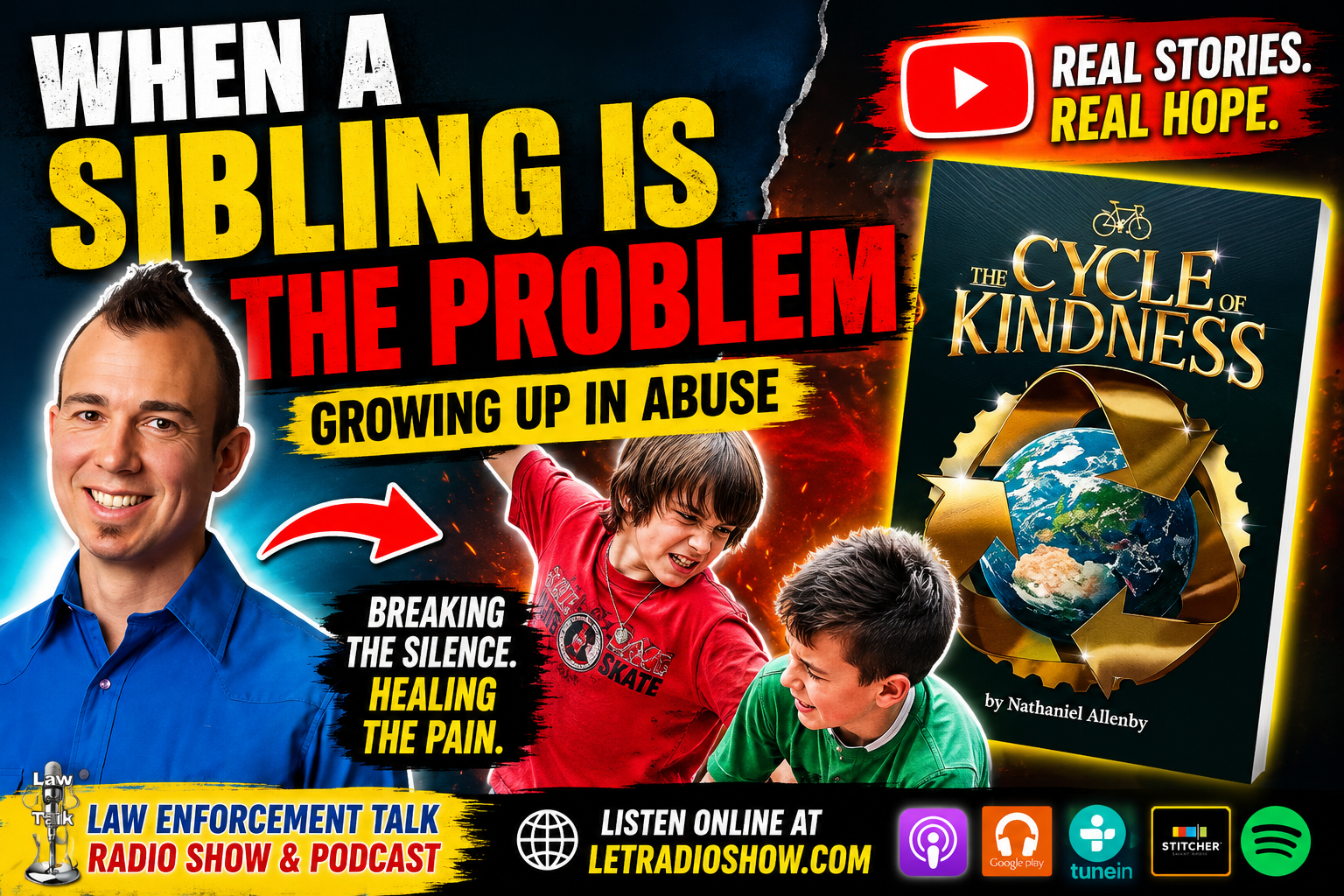
Nathaniel Allenby's harrowing experience with sibling abuse left deep scars. Discover how an extraordinary 28,000-mile adventure became his unique path to healing, transforming trauma into resilience and self-discovery. This journey offered a radical new way to confront and overcome the lasting impact of his past.
His incredible journey and his insights into overcoming adversity on the Law Enforcement Talk Radio Show and Podcast. Listen to the full episode here.
Key Takeaways
- Embarking on an extreme adventure provided a tangible escape and a new narrative for healing from sibling abuse trauma.
- The physical and mental challenges of a long-distance journey rebuilt self-reliance and a sense of control lost to childhood abuse.
- Navigating unexpected hardships and relying on the kindness of strangers directly counteracted the isolation and distrust bred by sibling abuse.
- The vastness and unpredictability of a global cycling trip offered a unique perspective, dwarfing past traumas and enabling a fresh start.
- Adventure facilitated a profound internal shift, allowing Nathaniel to redefine himself beyond the role of a victim and embrace a future of agency.
The Adventure as Antidote to Sibling Abuse Trauma
The conventional approaches to healing from trauma, particularly the insidious kind inflicted within a family, often involve therapy, support groups, and introspection. While these methods are invaluable, Nathaniel Allenby’s story, shared on the Law Enforcement Talk Radio Show and Podcast, presents a compelling alternative: adventure as a powerful agent of change. His experience with severe sibling abuse left him grappling with deep-seated feelings of unworthiness and a shattered sense of self. Instead of succumbing to these profound wounds, Nathaniel chose an extraordinary path – a 28,000-mile cycling odyssey. This wasn't merely a physical feat; it was a meticulously orchestrated journey of healing, an active confrontation with the echoes of his past through the lens of intense, self-driven experience. The sheer scale and demanding nature of this adventure served as a crucible, forging a new identity and resilience forged in the fires of overcoming immense physical and emotional challenges, directly countering the destructive patterns instilled by sibling abuse trauma.
Reclaiming Control Through Extreme Endurance
The psychological impact of sibling abuse often manifests as a profound loss of control and agency. Nathaniel Allenby’s childhood was marked by an imbalance of power, where his sibling’s actions dictated his emotional and physical well-being. This instilled a sense of helplessness that lingered into adulthood. His decision to embark on a 28,000-mile cycling journey was a deliberate act of reclaiming that control. Each pedal stroke across continents was a conscious choice, a step away from the victim narrative and towards becoming the architect of his own destiny. The physical demands of such an expedition – enduring harsh weather, navigating unknown terrains, and managing basic survival needs – required immense mental fortitude. This constant problem-solving and self-reliance served as a powerful antidote to the passivity and fear that often accompany trauma. By placing himself in situations where his survival and progress depended solely on his own capabilities, Nathaniel systematically dismantled the ingrained belief that he was powerless. The relentless nature of the journey, requiring daily commitment and perseverance, allowed him to build a new foundation of self-efficacy, directly challenging the narrative of weakness imposed by his sibling abuse.
Get more information about overcoming adversity on the Law Enforcement Talk Radio Show and Podcast. Listen to the full episode here.
Novel Environments and the Reframing of Self
The impact of childhood trauma, especially from a sibling, can warp one’s perception of the world and their place within it. Nathaniel Allenby's experience was colored by the distortions and fears cultivated during his abusive upbringing. The 28,000-mile adventure provided him with a constant stream of novel environments, each presenting unique challenges and opportunities for growth. From the bustling streets of European cities to the solitude of remote landscapes, these new settings offered a stark contrast to the confined and often terrifying domestic sphere of his youth. In these unfamiliar territories, free from the immediate associations of his past trauma, Nathaniel could begin to reconstruct his identity. The absence of familiar triggers allowed for a clearer perspective on his own thoughts and feelings. Furthermore, the interactions he had with strangers – moments of unexpected kindness and assistance – served as powerful counter-narratives to the hostility and betrayal he experienced as a child. These positive encounters helped rebuild his capacity for trust and connection, demonstrating that the world, and the people in it, were not inherently malicious. This exposure to diverse experiences and the rebuilding of trust were crucial elements in his adventure healing from sibling abuse trauma, allowing him to see himself not as a damaged individual, but as a capable explorer of both the external world and his internal landscape.
Embracing Uncertainty and Building a New Narrative
Sibling abuse often creates a rigid and fear-based worldview, where predictability is sought to avoid pain. Nathaniel Allenby’s journey transcended this by intentionally embracing uncertainty. A 28,000-mile cycling trip is inherently unpredictable – mechanical failures, language barriers, unforeseen weather, and financial scarcity are constants. By choosing to navigate these uncertainties daily, Nathaniel was actively practicing resilience. He learned to adapt, to improvise, and to find solutions in real-time, skills that were severely underdeveloped due to his past trauma. This process of confronting and overcoming the unknown allowed him to reframe his narrative. Instead of a story defined by victimization and fear, it became one of courage, resourcefulness, and perseverance. The sheer magnitude of the journey – covering vast distances and experiencing diverse cultures – provided a sense of perspective that diminished the perceived power of his past trauma. He was no longer just a survivor of sibling abuse; he was an adventurer, an explorer, and a resilient individual capable of achieving extraordinary goals. This active engagement with the unknown was a critical component of his adventure healing, empowering him to write a future unburdened by the constraints of his past.
The Enduring Legacy of Adventure Healing
Nathaniel Allenby's 28,000-mile cycling odyssey is more than just an impressive travelogue; it is a profound testament to the power of adventure in healing deep-seated trauma, specifically that stemming from sibling abuse. By engaging in extreme physical and mental challenges, immersing himself in new environments, and embracing uncertainty, Nathaniel actively dismantled the negative self-perceptions and fears instilled by his childhood experiences. His journey demonstrates that healing is not confined to traditional therapeutic settings but can be forged through active, experiential engagement with the world. The resilience, self-reliance, and renewed sense of agency he cultivated are the enduring legacies of his adventure. This radical approach offers a powerful model for others grappling with the aftermath of trauma, showcasing how stepping far outside one’s comfort zone can lead to profound personal transformation and a rewritten life story. His experience provides a powerful example of how adventure healing can be a potent force against the lingering effects of sibling abuse trauma.
Learn more about Nathaniel Allenby's incredible journey and his insights into overcoming adversity on the Law Enforcement Talk Radio Show and Podcast. Listen to the full episode here.
Frequently Asked Questions
Q: How did a long-distance cycling trip help Nathaniel Allenby heal from sibling abuse trauma?
A: The cycling trip allowed Nathaniel to reclaim control, build self-reliance, and gain a new perspective by constantly facing and overcoming physical and mental challenges in unfamiliar environments, effectively counteracting the helplessness instilled by abuse.
Q: Can adventure truly be a form of healing for serious trauma like sibling abuse?
A: Yes, Nathaniel's experience demonstrates that adventure can be a powerful catalyst for healing by providing a tangible way to confront fears, rebuild self-esteem through accomplishment, and create a new, empowering narrative that supersedes past trauma.
Q: What specific aspects of the 28,000-mile journey were most impactful for his healing?
A: The constant need for problem-solving, the reliance on his own capabilities, the exposure to diverse and positive interactions with strangers, and the sheer scale of the journey that put his past trauma into perspective were all highly impactful.
Q: Is this type of adventure healing suitable for everyone recovering from sibling abuse trauma?
A: While not a one-size-fits-all solution, Nathaniel's story highlights the potential of experiential healing. It suggests that engaging in challenging, self-directed activities can be a potent form of therapy for those who thrive on active engagement and externalizing their struggles.

Radio Show Host and Producer
Retired from the Baltimore Police Department at the rank of Sergeant. He was retired early due a permanent line of duty injury that occurred during an act of violence. The injury resulted in 3 surgeries, two steel plates and a fusion of his right wrist and thumb.
About 8 years after retiring from police work, he began a career in the audio broadcasting space. Starting with "audio-blogs" in 1999. Which progressed into a brokered once a week radio show and then led to broadcasting school.
After graduating he has been a full time FM radio personality and launched the Law Enforcement Today Show as a podcast in March of 2017. This was in a partnership with Law Enforcement Today's Robert Greenberg. The show was quickly recruited by radio and is a nationally syndicated radio show, broadcasting weekly on many US Radio Stations to millions of people.
The partnership with them ended in the Summer of 2023 and the show was renamed the Law Enforcement Talk Radio Show and Podcast.
The radio show is syndicated by Talk Media Network. Go to the Radio Page of the site for more information.

When the Badge Is Gone: Navigating Career Termination After Line-of-Duty Trauma