 Apple Podcasts Apple Podcasts
  Spotify Spotify
  Amazon Music Amazon Music
  Audacy Audacy
  Audible Audible
  Castbox Castbox
  Castro Castro
  Deezer Deezer
  Fountain Fountain
  Goodpods Goodpods
  iHeartRadio iHeartRadio
  PocketCasts PocketCasts
  Podcast Addict Podcast Addict
  Podchaser Podchaser
  Podverse Podverse
  Spreaker Spreaker
  Podurama Podurama Apple Podcasts Apple Podcasts Spotify Spotify Amazon Music Amazon Music Audacy Audacy Audible Audible Castbox Castbox Castro Castro Deezer Deezer Fountain Fountain Goodpods Goodpods iHeartRadio iHeartRadio PocketCasts PocketCasts Podcast Addict Podcast Addict Podchaser Podchaser Podverse Podverse Spreaker Spreaker Podurama Podurama
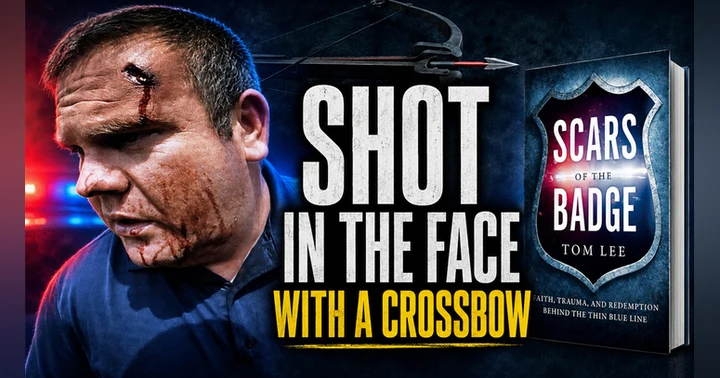
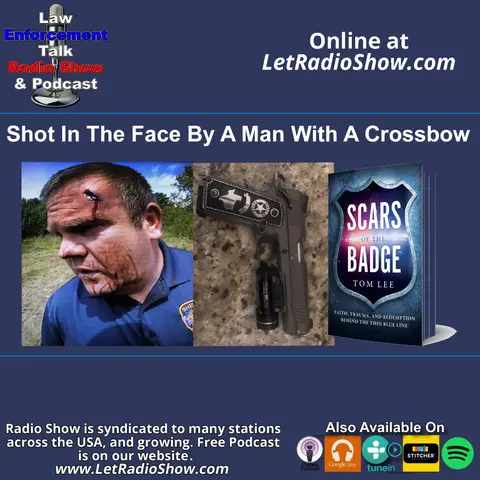
 Shot in the Face by a Man With a Crossbow. A mental health crisis call became a fight for survival, and one of the most extraordinary chapters in a 23-year law enforcement career. The Podcast is available for free on the Law Enforcement Talk Radio Show and Podcast website, also on Apple Podcasts, Spotify, YouTube, iHeartradio and most major podcast platforms. #LawEnforcementTalk #Free #Podcast #Radio
Hardin County Texas Sheriff’s Sergeant Tom Lee had responded to countless difficult calls during more than two decades in law enforcement. On June 20, 2019, he and a caseworker approached a home believing they were there to help a family in crisis. The Law Enforcement Talk Radio Show and Podcast social media like their Facebook , Instagram , LinkedIn , Medium and other social media platforms.
The request had come from relatives of a 38-year-old man who was reportedly experiencing a mental health emergency. Lee was serving with the local Sheriff’s Office mental health division, a role requiring patience, communication, restraint, and the ability to recognize when a troubled person might become dangerous. Supporting articles about this and much more from Law Enforcement Talk Radio Show and Podcast in platforms like Medium , Blogspot and Linkedin.
Nothing about the assignment suggested that Lee would soon be shot in the face by a man with a crossbow.
The central fact remains almost impossible to comprehend:
“The crossbow bolt struck him just above his left eye.”
The impact could have killed him instantly. Instead, the bolt miraculously failed to penetrate his skull. Although seriously injured, Lee stayed in the fight, returned fire with his service weapon, and stopped the threat. Shot in the Face by a Man With a Crossbow.
Both men survived.
For Lee, however, physical survival was only the beginning. The ambush became part of a much larger story involving trauma, faith, career setbacks, family, law enforcement service, and the long road toward redemption.
That journey is the foundation of his first book, Scars of the Badge: Faith, Trauma, and Redemption Behind the Thin Blue Line. Lee discussed the attack, his recovery, and the emotional cost of police work as a guest on the Law Enforcement Talk Radio Show and Podcast.
A Mental Health Call With a Terrifying Outcome
Lee and a mental health caseworker responded to the residence after the suspect’s family requested help from the sheriff’s office mental health division.
Calls involving a person in crisis are among the most unpredictable assignments in law enforcement. Officers may encounter someone who is frightened, delusional, suicidal, angry, confused, under the influence, or unable to understand what is happening around them. The person may need urgent treatment while also presenting a danger to relatives, clinicians, responding officers, or himself.
The objective is often to slow the encounter down, communicate calmly, and connect the individual with appropriate services. But even a carefully planned response can change without warning. He shares the full story as a guest on the Law Enforcement Talk Radio Show and Podcast, available on Apple, Spotify, YouTube, and other major podcast platforms. The interview is also featured across Facebook and Instagram.
While Lee and the caseworker were at the property, the 38-year-old suspect emerged from the home armed with a crossbow. He fired at Lee, striking him in the face above the left eye.
There was no time for a lengthy assessment. Lee had been ambushed with a weapon capable of causing catastrophic injury or death.
Despite the bolt that hit him near his eye, Lee returned fire. His rounds wounded the suspect and neutralized the immediate threat.
The event illustrates a reality that is frequently lost in brief News reports and Social Media discussions: officers responding to mental health calls may be attempting to help someone, yet they must also be ready to defend themselves and others in a fraction of a second.
“The call began as an effort to help a family. It became a deadly-force encounter in seconds.”
Survival Against Extraordinary Odds
Lee’s survival was remarkable.
The crossbow bolt struck just above his left eye but did not penetrate his skull. He received medical treatment and was eventually released from the hospital to continue recovering.
The suspect also survived after being airlifted to a regional hospital for treatment of his gunshot wounds. Authorities later arrested him and charged him with first-degree felony aggravated assault on a public servant. Shot in the Face by a Man With a Crossbow. The episode is available across major platforms including their website, Apple Podcasts, Spotify, YouTube, with highlights shared across their Facebook, Instagram, and LinkedIn profiles.
A Texas jury found the man guilty on June 23, 2021. He reportedly received a sentence of approximately 60 years in prison.
The verdict provided legal accountability, but a criminal conviction could not erase what happened. Lee still had to live with the physical and psychological consequences of being attacked at close range.
The public often sees an injured officer’s photograph, reads a short update, and moves on to the next headline. The officer and family cannot move on so quickly.
Recovery may include pain, medical appointments, disrupted sleep, anxiety, anger, intrusive memories, and the unsettling awareness that an ordinary workday nearly ended a life. The visible injury may heal while the emotional effects continue in private.
That hidden side of survival became one of the driving themes behind Scars of the Badge.
Before the Crossbow: A Career-Altering Setback
Lee’s law enforcement journey was not defined by a straight line of promotions and accomplishments.
Before serving with the Hardin County Sheriff’s Office, he worked for a university police department. That position ended after a controversy involving his speed while pursuing a vehicle during a traffic stop.
Being fired could have ended his police career. It could also have permanently defined the way he viewed himself.
Instead, the setback became part of a longer story about mistakes, consequences, perseverance, and second chances.
The episode adds important context to Lee’s memoir. Scars of the Badge is not presented as the story of a flawless officer. Its power comes from a more honest premise: a badge does not protect the person wearing it from failure, trauma, doubt, or the need for redemption. The Podcast is available for free on the Law Enforcement Talk Radio Show and Podcast website, also on Apple Podcasts, Spotify, YouTube, iHeartradio and most major podcast platforms.
The book’s subtitle identifies its central themes with three carefully chosen words:
“Faith, Trauma, and Redemption.”
Lee’s earlier firing and later crossbow ambush were very different events, but both forced him to confront uncertainty about his future. One threatened his professional identity. The other threatened his life.
In each case, continuing required more than physical toughness.
The Emotional Weight Behind the Badge
During more than 23 years of service, Lee responded to tragedy, violence, crisis, and human suffering. Each call carried the possibility of leaving a mark.
Law enforcement officers are expected to remain composed while others are experiencing the worst moments of their lives. They see injured children, grieving families, violent suspects, fatal crashes, suicides, abuse, addiction, and mental illness. They may be threatened, attacked, or forced to use deadly force.
Then they are expected to finish the report, clear the call, and remain ready for whatever comes next.
The accumulated effects are not always obvious. An officer may appear calm at work while becoming distant at home. Sleep may become difficult. Patience may shorten. A sound, smell, location, or routine call may trigger a memory of a previous tragedy. Shot in the Face by a Man With a Crossbow. The Law Enforcement Talk Radio Show and Podcast continues bringing listeners real conversations from the front lines of crime, policing, trauma, survival, and healing.
Lee’s experience gave him an especially vivid example of that burden. Being shot in the face with a crossbow was not merely an unusual headline. It was an event that affected his body, mind, faith, family, and understanding of service.
“Survival is not always the end of the incident. Sometimes it is the beginning of the recovery.”
That truth applies far beyond Lee’s case. Police officers, firefighters, emergency medical personnel, corrections officers, military veterans, and other first responders may survive an attack or traumatic event while continuing to struggle with its effects for years.
Writing Scars of the Badge in Five Weeks
Lee eventually turned his experiences into Scars of the Badge: Faith, Trauma, and Redemption Behind the Thin Blue Line.
Released in May, the memoir offers a candid examination of the emotional, psychological, and spiritual challenges that can accompany a law enforcement career. It explores the difficulty of responding to tragedy and violence while also trying to remain present for family, maintain faith, and continue serving the public.
The book came together with surprising speed. Lee told noon anchor Patrina Adger that it took him only five weeks to write.
That rapid process suggests the material had been accumulating for years. The words may have reached the page in a little more than a month, but the experiences behind them were shaped across decades.
The crossbow attack is a central part of the memoir, yet the book reaches beyond a single incident. It examines what happens when the uniform comes home with the officer, when the demands of the job influence relationships, beliefs, emotions, and identity.
Since its release, Scars of the Badge has received numerous five-star reader reviews and attracted interest from law enforcement professionals, first responders, and faith-based audiences.
Its appeal is understandable. Lee’s story contains an extraordinary attack, but its deeper themes are widely relatable: failure, fear, perseverance, faith, forgiveness, and the search for meaning after trauma.
Why the Title Matters
The phrase “scars of the badge” describes more than the injury above Lee’s left eye.
Some scars are physical and immediately visible. Others appear as nightmares, strained relationships, anxiety, spiritual questions, or memories that refuse to remain in the past.
The badge represents service and authority, but it can also carry personal costs rarely seen by the public. Lee’s memoir challenges the idea that courage means remaining unaffected.
Real courage may involve acknowledging the wound, asking difficult questions, seeking help, reconnecting with faith, and deciding that trauma will not write the final chapter.
Redemption is equally important to the story. Lee experienced a career setback before rebuilding his place in law enforcement. Years later, after surviving the crossbow attack, he again had to determine what came next.
The book does not treat redemption as the erasure of the past. Instead, it frames redemption as the process of using painful experiences to create something that may help others. Supporting articles about this and much more from Law Enforcement Talk Radio Show and Podcast in platforms like Medium , Blogspot and Linkedin.
The Complicated Reality of Mental Health Calls
The 2019 attack also highlights the complexity of law enforcement’s role in mental health crises.
The suspect’s family asked for assistance. Lee responded as a mental health liaison deputy alongside a caseworker. The purpose of the visit was intervention, not punishment.
Yet the situation became violent.
That does not mean every mental health call is dangerous or that people living with mental illness should be treated as threats. Most are not violent. It does mean responders must balance compassion, de-escalation, treatment needs, family concerns, and safety in circumstances that can shift rapidly.
Lee’s case demonstrates why cooperation between law enforcement agencies, clinicians, crisis workers, families, and community services is so important. It also shows why mental health responders need training, communication tools, protective strategies, and adequate resources.
No approach can eliminate every danger. The crossbow ambush was a brutal reminder of that limitation.
From Local News to a National Podcast Audience
Lee’s story first emerged through local News coverage, but the lessons extend well beyond Hardin County, Texas.
Through the Law Enforcement Talk Radio Show and Podcast, audiences can hear the larger story behind the headline. The conversation explores the crossbow attack, the force Lee used to stop the suspect, the criminal case, his recovery, his earlier firing, and the faith that helped him continue.
The interview is available on Apple, Spotify, YouTube, and other major Podcast platforms. Additional clips, articles, and episode information can be shared through Facebook, Instagram, and other Social Media channels.
Those platforms give listeners an opportunity to look beyond a dramatic headline and understand the human being behind it.
A Story About More Than Survival
Tom Lee could easily be remembered only as the Texas deputy who was shot in the face by a man with a crossbow.
That description is accurate, but incomplete.
He is also an officer who endured a humiliating career setback and found a way forward. He is a mental health liaison deputy who responded to help a family and nearly lost his life. He is a survivor who returned fire under unimaginable circumstances. He is an author who transformed decades of pain, service, and reflection into a book written in five weeks. Shot in the Face by a Man With a Crossbow. The show is distributed through Apple Podcasts, Spotify, YouTube, iHeartradio and other podcast platforms. Its interviews are also promoted across Facebook, Instagram, and other social media channels.
Most importantly, his story asks a question relevant to anyone who has experienced failure or trauma: What will the person do with the scars?
Lee chose to tell the truth about them.
Scars of the Badge: Faith, Trauma, and Redemption Behind the Thin Blue Line does not present survival as a clean ending. It presents recovery as a continuing process, one shaped by faith, family, accountability, and the willingness to speak openly about what the badge can cost.
His physical wound became visible evidence of an extraordinary attack. His memoir reveals the less visible wounds and the lessons that followed.
The full interview with Sheriff’s Sergeant Tom Lee is featured on the Law Enforcement Talk Radio Show and Podcast. Listeners can find the episode on Apple, Spotify, YouTube, and other major podcast platforms, with additional content on Facebook, Instagram, and Social Media.
The attack lasted only moments.
The story of survival, trauma, faith, and redemption is still being written.
Get the Free Clubhouse App, it is Drop In Social Audio. Think of it as your own talk radio show on your phone, and best of all it is free. Be sure to look for me and follow me, that’s John J Wiley or @letradioshow you can do all that here.
The Law Enforcement Talk Radio Show and Podcast social media like their Facebook , Instagram , LinkedIn , Medium and other social media platforms.
You can contact John J. “Jay” Wiley by email at Jay@letradio.com , or learn more about him on their website .
Find a wide variety of great podcasts online at The Podcast Zone Facebook Page , look for the one with the bright green logo.
Be sure to check out our website .
Be sure to follow us on X , Instagram , Facebook, Pinterest, Linkedin and other social media platforms for the latest episodes and news.
Listeners can find the show across Apple, Spotify, YouTube, Facebook, Instagram, and other podcast and social media platforms.
Learn and get access to money saving tips and how to increase your net worth at www.LetSavings.com
For a community of like minded individuals from all over the planet that want to improve their lives, relationships and business. Learn what they need, and develop the life that they’ve always wanted.
We host weekly rooms on the Clubhouse Drop In Social Audio App. The App and Your Confident Life rooms are free of charge. You can get more information about Clubhouse and Your Confident Life for free here.
Download the Free Ebook about ways and tips to improve your health. You can get the ebook for free at www.LetHealthy.com
Listen to the Law Enforcement Talk Radio Show and Podcast on their website, Facebook, Instagram, YouTube, Apple Podcasts, Spotify, iHeartRadio, and most major podcast platforms.
Shot in the Face by a Man With a Crossbow.
Attributions
Scars of the Badge: Faith, Trauma and Redemption Behind the Thin Blue Line
Hosted by Simplecast, an AdsWizz company. See pcm.adswizz.com for information about our collection and use of personal data for advertising.