 Apple Podcasts Apple Podcasts
  Spotify Spotify
  Amazon Music Amazon Music
  Audacy Audacy
  Audible Audible
  Castbox Castbox
  Castro Castro
  Deezer Deezer
  Fountain Fountain
  Goodpods Goodpods
  iHeartRadio iHeartRadio
  PocketCasts PocketCasts
  Podcast Addict Podcast Addict
  Podchaser Podchaser
  Podverse Podverse
  Spreaker Spreaker
  Podurama Podurama Apple Podcasts Apple Podcasts Spotify Spotify Amazon Music Amazon Music Audacy Audacy Audible Audible Castbox Castbox Castro Castro Deezer Deezer Fountain Fountain Goodpods Goodpods iHeartRadio iHeartRadio PocketCasts PocketCasts Podcast Addict Podcast Addict Podchaser Podchaser Podverse Podverse Spreaker Spreaker Podurama Podurama
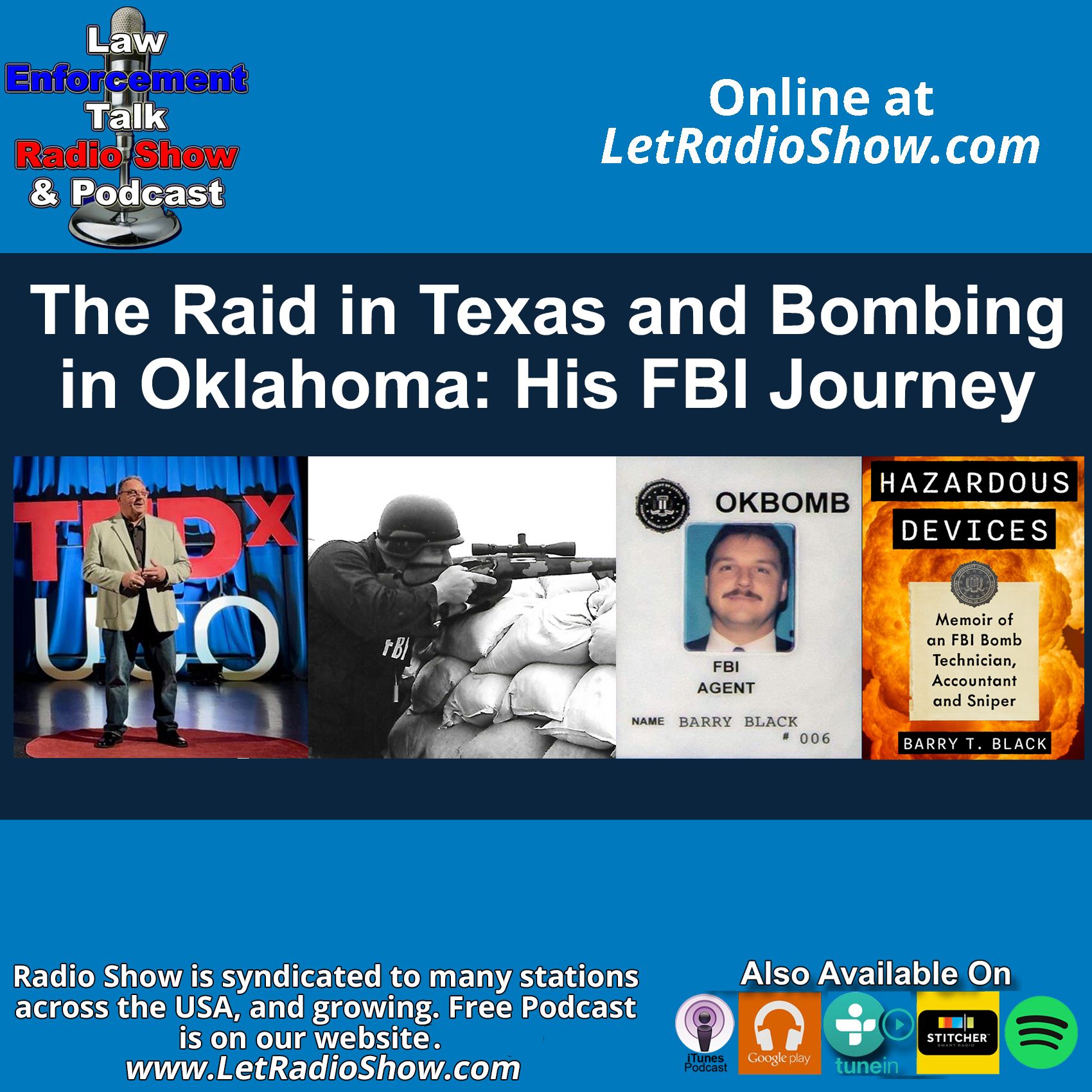
 The Raid in Texas and Bombing in Oklahoma: His FBI Journey. Across Facebook, Instagram, YouTube, Apple, Spotify, Podcast platforms, LinkedIn, and national News outlets, one story continues to resonate with audiences, a story not just about law enforcement, but about survival, sacrifice, and witnessing history from the front lines. The Law Enforcement Talk Radio Show and Podcast social media like their Facebook , Instagram , LinkedIn , Medium and other social media platforms.
This is the story of a retired FBI sniper and master bomb technician, an accountant who stepped into a world few ever experience, and who would go on to play a role in some of the most pivotal and tragic events in modern American history. The Podcast is available for free on the Law Enforcement Talk Radio Show and Podcast website, also on Apple Podcasts, Spotify, YouTube and most major podcast platforms. #Free #Podcast #Radio
“I didn’t sign up thinking I’d be in the middle of national tragedies,” he said. “But once you’re in, you go where the mission takes you.” Supporting articles about this and much more from Law Enforcement Talk Radio Show and Podcast in platforms like Medium , Blogspot and Linkedin .
From Accountant to Elite FBI Operator
At just 24 years old, he entered the FBI expecting a traditional path, financial crimes, audits, investigations rooted in numbers. But the Bureau quickly recognized something more. Over time, he transitioned into specialized roles, becoming a SWAT sniper, master bomb technician, and counterterrorism instructor.
This transformation required intense training, mental discipline, and a willingness to face life-threatening situations. The Raid in Texas and Bombing in Oklahoma: His FBI Journey. The episode is available across major platforms including their website, Apple Podcasts, Spotify, YouTube, with highlights shared across their Facebook, Instagram, and LinkedIn profiles.
“You’re trained to think differently, to slow everything down in the middle of chaos,” he explained. “That’s what keeps people alive.”
His career would soon test those skills in ways no one could have predicted.
Waco, Texas, On Scene for The Raid
One of the first major events that defined his career was the Waco siege in Texas, a confrontation that began with a planned federal raid and evolved into a 51-day standoff.
The operation, initially intended to serve warrants, quickly escalated into violence. A loss of surprise led to a deadly exchange of gunfire, followed by weeks of tense negotiations between federal agents and members of the Branch Davidians. Available for free on the Law Enforcement Talk Radio Show and Podcast website, also on Apple Podcasts, Spotify, Youtube and most major Podcast networks.
“Waco was one of those moments where everything changes in real time,” he said. “You’re constantly reassessing, constantly adapting.”
The siege ended in tragedy, with dozens killed, including children, an outcome that sparked debates and scrutiny that continue to this day.
“There are events you don’t leave behind. Waco is one of them,” he reflected.
Oklahoma City: The Day Terror Hit the Heartland
In 1995, he found himself responding to another catastrophic event, the Oklahoma City bombing, the deadliest act of domestic terrorism in U.S. history. The Raid in Texas and Bombing in Oklahoma: His FBI Journey.
A truck bomb detonated outside the Alfred P. Murrah Federal Building, instantly turning a normal morning into a scene of devastation. Buildings were destroyed, lives were lost, and the nation was shaken.
“It was absolute chaos. You’re looking at something that feels like a war zone, but it’s right here at home,” he said. The Law Enforcement Talk Radio Show and Podcast on social media like their Facebook , Instagram , LinkedIn , Medium and other social media platforms.
For him, the tragedy was not just professional, it was deeply personal. His wife worked inside that very building and survived the explosion.
“That moment changes how you see everything. It’s not just a job anymore, it’s your life,” he said.
The investigation that followed became one of the most exhaustive in FBI history, quickly identifying Timothy McVeigh as the suspect and uncovering a network tied to the attack.
9/11 and Ground Zero: Loss Beyond Words
Years later, the attacks of September 11th would once again place him at the center of tragedy. Responding to the World Trade Center, he witnessed the aftermath of one of the most devastating attacks in history. The Raid in Texas and Bombing in Oklahoma: His FBI Journey. You can listen to the complete interview for free on our website, also on Apple Podcasts, Spotify, Youtube and most major podcast platforms.
But this time, the cost hit even closer.
“We lost my partner at the World Trade Center,” he said. “That’s something you carry with you forever.”
The long-term impact extended beyond emotional loss. Years after working at Ground Zero, he was diagnosed with cancer, believed to be linked to exposure at the site.
“You don’t think about it in the moment. You’re focused on the mission. But years later, you realize the toll it’s taken,” he shared.
A Career Without Borders
His expertise didn’t stop at U.S. operations. Over more than three decades, he trained law enforcement and military units across the globe, from Europe to the Middle East and beyond. The Raid in Texas and Bombing in Oklahoma: His FBI Journey.
He became a trusted instructor, teaching counterterrorism tactics, bomb disposal, and crisis response strategies to elite units worldwide.
“The threats are global, so the training has to be global too,” he explained.
Whether advising governments, supporting major security events, or testifying as an expert, his role evolved into shaping the next generation of responders.
You can find the Law Enforcement Talk Radio Show and Podcast on Facebook, Instagram, Pinterest, X (formerly Twitter), and LinkedIn, as well as read companion articles and updates on Medium, Blogspot, YouTube, and even IMDB.
Life After the FBI
After retiring in 2019, he didn’t step away from service. Instead, he transitioned into education, public speaking, and storytelling, sharing his experiences with audiences eager to understand what really happens behind the scenes. The Raid in Texas and Bombing in Oklahoma: His FBI Journey.
He now speaks at memorials, universities, and national events, helping preserve the lessons learned from some of the nation’s darkest days.
“If these stories can help prepare someone else, or even save a life, then they need to be told,” he said.
The Memoir: A Firsthand Account
His experiences are captured in the book Hazardous Devices: Memoir of an FBI Bomb Technician, Accountant and Sniper, offering readers an unfiltered look into the realities of law enforcement at the highest level.
From financial crimes to sniper operations, from bomb scenes to global counterterrorism missions, the memoir reveals the breadth of responsibility carried by those who serve.
“It’s not just about the operations, it’s about the people, the losses, and the moments that define you,” he said. The episode is available across major platforms including their website, Apple Podcasts, Spotify, YouTube, with highlights shared across their Facebook, Instagram, and LinkedIn profiles.
A Story That Continues to Reach Millions
Today, his story is being shared through a Free Podcast, connecting with audiences across every major platform, Facebook, Instagram, YouTube, Apple, Spotify, and LinkedIn.
Listeners are drawn not just to the events, but to the human side of the story, the resilience, the sacrifice, and the reality of living through history. The Raid in Texas and Bombing in Oklahoma: His FBI Journey.
“People see the headlines, but they don’t always see what happens behind them,” he said.
A Legacy of Service and Sacrifice
From the raid in Texas to the bombing in Oklahoma, from 9/11 to global counterterrorism efforts, his journey is a testament to dedication and courage.
It is also a reminder of the cost, both seen and unseen, of standing on the front lines.
“You don’t walk away the same person,” he said. “But you hope that what you did made a difference.”
Be sure to follow us on X , Instagram , Facebook, Pinterest, Linkedin and other social media platforms for the latest episodes and news.
Background song Hurricane is used with permission from the band Dark Horse Flyer.
Learn and get access to money saving tips and how to increase your net worth at www.LetSavings.com
You can contact John J. “Jay” Wiley by email at Jay@letradio.com , or learn more about him on their website .
Get the Free Clubhouse App, it is Drop In Social Audio. Think of it as your own talk radio show on your phone, and best of all it is free. Be sure to look for me and follow me, that's John J Wiley or @letradioshow you can do all that here.
Find a wide variety of great podcasts online at The Podcast Zone Facebook Page , look for the one with the bright green logo.
Be sure to check out our website .
Listen to the full story on the Free Podcast, available on the Law Enforcement Talk Radio Show and Podcast Website, on Facebook, Instagram, YouTube, Apple, Spotify, and more.
Download the Free Ebook about ways and tips to improve your health. You can get the ebook for free at www.LetHealthy.com
The Raid in Texas and Bombing in Oklahoma: His FBI Journey.
Attributions
Wikipedia
Amazon
Hosted by Simplecast, an AdsWizz company. See pcm.adswizz.com for information about our collection and use of personal data for advertising.
John J. Wiley (0:00): He's a retired FBI sniper. He was on scene at Waco, the siege at Waco, the Oklahoma City bombing where his wife was there. Fortunately, she survived. He was even assigned to the nine eleven World Trade Center terrorism attack. He's here to talk about all that and more on the law enforcement talk radio show.
John J. Wiley (0:21): Welcome to the law enforcement talk radio show. In the law enforcement talk radio show, we are joined by special guest talking about their experiences, their realities of investigating crimes, plus those who have experienced horrendous trauma, police, first responders, military, and victims of crime share their stories. Hi. I'm John J. Wiley.
John J. Wiley (0:42): In addition to being broadcaster, I'm also a retired police sergeant. Be sure to check out our website, letradio.com, and also like us on Facebook. Search for the law enforcement talk radio show. You can find us on Facebook. Look for and like the Law Enforcement Talk Radio Show Facebook page.
John J. Wiley (1:00): Joining us from Oklahoma, we have Barry Black on the Law Enforcement Talk Radio Show. Barry is a retired FBI sniper, bomb technician. He started his career as an accountant, which we'll talk about in a few moments. He's author of the book Hazardous Devices Memoir of an FBI Bomb Technician, Accountant, and Sniper. And his website is barryblackokc.com.
John J. Wiley (1:22): That's barryblackokc.com. Barry, thanks for your service, a, and b, thanks for being guests on the law enforcement talk radio show and talking about it.
Barry Black (1:30): Oh, it's my pleasure. Thanks for having me on.
John J. Wiley (1:32): And and by the way, Barry was diagnosed with cancer as a result of his deployment to the World Trade Center, which we'll talk about a little bit later on. I know this. I I looked at the FBI, and I was not qualified for the FBI because I didn't have a college degree. I wasn't a military veteran, and I didn't have accounting or back then computer skills or language skills. How did you make the jump from accountant to a bomb technician and FBI sniper?
John J. Wiley (1:59): That seems like a bit of a reach.
Barry Black (2:01): It was, an an odd ride for sure, and, really, the accounting, background was just means to an end. I never really wanted to be an accountant, but I did wanna be an FBI agent since I was a little kid. And speaking with the recruiter, very early on in college, I was told, hey. We're not hiring engineers, which is what I was studying. And she told me we're we're hiring accountants and lawyers.
Barry Black (2:24): Law school was three more years of school. And back then, they had an accounting test. So if I got an accounting degree, could have passed the FBI accounting test, they would waive this requirement for three years of practical work experience so I could get in really much sooner, and it got me in at the age of 24.
John J. Wiley (2:41): So the the thing is that a lot of people don't realize back then, and now it's language, computer skills, a lot of other things, but that sort of stuff will get you in the door. Why was accounting such a big deal?
Barry Black (2:53): Well, I I got in in 1988. And in the eighties, you may remember there was the oil bust, oil dropped. You know, the market's very volatile right now, but there were so many banks, in the Southwest, particularly in oil country, that made some really bad decisions in their loan making. So there were bank failures and a lot of bankruptcy fraud. So the the FBI is is pretty dynamic in its hiring.
Barry Black (3:16): They realized they were gonna need some people with accounting backgrounds, So they they put out that specialty request and a lot of people in my class were were in fact accountants.
John J. Wiley (3:25): There's a big difference between being a sniper and being a number cruncher.
Unknown Speaker (3:30): There is. Yes. I'll agree. I'll agree.
John J. Wiley (3:33): Although numbers and sniping plays into it. I was never a sniper. I was just street cop, and that's a skill set I really don't know much about. But you wanted to go was the the show FBI part of your influence of why you wanna go in there?
Barry Black (3:49): Oh, absolutely. The show itself, FBI, and, you know, the untouchables and all those things that young kids watch were, incredibly instrumental. And, I I actually had a little league coach that was an FBI agent, and he was a great role model and mentor. And I I hammered him with questions all through middle school and high school till he eventually handed me off to the recruiter. So I I had a lot of help along the way.
John J. Wiley (4:14): Is it is it like policing? I I've gotten to point where I rarely ever watch American made police dramas because they're so so far from the truth. They're not even remotely close. The FBI ones, are they are they just as distant?
Barry Black (4:31): You know, I watch them. I enjoy them. I've I've, been small parts, behind the scenes in one or two of them. A lot of it is factual, but they have to to jam so much into a sixty minute episode. Obviously, there are some kind of Hollywood liberties taken, but but they do make a good story.
John J. Wiley (4:49): One of the things that I get quite often is I'm retired Baltimore police, and I'll go, oh my god. Baltimore. Was it like the wire? Was it really like dinner go? Well, I'll give you an example that one of the characters in the wire, I could see elements of six or seven police I knew in that that one character.
John J. Wiley (5:07): What they'll do is they'll take all these elements from different people and combine them one because of time constraints.
Barry Black (5:13): Right. Exactly. And that's how you get, you know, everybody's identified with facial recognition or DNA. Sometimes that just doesn't exist on a crime scene. You know, best laid plans, and you still may not get usable DNA or or even fingerprints.
Barry Black (5:28): But on most of these shows, there's always some forensic clue that's that's left behind. And, you know, we'll we'll try to collect them, but sometimes they just aren't aren't there.
John J. Wiley (5:37): One of the things I get, you rob DNA, and that was in its infancy when I was policing. But one thing I see quite often now on television is contact DNA. They're gonna leave their DNA where I'm what are they talking about?
Barry Black (5:50): So contact DNA is, it can be as as few as seven skin cells. So if you touch more often a rough surface, you you slough off skin cells, and five to seven cells can be enough in certain circumstances to provide a positive ID. The the technology has changed so much, but it it is amazing.
John J. Wiley (6:13): And one of the things that that I don't get and that, I think a lot of people don't get, and maybe Hollywood is the blame, but I'm I'm a say not maybe. They're definitely blamed for this. The the Guthrie case that they talk about they recovered DNA. Well, that's great. But if you don't have a sample that matches up to that, you really got nothing.
Barry Black (6:34): Right. Well, you know, DNA is not always a silver bullet. You know, you you have to exclude people that had some reason to be on the scene.
John J. Wiley (6:44): Right.
Barry Black (6:45): But, yeah, if if you get DNA and nobody's been loaded in the database, if that string is identifiable, in theory, you could get what they call a John Doe warrant. We're looking for the person with his DNA so that if there's a statute of limitation, that warrant, would outlast the statute of limitation. So it can be handy, but, obviously, not everybody is in in the database.
John J. Wiley (7:08): When you started in the FBI and and one of the advantages of working with the Feds, I did about two years of a DEA in Baltimore. I was detailed to them as a US marshal, special deputy US marshal. It was a pretty sweet gig, but they had great equipment. They had great technology. They had great cars.
John J. Wiley (7:26): They had all the things that we didn't have. But Right. When I started, we didn't even have cell phones. We didn't have when we we started this drug investigation, it was with a clone pager and then a pen register. We had to sit there and register every time a phone call came in.
John J. Wiley (7:43): We'd rather document it. And then we'd follow-up with surveillance on that location, all that stuff. Nowadays, it seems like and this is I'm a pose this as a former question. Have you seen a lot of changes technology wise between when you first started now?
Barry Black (7:58): Oh, absolutely. When I went through the academy, we had to buy our own handcuffs. And, when I got on the SWAT team, we were buying our own boots. When I became a bomb technician, we were using, hope some people were using homemade disruptors. Yeah.
Barry Black (8:16): Budget plays into that a lot. You mentioned the task forces had better cars and better equipment. That that's just straight a function of budget. So, yes, it's as terrorism has become, more prevalent, the terrorism budget went up. And when I was a bomb technician, our tools and capabilities went up dramatically.
John J. Wiley (8:35): Well, I guess there's positives and there's negatives with that. And one of the things I get all the time, and I was thinking I was actually thinking about this in the shower, Barry, before my interview with you. It's like, man, policing nowadays, you got cell phones. You can ping a cell phone, tell if it banged off of we didn't have any of that stuff. And it seems to me that a lot of crimes are solved by old fashioned gumshoe policing.
Barry Black (8:57): Yeah. I I agree completely. And what we're losing, it seems, is the ability to to have, contact with individuals face to face. A face to face interview, can tell you things that you're not gonna get from texting or, you know, any kind of direct messaging. And I've I was a training agent for a while, and one of the newer agents asked while we were driving four hours of Oklahoma to interview somebody instead of emailing them.
Unknown Speaker (9:24): I said, because I wanna see his face.
John J. Wiley (9:26): Wanna see him. Expression on his face. We're talking about Barry Black. He's a retired FBI sniper, bomb technician. He's authored the book Hazardous Devices Memoir of an FBI Bomb Technician, Accountant, and Sniper.
John J. Wiley (9:37): His website is barryblackokc.com. Don't go anywhere. This law enforcement talk radio show will be right back.
Unknown Speaker (9:48): There are more than 700 free podcast episodes of the law enforcement talk radio show. Episodes are converted to a free podcast after airing on radio. You're bound to find a podcast episode that suits you at letradio.com, letradio.com. That's letradio.com.
John J. Wiley (10:17): Joining us from Oklahoma, we have Barry Black. He's retired FBI. I love the sign in there. Retired FBI. Bomb technician, sniper, accountant.
John J. Wiley (10:28): He's also an author of the book called Hazardous Devices Memoir of an FBI Bomb Technician, Accountant, and Sniper. His website is barryblackokc.com. It's barryblackokc.com. During your career in the FBI, Barry, it, we talked about how you got started as an accountant and why you did that. But you wanted being assigned to Waco, and I remember watching videos.
John J. Wiley (10:52): I still I cannot watch those videos of, the the ATF and other people on the roof and exchanging gunfire with I I I can't to this day stomach that stuff. It it brings up parts of me that I don't like.
Barry Black (11:05): Yeah. It it was difficult. It had never happened before. Obviously, there was that that initial raid. It did not go well.
Barry Black (11:14): There were four, of their agents killed, and, of course, some of the Davidians were killed. But there was basically a a ceasefire called, and president Clinton was new. The AG, Janet Reno, was new. And they basically said for the FBI to to get involved and and resolve it, and that's that's how the FBI got involved at all.
John J. Wiley (11:33): But you were there during the whole thing or just it came in towards the end of it?
Barry Black (11:38): Yes. So that after, after the raid, I was, unpacking from my honeymoon, and I we had pagers by then. The pager went off with a SWAT rally, and then my wife said, how is this gonna work? I said, I'm gonna pack for three days. This will be over in about three days, and, of course, it lasted for fifty one.
Barry Black (11:56): So I I was wrong on my first deployment.
Unknown Speaker (11:58): Yeah. You were slightly off by a little bit.
Unknown Speaker (12:01): She hasn't forgiven me for that either.
John J. Wiley (12:03): Well and by the way, they have long memories. And and here, I'll say this about police wives. And I use the term police that includes federal agents as well. No matter and I was married to a woman that that she didn't sign up for this stuff, and and the marriage failed. My wife now, she's phenomenal.
John J. Wiley (12:19): We've been married almost we've been together about thirty years. Fantastic. No matter where I was in the rank structure, this person always outranked me. If I was a sergeant, they're lieutenant. If I'm a lieutenant, they're a captain.
Barry Black (12:33): Well, the the families of of law enforcement and and the military, they you're right. They didn't sign up for it, but they're an integral part, through support, you know, while you're away and when you get home. And you've seen some horrible things. I know I have, and you can't come home and just unload that on your family. They're they're a huge support.
John J. Wiley (12:52): It's not fair to them, and I never wanted to to have them worry about me, and they still did anyway. But when you were being deployed to Waco, were you, like, jacked up and excited about this?
Barry Black (13:05): Well, it was just part of the job. I I had been on the SWAT team, and, the subset of the SWAT team was the sniper team. Back from TV shows, that's kind of what I wanted to do, and I was fortunate to get to do it. So when we were deployed, it was gonna be in support of the FBI office in Waco, and other teams would be coming in, as mutual aid. But we had no idea that this was gonna be this unprecedented historic event.
Barry Black (13:30): It was just another SWAT call out at the time.
John J. Wiley (13:32): And I I from memory, if my memory is correct, it is often not at this ripe old age. This thing went on a lot longer than most do. We we had situations. We did raids. They were done early in the morning usually when people were asleep.
John J. Wiley (13:49): And if we thought there's a chance of violence, we'd have a SWAT team or we will call QRT. They would do the room entry, but they would handle it. And we would cut off water if we need to, cut off electricity, all that stuff from Jump Street.
Barry Black (14:02): All of that was done. You know, this this was, I don't remember, you said you saw it on television. It was an enormous compound on the Flat plains of Texas. There was no good way to access even the compound.
John J. Wiley (14:16): Coming no matter what you did.
Barry Black (14:18): Oh, there was a there was a watchtower in the middle of that compound, and we were told that they had 50 caliber weapons. Yeah. It was a bad situation, so we borrowed some armor from Fort Hood and walked down this long country road on the safe side of that armor, got to our initial positions, and, you know, everybody was hopeful negotiations would work out. So we held there as the negotiations kinda ebbed and flowed, and it turned into that fifty one day standoff.
John J. Wiley (14:44): One of the things that and I had some guest on a long time ago, and they talked about there were a Waco for the raid. There were ATF. And one the things that they said was this guy, David Koresh, could have been arrested anytime in town. He went in town frequently.
Barry Black (15:00): Yes. And I I won't armchair quarterback the decision of that initial raid by the other agency. You know, we we inherited, that situation where there had already been a pretty severe a fierce firefight deaths. It was a bad situation. Yeah.
Barry Black (15:18): Decisions made before we got there, really, I'm not bait to even comment on.
John J. Wiley (15:22): I'm I agree with you. And one thing is I tell people all the time, and trust me, I love police, and that includes federal agency, state troopers, deputies, you name. I love them. However, when you get the so called tactical and American quoting tactical experts, they say, if I was there, I'd done this. I go, you weren't there, so I shut your pie hole.
Barry Black (15:41): Yeah. It it's it's difficult. You know, hindsight is always perfect. Things don't always go well in tactical situations, but, yeah, I would never, assume to to back, you know, kind of armchair quarterback those decisions. But it it did not go well.
Barry Black (15:57): And, you know, the ferocity of fire they took, I was, briefed by one of their, SRT, their special response team, and he had taken a shotgun blast from an upper story window. It was a pretty dramatic brief in, and we we expected some problems, but had no way to know it would last fifty one days.
John J. Wiley (16:14): And you had obviously, you packed for three days. So Yeah. Listen. There's I'm not able to go into details, but you had to make a run to the the store to get change of underwear.
Barry Black (16:24): Sure. Well and I'd mentioned I'd just gotten married. And back in the day, our wedding photos were on 35 millimeter film, so that wedding photographer was pressing my new wife to get his, his proofs back. So my sniper partner, his wife, drove my new bride to Waco with the photos so we could pick our wedding pictures and some other some other gear.
John J. Wiley (16:46): Listen. Barry, one of the things that I can only assume this is the case with feds. With police, they're long on memories, and they're quick to give people nicknames, and they tease each other relentlessly. I could see being an active sniper and having your wife show up with wedding photos. Did you catch any flack from that?
Barry Black (17:05): You know, we were on twelve hour shifts with an hour brief and debrief on each end. When we got done, everybody just tried to get some sleep. Yeah. There there wasn't a lot of time for joking around. It was a it was a crisis situation.
Barry Black (17:18): You know, it was a bad situation all in all. The team was was was, you know, great. We're all good friends. And, yeah, it was just once it turned into that that protracted situation, it was just, you know, do your shift, try to get some sleep, and then show back up and do your shift again.
John J. Wiley (17:33): Before we go to break, I've gotta ask you one quick question. And one of the things I get quite often from police is like, is it, woah. You ever in a shooting? And I'm like, yeah. I was in four of them in a little more than ten years.
John J. Wiley (17:45): And I'm like, you gotta be kidding me. I don't go in a lot of details. But did you expect did you encounter agents to go, man, you've been through a ton?
Barry Black (17:55): Yes. In thirty one years with the some pretty major events, historic events, my my career was not unique. Even my buddies tell me that. It was a strange ride, I got to do a lot of kind of unusual things with some amazing people.
John J. Wiley (18:09): We're talking with Barry Black. He's retired FBI sniper and bomb technician. He's an accountant turned FBI sniper and bomb technician, which we will turn to in a few moments. And wrapping up a conversation about being at Waco, the siege at Waco. He was also at the Oklahoma City bombing.
John J. Wiley (18:25): His wife worked at the the building where the bombing took place. He was the World Trade Center. He got cancer from World Trade Center. One of his partners was killed. We'll talk more about that.
John J. Wiley (18:35): He's the author of the book. Has his device's memoir of an FBI bomb technician accountant and sniper, and his website is barryblackokc.com. It's barryblackokc.com. This is law enforcement talk radio show. We'll take a short break.
John J. Wiley (18:47): We'll be right back. Of all the radio stations in The United States, there are no other shows like the Law Enforcement Talk Radio Show. And on Facebook, there's only one official page. Do a search on Facebook for the Law Enforcement Talk Radio Show, and be sure to like the Law Enforcement Talk Radio Show Facebook page. During conversation with Barry Black on law enforcement talk radio show, Barry's retired FBI sniper, bomb technician, accountant.
John J. Wiley (19:25): He's also off the book Has This Device's memoir of an FBI bomb technician accountant and sniper. His website is barryblackokc.com. That's barryblackokc.com. I think the OKC is for Oklahoma City. Am I correct?
Unknown Speaker (19:38): Correct. Oklahoma City.
John J. Wiley (19:40): So by the way, Oklahoma City is also I remember watching video of the is it the Edward R Murrow Building, the bombing?
Unknown Speaker (19:49): Yeah. The Alfred, yes. Alfred, Murrow Federal Building. Yes. Alfred Murrow.
Unknown Speaker (19:55): Yep.
John J. Wiley (19:55): And and by the way, Timothy McVeigh was one of the the main players in this. He was caught on a routine routine traffic stop, several hours later. And that's constantly I bring it up because people are constantly saying, oh, routine traffic stops or minor traffic stops. We need to get rid of those things. And I'm telling you, that's when the old Gnomeshew police work that can pay off big time.
Barry Black (20:20): Absolutely. So, McVeigh had detonated the bomb in front of the Alfred P. Murrah Federal Building, driven northbound on I 35, and this was a a huge blast. It it registered 3.2 on the Richter scale, still the largest act of domestic terrorism in the country. But Oklahoma Highway Patrol trooper Charlie Hanger, he was driving south to come help in Oklahoma City, but his, dispatch of course, they still have policing responsibilities in other parts of the state being the highway patrol.
Barry Black (20:52): So he was told to turn back around and go to his patrol zone. As he was making that u-turn in the median, McVeigh passed him in this old yellow Mercury, but Mercury didn't have a license plate. So he, trooper Hanger pulled him over for failure to display a license plate. And when McVeigh got out, Charlie realized he had a gun under his jacket. So, in classic, OHP fashion, McVeigh said, hey.
Barry Black (21:18): I've got a gun and mine floated. Charlie put his gun to McVeigh's head and said, so is mine. Yeah. Arrested him for failure to display a plate and having that weapon, which was illegal back then. He didn't know he had just bombed the Murrah Building.
Barry Black (21:31): So he was sitting in a county jail. We ended up doing an offline NCIC search for McVeigh by name. Realized he was still sitting, in jail about 90 miles north. I had the air assets at the time, and we got a helicopter. I flew up, landed on the highway to seize the car, and then my partner and other agents flew on ahead into federal custody of McVeigh.
John J. Wiley (21:55): And by the way, the term where you said, you know, my gun's loaded too, that was what we call verbal judo, and the Baltimore police were notorious for that.
Barry Black (22:05): Well, I I saw Charlie at a law enforcement society meeting day before yesterday. He he's a quiet, unassuming guy. He's a he's a great man. He's retired now as well. But, yeah, what a great guy.
John J. Wiley (22:16): Well, next time you see him, tell him I said thank you. Because I I don't think he knew and we're not here to tell his story, but I don't think he knew who he had, and what
Unknown Speaker (22:22): he had. No idea.
John J. Wiley (22:24): No. He had no idea. When this Oklahoma City bombing first of all, I as an American, I never thought that would happen here. That only happened overseas. And when I saw that on television, I was shocked.
Barry Black (22:36): Well, it had never happened before. Of course, there was the first World Trade Center attack, which was a a a big device. It's 1,200 pounds inside a garage. This was about 5,000 pounds parked outside on a city street, destroyed the the Murrah Building was completely destroyed, and it damaged another 300 buildings. The the size and magnitude of this blast was was really unbelievable.
John J. Wiley (23:01): And was your wife, working at the time?
Barry Black (23:05): So, we we got married just before Waco. She was a federal probation officer. That's how we met. So, yes, she was, the the the government cars, the g rides, we call them, were in the garage in the Murrah Building along with her personal car. And, she she worked in the building across the street, but had gone to the garage in the Murrah Building, gotten her government car, left the West Garage, pulled right drove right past the bomb on the north side of the building, made it a couple blocks away at the time of detonation, and she thought she had fallen into some giant construction hole on the highway that over pressure had had pushed her her vehicle, but she missed it by two minutes.
John J. Wiley (23:44): Did she realize how close she came?
Barry Black (23:47): Well, she didn't know immediately what had happened. Of course, you know, there weren't cell phones then, but once it became obvious, yes. So, her office was closed, obviously, And, you know, I was one of two FBI bomb technicians, so I really couldn't, you know, say I'm not coming to work. So that that was a difficult time just on a personal level is you have that that pull to to be home with your spouse who, by the grace of god, is still here.
Unknown Speaker (24:14): Right.
Barry Black (24:15): But, you know, you've there's there's only two of us in the state, and, there's a job to do. Plus, we knew other people that were killed in the building. It it was a very difficult time.
John J. Wiley (24:25): One of the things that I can relate to, and I didn't do anything to that level, trust me, but there's no saying no. When the bosses said you could do something, it didn't matter if there's 500 in the state. You didn't say no ever.
Barry Black (24:40): Well and as as you know, as a first responder, most of us and and our military partners are kinda type a people anyway. And, you know, it gets to a point where as a as a leader, as a manager, you have to send your people home just to get some sleep. But there were, I I believe there's a total of about 1,400 people worked just that investigation for nearly nine hundred days. It was an unbelievable effort.
John J. Wiley (25:07): And if my memory's correct, and it's quite often not, they were the the linchpin in solving the case was the rear axle from the truck?
Barry Black (25:17): Right. So there was a huge piece of twisted metal blown about a city block away, and a reserve deputy sheriff called me and my my biotech partner, Jim Norman, over. He spit on his finger, wiped away some grease, and revealed a CVIN, a confidential vehicle identification number. Jim and I both wrote it down. We called it out to make sure there were no errors, and we still didn't have cell phones at the time.
Barry Black (25:43): So Jim tore off his little paper from the tiny government memo pad we all had, gave it to a runner and took that to the command post, and then they were starting to run the CVIN, which led to Ford Motor. Ford said that it was a truck built for Ryder rental company. Ryder said it was assigned to a place in Junction City, Kansas called Elliott's Body Shop. So we flooded that place with, our state and local partners and FBI agents, got a sketch artist up there because there was not digital photography back then.
Unknown Speaker (26:12): Right.
Barry Black (26:13): And, got sketches of John Doe one and John Doe two. Got about, oh, well, nearly 16,000 leads from those sketches. But, yeah, that that's how those now infamous sketches were were gotten so fast.
John J. Wiley (26:26): And by the way, John Doe number one and John Doe number two turned out to be McVeigh and his partner.
Barry Black (26:32): Well, John Doe one was McVeigh. John Doe two was mystery and the the reason for so many conspiracy theories, but we we fully identified him as another soldier who was at Port Riley. He had been to Elliot's body shop, but just on a different day. The the composite was perfect of both of them, actually, the the sketch, but, the people that gave us their recollection had just sort of misremembered what day John Doe two was there.
Unknown Speaker (27:02): Gotcha.
Barry Black (27:02): But we spent about eight thousand hours identifying that man.
John J. Wiley (27:05): One of the things that amazes me, and I I would love for you to touch base on this, so many crimes of this magnitude are are are not solved because the evidence listen. I I talked to my wife the other day, and we talked as a famous quote that I love. You go to war with the army you have. You build a case with the evidence that presented. You can't create evidence.
John J. Wiley (27:26): There's certain things about that case that if they were not there, it it would be a lot harder to prove.
Barry Black (27:32): Well, finding that CVIN that early on, it was about, I don't know, maybe 10:30 that morning, which was enabled us to run that data and get to Elliott's body shop where there was an eyewitness, you know, who who rented this truck, and we got the sketch. So finding that, you know, was great. We had we did have some chemical residue, but it it was very minute because it rained that night.
Unknown Speaker (27:57): Right.
Barry Black (27:57): And a lot of the chemical explosive chemical residue was was washed away. But, yeah, some of this evidence that you need is is very, very small, and it just takes an extremely thorough crime scene investigation followed up by really good interviews to put a case together.
John J. Wiley (28:13): And do me a favor. Please tell your wife I said thank you, for her service as well. We're talking about Barry Black, retired FBI sniper, bomb technician. He's an encounter and FBI sniper, which is a mind blowing thing, but if when you think about it. He's authored the book Hazardous Devices Memoir of an FBI Bomb Technician Accountant and Sniper, and his website is barryblackokc.com.
John J. Wiley (28:34): It's barryblackokc.com. This is law enforcement talk ready to show. When we return, we're gonna talk about 911 World Trade Center. Don't go anywhere. We'll be right back.
John J. Wiley (28:50): If you wanna be a guest on the law enforcement talk radio show, simply contact us. It couldn't be easier. You can send us a message on Facebook. Look for and like the law enforcement talk radio show page or email jay@letradio.com. That's jay@LETRadio.com.
John J. Wiley (29:16): During conversation with Barry Black on the law enforcement talk radio show, Barry is retired FBI sniper, bomb technician. He started off as an accountant. He's authored the book Hazardous Devices, memoir of an FBI bomb technician, accountant, and sniper. His website is barryblackokc.com. It's barryblackokc.com.
John J. Wiley (29:36): As if you didn't have enough already in your long career, Barry, you you also have been dispatched to nine eleven World Trade Center terror attack. Tell us about that.
Barry Black (29:47): Well, obviously, it was a horrific event. I I had become a bomb technician in 1994, exactly fifty three weeks before McVeigh bombed the Murrah Building in Oklahoma City. And between, the bombing there in '95 and the, nine eleven attacks, I'd been given the opportunity to do a great deal of training and been to a number of special events. So, that morning, of course, everybody remembers where they were. The FBI went into high gear, and, four of us, special agent bomb technicians, were sent to New York in part because our special agent bomb tech there, Lenny Hatton, who was a great guy, he was killed rescuing people.
Barry Black (30:30): When the buildings collapsed, we lost Lenny. So we went up to support our office in New York for those, technical operations.
John J. Wiley (30:39): I I can't even begin to imagine the scope of of that disaster afterward. And and by the way, I I talk about this many many times on the show. Many years afterwards, I went to the construction area, and they had NYPD there. And I just wanted to say, you know, I'm retired Baltimore police, and I can't imagine losing that many people in one day. And I made it about three feet from them, and I started crying.
John J. Wiley (31:01): Right. To this day, I don't and I granted there's a lot of people that are born after that, but to this day, that has a huge impact on me. I can't imagine being on scene and trying to go from rescue mode to recovery mode?
Barry Black (31:17): Well, that job, the the rescue and recovery are are are done by first responders, and and my hats off, that was really not our part of it. You know, it was the the evidence would come through and if it had any kind of explosive element or we were backfilling the jobs with New York's special response teams when they would get leads for suspicious activity that may or may not have been tied to the attack. So it was a crazy time. There were a lot of things going on. But, yeah, the magnitude of the loss.
Barry Black (31:53): The crime scene itself was just a hellscape, something like I had never seen. It was, 14 acres of just absolute destruction.
John J. Wiley (32:01): And and how bad was the the health situation? Because I remember them saying that it wasn't that bad and people wearing little paper masks. And now we've we've actually lost more first responders, more people on scene from cancers than we did on scene from the disaster itself.
Barry Black (32:18): Right. Well and as as you know, first responders are kind of, let me help first. PPE, you know, whether it was available or not, you just went and did your job. I I remember being at Ground 0. You know, the smoke was still rising.
Barry Black (32:37): The little grids that cover walk don't walk signs were just packed with, you know, material. We did not know, you know, what we were breathing, and and we had teams at Freshkills Landfill that were sorting all that debris. But but, yes, more responders have died since the attack than died the day of the attack.
John J. Wiley (32:58): And you've had your own health scares as a result of working there?
Barry Black (33:02): I I did. About eight years after, I'd been having some sinus issues, which was really pretty common with with the first responders there. Seeing an ear, nose, and throat guy, and I said, hey. By the way, doc, what what is this? There's this little knot, kind of behind my left jawline.
Unknown Speaker (33:20): Good, by the way.
Unknown Speaker (33:22): No. It's you know, you gotta ask, so I did. And he he said, look. I don't know. So he sent me to couple of different folks.
Barry Black (33:30): Anyway, he was I was diagnosed with an exceptionally rare form of cancer that required surgery, six hours of surgery with a head and neck specialist. And thank God they got the whole tumor out, so I didn't have to have any treatments after. But I count myself as being very fortunate. Some other friends of mine in the explosives unit and other units have died because of of their exposures on scene. I'm I'm I'm blessed and quite fortunate.
John J. Wiley (33:58): You're very fortunate indeed, and that that is not lost on me that I can have this conversation with you. And by the way, a lot of these people that that have died from horrific illnesses died very young.
Barry Black (34:11): Right. Well, you look at the the average age of of the first responders. You know, it's not an easy job physically, And, you know, the the parameters just within the FBI. I mean, you're you're mandatorily retired at age 57, so you're gonna be, well below that, when you're doing some of these, more physically intensive jobs.
John J. Wiley (34:31): And one of the things I I jokingly say this, and then we'll go into what you're doing today in a moment, is when I was in the police academy back in 1980, we had a major at the time because the average life expectancy for Baltimore police at that time was 52. That's how long they lived. They usually lived two years after retiring and died. The average life expectancy, last time I read for an average American male police officer is 58, and the average life expectancy of American men is 73. So Right.
Unknown Speaker (35:03): We're still dying young.
Barry Black (35:05): Well and I think you'll find a correlation to the military as well. It's just the things you do, the things you see, the the operational tempo, the stress, it takes a a physical toll and a a physiological toll. And and that's it. It's important you have some way to to deal with all that because there's a whole good life after retirement. You just have to be around to enjoy it.
John J. Wiley (35:28): And by the way, speaking of your good life after retiring, you wrote this book, Hazardous Devices memoir of an FBI bomb technician, accountant, and sniper. What possessed you to do that?
Barry Black (35:38): Well, a a good friend of mine, when I was a little boy, she knew I wanted to be in the FBI. So when I got my letter to Quantico, she knew me well enough. She said, you're gonna forget all the cool stuff. Start writing it down. So I did.
Barry Black (35:51): I just kinda when I was flying from Kathmandu or Mogadishu or Tashkent, some of these crazy places, I would just jot down on the back of a napkin or something what we did, what we saw, what we ate, why we were there. And in retirement, I had a lot of free time, so I I strung those stories together really for my son, or his kids one day. But I was, contacted by a publisher. I I teach at the university now. I was contacted by a publisher to write a forensic science textbook.
Barry Black (36:21): And I said, well, I haven't really thought about that, but I do have this compilation of little stories from thirty one years in the FBI. And, it was it was sort of a surprise to me, but they they published it, and it's really going quite well.
John J. Wiley (36:34): Oh, I'm I'm thrilled for you. I really am because quite honestly, and this is part of the reason why I started the show nine years ago. Today's the nine year anniversary of it, the birth of this
Unknown Speaker (36:44): show. Congratulations.
John J. Wiley (36:46): I wanted to provide a platform, a national platform where people could tell their stories about the realities of policing because we we we get everything that seems to be washed with some political bias.
Barry Black (36:56): Right. Right. Well, in TV, you know, Hollywood's not necessarily realistic, then the news is usually negative. But the men and women that do the jobs we did, and I I will throw in our military partners, are public servants. They have servants' hearts, and they're to help people that need help.
John J. Wiley (37:15): And is it your your website, barryblackokc.com, a spin off of the book?
Barry Black (37:22): Well, I started, I've been doing some little speaking engagements here and there, and, the the last one I did down at the Dallas Holocaust Museum, they're like, well, we just happen to find you on LinkedIn. As I was talking to them, and a buddy suggested, you you should probably get a website. I'm not good at that, promotion part because as you know, in law enforcement, we usually couldn't even talk to the media. No. But it was good advice to get a little website.
Unknown Speaker (37:47): I I do some speaking now, and, of course, it's a a good avenue for the book as well.
Unknown Speaker (37:52): Is that a great place for people to reach out and get ahold of you?
Barry Black (37:55): That's a fantastic way to get me, Barry Black OKC dot com. The book's available on Amazon or wherever else you buy books, but sure. I I that's sort of what it's for, and I I hope it, continues to be a viable avenue.
John J. Wiley (38:07): That's barryblackokc.com. Now we're gonna change gears very quickly. Barry Black, is that your given name, or is that a made up name?
Unknown Speaker (38:16): No. That's that's my name. Yep. It's it's it, and I had to live with it when I was a kid. People would reverse it, you know, Blackberry or whatever.
Unknown Speaker (38:24): But, yeah, no, that's that's me.
John J. Wiley (38:26): I'm sure the song old Black Betty would was one you heard quite a bit.
Unknown Speaker (38:30): Well and and it mentions Birmingham. That's where I'm from. Uh-huh. That folds into.
John J. Wiley (38:35): Well, that's awesome. Barry, I I wanna thank you for your service, but I really wanted to thank you for talking about these things. They're not easy to talk about. They're not fun to talk about. You handled it with dignity and grace, and you're very much appreciated.
Unknown Speaker (38:48): Well, I appreciate your kind words, and thank you for your service as well.
John J. Wiley (38:52): I'd like to thank our guests for coming on the law enforcement talk radio show. The Law Enforcement Talk Radio Show is a nationally syndicated weekly radio show broadcast on numerous AM and FM radio stations across the country. We're always adding more affiliate stations. If you enjoyed the podcast version of the show, which is always free, please do me a favor and tell a friend or two or three. I'll be back in just a few days with another episode of law enforcement talk radio show and podcast.
John J. Wiley (39:20): Until then, this is John Jay Wiley. See