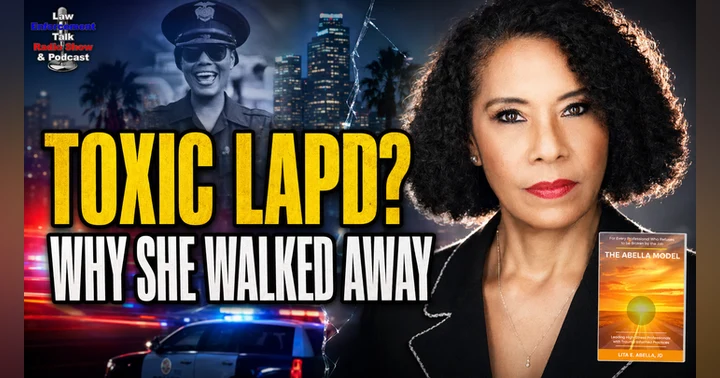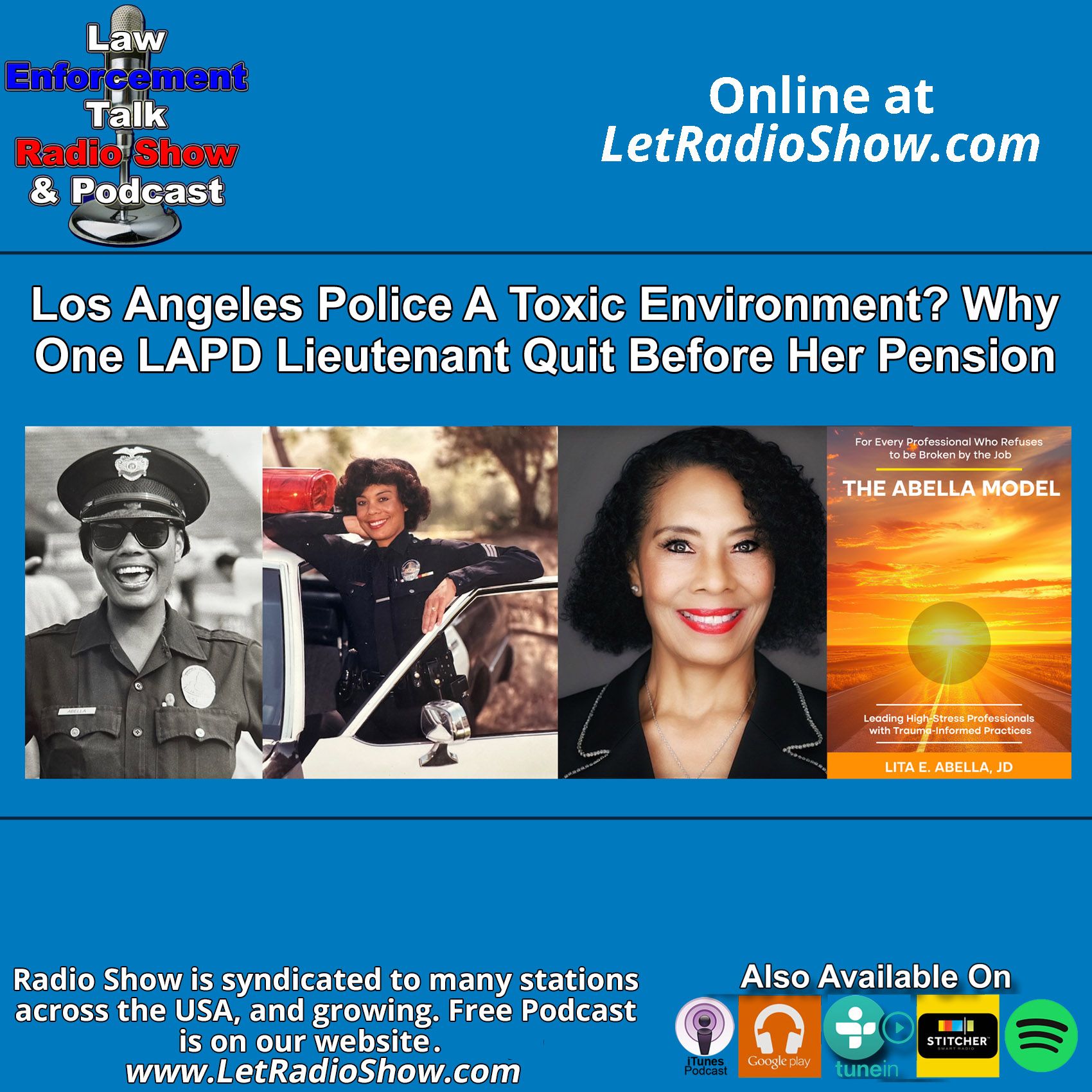
Los Angeles Police A Toxic Environment? For decades, the Los Angeles Police Department has been viewed as one of the most recognizable law enforcement agencies in America. Serving in a massive City like Los Angeles, California comes with intense pressure, dangerous calls, political scrutiny, and emotional trauma that few people outside of policing can truly understand.
 Apple Podcasts Apple Podcasts
  Spotify Spotify
  Amazon Music Amazon Music
  Audacy Audacy
  Audible Audible
  Castbox Castbox
  Castro Castro
  Deezer Deezer
  Fountain Fountain
  Goodpods Goodpods
  iHeartRadio iHeartRadio
  PocketCasts PocketCasts
  Podcast Addict Podcast Addict
  Podchaser Podchaser
  Podverse Podverse
  Spreaker Spreaker
  Podurama Podurama Apple Podcasts Apple Podcasts Spotify Spotify Amazon Music Amazon Music Audacy Audacy Audible Audible Castbox Castbox Castro Castro Deezer Deezer Fountain Fountain Goodpods Goodpods iHeartRadio iHeartRadio PocketCasts PocketCasts Podcast Addict Podcast Addict Podchaser Podchaser Podverse Podverse Spreaker Spreaker Podurama Podurama
 Los Angeles Police A Toxic Environment? Trauma, Stress, Race, Gender Discrimination, and Why One LAPD Lieutenant Quit Before Her Pension. For decades, the Los Angeles Police Department has been viewed as one of the most recognizable law enforcement agencies in America. Serving in a massive City like Los Angeles, California comes with intense pressure, dangerous calls, political scrutiny, and emotional trauma that few people outside of policing can truly understand. The Podcast is available for free on the Law Enforcement Talk Radio Show and Podcast website, also on Apple Podcasts, Spotify, YouTube, iHeartradio and most major podcast platforms. #Free #Podcast #Radio
But according to former LAPD Lieutenant Lita Abella, it was not the violence on the streets that ultimately forced her to leave policing just months before qualifying for her pension. The Law Enforcement Talk Radio Show and Podcast social media like their Facebook , Instagram , LinkedIn , Medium and other social media platforms.
She says it was the toxic environment inside the department itself.
In this emotional and revealing episode featured on Facebook, Instagram, Youtube, Apple Podcasts, Spotify, and major Podcast platforms nationwide, Abella speaks openly about trauma, stress, discrimination, internal politics, and what she describes as a deeply damaging culture within the Los Angeles Police Department. Supporting articles about this and much more from Law Enforcement Talk Radio Show and Podcast in platforms like Medium , Blogspot and Linkedin.
The #Free Podcast episode offers listeners a rare and personal look into the emotional cost of law enforcement from someone who spent years serving inside one of America’s most famous police agencies.
The Trauma Started Immediately
Many police officers remember their first horrific call for the rest of their lives.
For Lita Abella, that trauma came almost immediately.
She recalls responding to the death of a toddler who fell from a balcony early in her career. It was the kind of tragic scene that no amount of academy training can prepare an officer to handle emotionally.
Like countless officers across California and the United States, Abella quickly learned that police work often involves witnessing people during the worst moments of their lives. Los Angeles Police A Toxic Environment? Trauma, Stress, Race, Gender Discrimination, and Why One LAPD Lieutenant Quit Before Her Pension. The show is inspiring audiences through the Law Enforcement Talk Radio Show and Podcast Facebook, Instagram, YouTube, Apple, Spotify, iHeartradio and and many Podcast platforms.
Fatal accidents.
Violent assaults.
Domestic violence.
Dead children.
Shooting victims.
Suicides.
Murder scenes.
While the public may only see flashing lights or crime scene tape, officers often carry the emotional weight of those moments for years afterward.
Abella says one of the cases that stayed with her most involved a 16-year-old shooting victim who died in front of her.
Those experiences became part of her life as an LAPD officer.
Yet despite the emotional impact of traumatic calls, she says she found ways to manage the stress that came from the streets.
What became harder to survive was everything happening internally within the agency. Los Angeles Police A Toxic Environment? Trauma, Stress, Race, Gender Discrimination, and Why One LAPD Lieutenant Quit Before Her Pension. The episode is available across major platforms including their website, Apple Podcasts, Spotify, YouTube, with highlights shared across their Facebook, Instagram, and LinkedIn profiles.
“The Streets Were Easier Than The Politics”
One of the most striking parts of Abella’s story is her belief that the trauma from actual police work was easier to handle than the internal politics she says existed inside the Los Angeles Police Department.
According to Abella, command staff and City Hall created what she describes as a toxic work environment.
That statement alone raises difficult questions that continue to spark debate inside law enforcement agencies nationwide.
How much pressure do officers face from leadership?
Can department politics become emotionally destructive?
What happens when officers feel unsupported by their own agency?
Can internal stress become more dangerous than the calls officers respond to every day?
Abella says the constant pressure inside the department slowly became overwhelming.
While officers are trained to prepare for dangerous suspects and violent encounters, many say they are not prepared for the emotional impact of toxic workplace culture, career retaliation fears, political agendas, or internal battles within large police organizations. Los Angeles Police A Toxic Environment? Trauma, Stress, Race, Gender Discrimination, and Why One LAPD Lieutenant Quit Before Her Pension. Available for free on the Law Enforcement Talk Radio Show and Podcast website, also on Apple Podcasts, Spotify, Youtube and most major Podcast networks.
In major City police departments like LAPD, officers often operate under enormous public scrutiny while also navigating internal administrative pressures.
For some officers, those combined stressors can become unbearable.
Gender Discrimination Inside Policing
Abella also says gender discrimination was part of her experience within the LAPD.
Women in law enforcement have long discussed the challenges of working in what has traditionally been a male-dominated profession. While progress has been made over the years, many female officers continue to report issues involving unequal treatment, harassment, lack of support, or difficulties advancing within agencies.
Abella’s comments add to ongoing national conversations surrounding women in policing and the emotional toll that discrimination can create over time.
Law enforcement agencies often ask officers to remain mentally strong under extreme pressure. But critics argue that when officers feel isolated or unsupported within their own departments, the long-term effects can become devastating.
The conversation surrounding mental health in policing has expanded dramatically in recent years as more officers openly discuss burnout, PTSD, depression, anxiety, and emotional exhaustion.
This compelling conversation is available across Podcast platforms including Apple, Spotify, Facebook, Instagram, YouTube, and LinkedIn, where social audiences continue engaging with powerful stories about trauma, recovery, and resilience. Los Angeles Police A Toxic Environment? Trauma, Stress, Race, Gender Discrimination, and Why One LAPD Lieutenant Quit Before Her Pension
Stories like Abella’s highlight how trauma can come not only from violent calls but also from workplace culture itself.
Race And Minority Discrimination
Abella also claims racial minority discrimination was part of the problem during her law enforcement career.
Race has remained one of the most difficult and controversial conversations surrounding policing in America, particularly in large departments operating in diverse communities like Los Angeles, California.
While police agencies nationwide have promoted diversity recruitment efforts for years, some officers continue to say discrimination and unequal treatment still exist behind the scenes.
Abella’s story brings attention to concerns raised by some minority officers who say they have faced barriers, bias, or unequal opportunities during their careers. Los Angeles Police A Toxic Environment? Trauma, Stress, Race, Gender Discrimination, and Why One LAPD Lieutenant Quit Before Her Pension The Podcast is available for free on the Law Enforcement Talk Radio Show and Podcast website, also on Apple Podcasts, Spotify, YouTube, iHeartradio and most major podcast platforms.
Her perspective adds another layer to an already emotional discussion about race, policing, leadership, and workplace culture inside law enforcement agencies.
Walking Away Months Before A Pension
Perhaps the most shocking part of Abella’s story is her decision to leave policing only months before qualifying for her pension.
For most officers, reaching retirement eligibility becomes a finish line after years of sacrifice, stress, missed holidays, dangerous calls, family strain, and emotional trauma.
Walking away before securing those retirement benefits is almost unheard of.
But according to Abella, staying inside the environment had become too damaging emotionally and mentally.
She says she resigned to save her own life.
That statement reflects the seriousness of the mental and emotional struggles some officers quietly experience while continuing to wear the uniform every day. The Law Enforcement Talk Radio Show and Podcast continues bringing listeners real conversations from the front lines of crime, policing, trauma, survival, and healing.
Police officers are often expected to appear emotionally strong no matter what they witness or endure. Yet many officers privately battle stress, trauma, sleep problems, anxiety, depression, and emotional fatigue without seeking help.
Some fear appearing weak.
Others fear damaging their careers.
Some simply believe nobody will understand.
The Growing Conversation About Police Trauma
Across America, conversations about trauma and mental health among law enforcement officers are becoming more public than ever before.
Podcasts, Books, documentaries, and interviews on Facebook, Instagram, Youtube, Apple Podcasts, Spotify, and other Podcast platforms are increasingly exploring the emotional realities of police work.
Many retired officers now openly discuss PTSD, alcoholism, failed marriages, depression, suicide, and emotional trauma connected to years spent responding to violence and tragedy. Los Angeles Police A Toxic Environment? Trauma, Stress, Race, Gender Discrimination, and Why One LAPD Lieutenant Quit Before Her Pension
The topic of police suicide has also gained national attention as agencies work to improve mental health awareness and peer support programs.
Abella’s story contributes to this growing conversation by focusing not only on trauma from violent calls but also the impact of toxic leadership, discrimination, and internal politics.
A Different Kind Of Police Story
Most public discussions about policing focus on crime, arrests, shootings, or political debates.
But stories like Lita Abella’s focus on something deeper: the emotional survival of the officers themselves.
Her experiences raise important questions for police leaders, City officials, officers, and the public:
Are police officers receiving enough mental health support?
How much emotional damage can toxic workplace culture create?
Are female and minority officers being treated fairly?
Can leadership decisions affect officer wellness?
How many officers silently struggle while continuing to serve the public?
These are difficult conversations, but they are becoming impossible to ignore.
Trauma Stress Was It
For Abella, the breaking point was not one single violent call.
It was the accumulation of trauma, stress, internal conflict, emotional exhaustion, and what she describes as a toxic environment that finally pushed her to walk away. Los Angeles Police A Toxic Environment? Trauma, Stress, Race, Gender Discrimination, and Why One LAPD Lieutenant Quit Before Her Pension
Her story serves as a reminder that sometimes the deepest wounds in policing are not always physical.
Sometimes they are emotional.
Sometimes they are invisible.
And sometimes they follow officers long after they remove the uniform for the final time. The Podcast is available for free on the Law Enforcement Talk Radio Show and Podcast website, also on Apple Podcasts, Spotify, YouTube, iHeartradio and most major podcast platforms.
Listen to this powerful #Free Podcast episode featuring former LAPD Lieutenant Lita Abella on Facebook, Instagram, Youtube, Apple Podcasts, Spotify, and major Podcast platforms nationwide.
Learn and get access to money saving tips and how to increase your net worth at www.LetSavings.com
Download the Free Ebook about ways and tips to improve your health. You can get the ebook for free at www.LetHealthy.com
Get the Free Clubhouse App, it is Drop In Social Audio. Think of it as your own talk radio show on your phone, and best of all it is free. Be sure to look for me and follow me, that’s John J Wiley or @letradioshow you can do all that here.
You can contact John J. “Jay” Wiley by email at Jay@letradio.com , or learn more about him on their website .
Find a wide variety of great podcasts online at The Podcast Zone Facebook Page , look for the one with the bright green logo.
Be sure to check out our website .
Listen to the full story on the Free Podcast, available on the Law Enforcement Talk Radio Show and Podcast Website, on Facebook, Instagram, YouTube, Apple, Spotify, and more.
Be sure to follow us on X , Instagram , Facebook, Pinterest, Linkedin and other social media platforms for the latest episodes and news.
Los Angeles Police A Toxic Environment? Trauma, Stress, Race, Gender Discrimination, and Why One LAPD Lieutenant Quit Before Her Pension
Attributions
Amazon
Hosted by Simplecast, an AdsWizz company. See pcm.adswizz.com for information about our collection and use of personal data for advertising.
John Jay Wiley (0:00): She's retired from the LAPD. Her very first call for service was a death of a baby that fell from a balcony. She's here to talk about the traumas, responding to shooting calls, handling shootings, and what a lot of people don't understand about police work. Welcome to the law enforcement talk radio show. In the law enforcement talk radio show, we are joined by special guests talking about their experiences, their realities of investigating crimes, plus those who've experienced horrendous trauma, police, first responders, military, and victims of crime share their stories.
John Jay Wiley (0:37): Hi. I'm John Jay Wiley. In addition to being a broadcaster, I'm also a retired police sergeant. Be sure to check out our website, letradio.com, and also like us on Facebook. Search for the law enforcement talk radio show.
John Jay Wiley (0:52): Of all the radio stations in The United States, there are no other shows like the law Enforcement Talk Radio Show. And on Facebook, there's only one official page. Do a search on Facebook for the Law Enforcement Talk Radio Show and be sure to like the Law Enforcement Talk Radio Show Facebook page. Kantania from Great State of California. We have Lita Abella on the Law Enforcement Talk Radio Show.
John Jay Wiley (1:13): Lita is a former LAPD police lieutenant, Los Angeles Police Department, and she's here to talk about the traumas of the job, which had a huge impact on her. And me too, not just her, me too. And I don't know if anybody that goes through a career in policing doesn't. She is author of the book, The Abella Model, leading high stress professional with trauma informed practices. Her website is litaabella.com.
John Jay Wiley (1:42): Lita, thanks for your service and thanks for being guest on the Law Enforcement Talk Radio Show. Both very much appreciate it.
Unknown Speaker (1:47): You are welcome.
John Jay Wiley (1:48): It's a pleasure to have you here. And I feel kind of honored to talk to the lieutenants. Usually, when I had conversations with lieutenants as a sergeant, it was yes, sir, no, sir, and whatever I need to do to get them off my back.
Unknown Speaker (2:03): Well, that's not how our conversation's gonna be today. This gonna be a friendly conversation.
John Jay Wiley (2:07): Exactly. And and just I'm sure you in your police career, random people is we had a a major, a district commander that he was a fire plug, and he was always reacting, and he was always yelling. And and I learned eventually that when I got called in his office and he started yelling, I'm like, that's it. I'm gonna fire that guy. I'll get rid of him.
John Jay Wiley (2:29): He'll be walking a foot post at midnight blah blah blah blah at George Hill Park. And he'd like, relax. Slow down. Take a deep. And I learned how to to deal with that guy to create that buffer between and I'm not saying this is negative between lieutenants and above and the patrolman.
Unknown Speaker (2:46): Mhmm. Okay.
John Jay Wiley (2:48): And it's it's it's not an easy situation. You gotta make sure they do their job, do the job well, make sure they're equipped to do their job, but protect them at same time, and it's tough. It was really tough.
Unknown Speaker (2:58): Yes. I agree with you.
John Jay Wiley (3:00): So you did I wanna talk about your career. How long did you do with the Los Angeles Police Department?
Lita Abella (3:06): I was there just shy of twenty years.
John Jay Wiley (3:10): So that means you left the job right before you were eligible for a pension. Am I correct?
Unknown Speaker (3:17): That's correct.
John Jay Wiley (3:19): Did you win the lottery or something?
Lita Abella (3:22): No. No. It was due to all the trauma, stress, anxiety, depression, all the issues that I was dealing with being in law enforcement and on the LAPD.
John Jay Wiley (3:37): I get it. I really do get it. I tell people that, and I'm I'm phrasing this former question, the the streets were bad enough. I learned how to deal with the streets. Most of my problems came from the command staff and city hall.
John Jay Wiley (3:51): That's where the real stressors were.
Lita Abella (3:54): Oh, I agree with you a 110%, and that's exactly why I left. I did not leave because of, you know, dealing with murder suspects, rapists, sexual assault suspects, you know, criminals, arrestees, the citizens on the street. No. I left because of all the Yeah. That goes on in the inner department dealing with officers, command staff, mostly command staff, and the politics around it.
Unknown Speaker (4:26): It it's just it's it was just horrendous. How Horrendous.
Unknown Speaker (4:31): When did you start and when did you leave?
Lita Abella (4:34): I started in 1980 and left in 2000. So I was one of the first female groups of female officers that came into the Los Angeles Police Department, and that was due to a consent decree because they were not able to hire women and minorities. Right. They had to lower a lot of the standards, meaning that, for example, they lowered the height requirement from five foot six to five foot zero. That didn't affect me because I'm five nine, so I'm a tall person.
Lita Abella (5:09): But by lowering those standards, they were able to get more females and, you know, certain cultures, they don't have tall males. So it opened the door for a lot of other cultures to come inside. It was a huge turning point.
John Jay Wiley (5:25): One of things that we share in common is I started in the Baldwin Police Department in October 1980, and I I got hurt and retired in February '92.
Lita Abella (5:35): Oh my god. We are almost the same time. I started 11/17/1980, and I left on February, I believe it was twentieth two thousand.
John Jay Wiley (5:46): Now LAPD has a good reputation. I I know people love to Hollywood in particular loves to go after the LAPD. And when there's news, it's usually LA or New York. It's not it's not the smaller agencies. That's the ones that get national news.
John Jay Wiley (6:01): But they've had a good reputation. I wanna say this. I'm an old revolver cop. I think when you started, you were revolver also.
Unknown Speaker (6:08): Yes. Yes. '38 Smith and Wesson.
John Jay Wiley (6:11): It's a it's and a lot of what and I'm sure there's a lot of commonality. A lot of the senior officers at the time when I was a rookie police were Vietnam combat veterans. And there was a few command staff that were Korean War veterans, and they didn't play.
Lita Abella (6:28): Yes. You're you're absolutely right. Just about every I would say 95% of the officers that were my field training officers when I was a boot, you know, or young new law enforcement officer, they were all veterans from Vietnam War. Right. Military, at least 95% were military.
Lita Abella (6:55): And so it it was a shocker to them. Here they are coming back from the war, and all of a sudden now they have all these females. They didn't know how to deal with it.
John Jay Wiley (7:03): I I I see that. When I came out, we had, I'd say more than half my class was female. And we had a lot of female officers. We had gay officers. We had Jews.
John Jay Wiley (7:13): We had Muslims. We had every walk of life you could imagine, and no one cared one bit.
Lita Abella (7:20): Oh, that's interesting because that's not how it was when I came on the job. They did not want the females there. They told us that. They didn't want the minorities there. Gay people the word gay wasn't even around in 1980.
Lita Abella (7:34): That that
Unknown Speaker (7:35): No. It wasn't.
Lita Abella (7:35): Probably several years later. But no. All those demographics that you just mentioned were not welcome, and they told you in your face.
Unknown Speaker (7:48): One of the things that
Unknown Speaker (7:49): You were not welcome.
John Jay Wiley (7:50): And and I always thought of look. Baltimore is a a relatively conservative police department, and LA had a reputation of being more progressive. And one of the things that I always am am kinda shocked about is the the way the West Coast agencies, maybe it's before your time, but the West Coast agencies are more progressive when it comes to lateral transfers and things like retiring on PTSD, where it's still you can't on the East Coast.
Lita Abella (8:17): I I would say that came about in the later years, but not back in the nineteen eighties when I first joined.
Unknown Speaker (8:25): It was a different school back then, wasn't
Lita Abella (8:27): it? Exactly. Exactly. Yes.
John Jay Wiley (8:30): We had a mindset, and in some respects, still holds true because you have a job there. But and there's a different lingo that people use. But in Baltimore, have a distinct slang, and they would say things like and and accent, they would say things like, you're Baltimore police. Suck it up and do your job. You can lick your wounds later on.
John Jay Wiley (8:51): That's all they did. And by the way, we had really bad calls. We we went to a parking lot after work and had a case of beer and talked it out. There was no peer there's no peer support. Was critical incidents, none of that stuff.
Lita Abella (9:04): You're absolutely right. Right after roll call, it was let's go. You would have your roll call, your formal roll call with your sergeant in the police station. And then right after that, after you checked out your vehicle, your shotgun, and everything, everybody would head to the donut shop. And that's where you have the informal
John Jay Wiley (9:24): roll call. Quickly short break on that note, we're talking with Lita Abella. She's a former lieutenant from LAPD. She's authored the book, The Abella Model, leading a high stress professional with trauma informed practices. And her website is litaabella.com.
John Jay Wiley (9:38): It's L I T A A B E L L A dot com. It's law enforcement talk radio, Gunquera World. Be right back.
Unknown Speaker (9:49): Look for the law enforcement talk radio show and podcast on youtube.com, where you'll find great police videos and episodes episodes of the podcast after they air on radio. Like everything they do, it is free. So be sure to look for and subscribe to law enforcement talk radio show and podcast on YouTube. That's the law enforcement talk radio show and podcast on youtube.com.
John Jay Wiley (10:19): Returning conversation with Lita Abella on the law enforcement talk radio show. Lita is a former LAPD lieutenant, and she's authored the book, The Abella Model, Leading High Stress Professionals with Trauma Informed Practices. Her website is litaabella.com. That's litaabella.com. As you can tell by the title of her book, High Stress Professionals with Trauma Informed Practices, we'll be talking a lot about that.
John Jay Wiley (10:45): When I look back, Lita, the academy was one thing and I challenged myself. I graduated second in my class. I really wanted to excel. I really wanted to be first in my class, but I wasn't. However, I thought I was prepared for what reality was going to happen when I graduated from academy and went to Northwest District Of Baltimore.
John Jay Wiley (11:04): I was shocked, at how traumatic it was, how violent it was, and I was not ready for this. I really were not.
Lita Abella (11:12): I I totally understand what you're saying. This is how shocking it was for us. When I went through the academy, our academy was six months long. However, because the crime was so high and so rampant in the city of Los Angeles. In our fourth month, they told us, we're putting you out on the streets.
Lita Abella (11:33): We have to get you out there. We need you. The crime is just horrendous. And so our our training was accelerated, like, within a week. We had to learn what we're supposed to learn in two months.
Lita Abella (11:48): So it was it was chaotic to say the least. And I worked Rampart Division which they've made several movies about that division which is just east of Downtown Los Angeles. One of my first radio calls there talk about trauma and shock was a toddler who was playing on this little makeshift balcony on the 8th Floor of an old apartment building. And the toddler fell down to the ground and the ambulance came, we responded, the toddler wasn't there when we first arrived, the ambulance had taken the toddler to the hospital. But my first question was where were the parents?
Lita Abella (12:35): When I saw the parents, of course, they were in shock and, you know, stressed and everything. But the mother was like ready to pop out her next child. She was like eight and a half months pregnant. They didn't speak English. I speak broken Spanish because I was born and raised in LA, so it's like you have to speak Spanish.
Lita Abella (12:54): Uh-huh. By the time we arrived to the hospital, the toddler died. It was like my first time ever seeing a baby deceased. It was just so shocking. You can imagine how shocking it is for a parent to go through this, but somebody who it's like this is, you know, dealing with children is traumatic in itself, but the death of a child, it was like, Oh my God, how do we process this?
Lita Abella (13:27): They didn't train you for that. My training officer at that time, his wife just had a baby, you know, a few about a year prior. And so he had a child almost in the same age range and he took it hard as well. It was it was just unimaginable dealing with that. And like I said, they they don't train you for this.
Unknown Speaker (13:51): No. They don't. Move on. Go to your next radio call, which is what we had to do.
John Jay Wiley (13:56): I I I said that the whole time. If you don't like me and you don't like that police officer, the way they they presented themselves, you're traffic stop, where'd they just come from? A lot of times, just came from call. And by the way, there are still calls involving children and elderly that bother me, that raise their ugly head when I at least want them to.
Lita Abella (14:18): Yes. Yes. For me, anything dealing with children, victims of domestic violence, those are the ones that really get to me. Sexual assault, those were the most traumatic for me.
Unknown Speaker (14:34): And those are never ending.
Unknown Speaker (14:35): Death investigations.
Unknown Speaker (14:36): Those things like What? By the way, death death investigations, death notifications, I I hated. I hated those.
Unknown Speaker (14:42): Me too.
John Jay Wiley (14:44): Me When we get the call from the dispatcher and the dispatcher say, go investigate the problem, do a welfare check, and you walk up and there's flies on the inside of the window, you know it's gonna be bad.
Lita Abella (14:55): Oh, yes. Death investigations, murders, traffic, fatal traffic accidents, all of those where you had to deal with the the death of a human were so traumatic. And just realizing the crime scene and the the things that you saw, I mean, pieces of body parts splattered across this this, you know, the the roadway or in a in a homicide investigation, the the amount of blood and just it's just horrendous. These are images that you cannot take out of your mind. They stay with you forever.
Lita Abella (15:36): I remember one time where we had a person who positioned himself so that when you open the door, this is exactly what you saw, the the first thing that you saw. And it was a person who committed suicide with the use of a 12 gauge shotgun.
John Jay Wiley (15:57): And here's the thing that that that what people don't get is you're supposed to be professional, deal with that, do a good job, and then go to your next call for service and and not have it phase you.
Unknown Speaker (16:08): Exactly. And and how do you do that?
Unknown Speaker (16:11): I don't know. To this day, I don't.
Lita Abella (16:13): It's it's still, you know, it fresh in your mind, and you have to move from, okay. We just handled the suicide. Here it is an hour later, and now you're dealing with, you know, a business dispute or something. And you're thinking to yourself, really? You're arguing over a dollar 50 item, and I just dealt with the death of a human being, and I can't get this out of my mind?
John Jay Wiley (16:37): And and meanwhile, it's like I'm gonna go back a little bit to the deceased baby, the toddler. One of the things that went through my mind when I got a call for service and it was a bad call, the dispatcher lets you know it's a bad call, you know it's gonna be bad, you know everything about it is bad, you start going through your monumental checklist of things you gotta do, protect the crime scene, work your way out, do all these things. And then I'll never forget the first DOA I had was an old gentleman died in the bathtub in a makeshift retirement home. And I was like, I was 21, 22. I didn't know.
John Jay Wiley (17:16): Was this guy really dead? I I'm and I'm afraid I'm gonna make a mistake. You compound that with this being a child and the parents don't speak English and you've got all that other things going on, did you feel like overwhelmed?
Lita Abella (17:32): Oh, for sure. I mean, to say the least. Overwhelm, stress, anxiety. It's like, how do you process this? How do you deal with this?
Lita Abella (17:43): How do you go home and talk to your spouse or your, you know, your family about something like this? And the thing is most police officers don't. No. I didn't. Everything bottled up inside.
Lita Abella (17:57): They don't talk to their spouse or their family members, whoever they're living with. And so you become withdrawn. And Yeah. You start to isolate, and people, you know, are asking you, what's going on? Are you okay?
Unknown Speaker (18:12): And you just say, you know, I don't wanna talk about it.
John Jay Wiley (18:14): Well, part of it was and I'm gonna cut you off because we got a break coming out. I would not talk about it because I didn't want my spouse and my children to worry anymore, nearly did. And and part of me was this psychological thing, right, that I did very well with it going from cop Jay to husband Jay to father J, all that stuff until it stopped working. This is Law Enforcement Talk Radio Show. We're talking with Lita Abella.
John Jay Wiley (18:36): She's a former LAPD Lieutenant, author of the book, The Abella Model, leading high stress professionals with trauma informed practices. Her website is litaabella.com. That's L I T a b e l l a dot com. His law enforcement talk radio show, Don't Get It Where. We'll be right back.
John Jay Wiley (18:53): Are you a fan of true crime, Joe's? How about true crime with a twist? People that actually investigated crimes, what they did, what they experienced, all for free. Just go to our website, letradio.com. It's lasinlincoln,easinedward,tasintom,radio.com.
John Jay Wiley (19:16): Returning conversation with Lita Abella on the Law Enforcement Talk Radio Show. Lita is a retired LAPD lieutenant on this Los Angeles Police Department. She is in California. She's authored the book, The Abella Model, Leading High Stress Professionals with Trauma Informed Practices. And her website is litaabella.com.
John Jay Wiley (19:32): That's litlaaa.com. There's one too many A's in there, Lita. And by the way, you got a great name. It's a wonderful name. One of things I
Unknown Speaker (19:49): Thank you.
John Jay Wiley (19:49): I understand. I remember being a police officer. I remember the trauma. I remember all that stuff. And as a sergeant, it was a different responsibility, but I was still on the streets.
John Jay Wiley (20:00): I was still called for pretty much every homicide that happened in my district or my sector, all that stuff. It didn't end, and we had a lieutenant. My career ended due to injury before I hit the rank of lieutenant. I wanted to go higher. I really did.
John Jay Wiley (20:14): Mhmm. Yes. And I but I jokingly tell people when I was in the middle of the stress and the drama and the trauma and all that stuff, I knew my job. I knew what to do. The real problems for me started when I retired and things got quiet.
John Jay Wiley (20:30): That's when things really, really became apparent. For you, when did the problems start arising?
Lita Abella (20:37): Oh, I would say the problems started arising from my first year on the job. Just learning how you you have to remember, and and you went through the same thing too. Here you are, a twenty one year old person thinking, oh, I'm an adult now.
Unknown Speaker (20:52): Right.
Lita Abella (20:53): And for me, this was my first real professional job. So you're learning so much. You're learning as a young adult. You're learning as a person who's in a profession that people look up to you, you know, and and you can be proud of. But there's so much of a learning experience there.
Lita Abella (21:13): And you're also learning about life on your days on the street
Unknown Speaker (21:18): Oh, yeah.
Unknown Speaker (21:18): In patrol, being on the police department.
Unknown Speaker (21:20): And and, by the way
Unknown Speaker (21:21): to people, how to
John Jay Wiley (21:23): who was with your department, he used to say that he was LAPD, I believe, and he said that you deal with people all the time in bad situations. It's like a psychological probably you know what. And eventually, you become top of the heap.
Lita Abella (21:38): Yes. Yes. I I I actually was a character in one of Joseph Wamba's books
Unknown Speaker (21:44): Oh, really? Back in 1918. I feel like I'm talking to highfalutin lieutenant.
Lita Abella (21:51): Yes. He he was a awesome writer. Awesome writer.
John Jay Wiley (21:55): And he inspired me to go into police work. I I originally wanted to be a priest. And then I realized that calling is not for me and police work was right behind it. But Joseph Wambaugh was a big influence on me and the movies that were made in movies from his books had a huge influence on me. Even The Onion Field had a huge influence on me.
Lita Abella (22:13): Oh yes, yes, yes. That was a fabulous book and movie and the story behind behind that. You I believe you had asked me about what it was like to be a lieutenant Yeah. On the Los Angeles Police Department. So it was amazing as I went up the ranks from police officer training officer, senior lead officer, detective sergeant, and lieutenant.
Lita Abella (22:41): But, again, back in those days so now we're looking at the '90s, people weren't accustomed to having a female at a rank that high, not only a female but a female minority. So I got a lot of pushback from the officers and a lot of it was, oh, well, the only reason why you're at this rank is because of affirmative action.
Unknown Speaker (23:06): Yeah. Remember those credited
Lita Abella (23:09): me with my, you know, the fact that I had to take a lot of different tests, civil service tests, go through the oral interview. I studied. I went through the the pretraining programs that will help you, you know, get through those tests. And and I talk to people, I talk to mentors. What do I need to do to get to the next level?
Lita Abella (23:32): I did a lot of my own homework to reach and attain those ranks.
John Jay Wiley (23:37): Don't hit those ranks by accident. I don't care who you are.
Lita Abella (23:40): You don't. You don't. They just don't give it to you on a silver platter and say, here. Here's your lieutenant badge. You know, go out and command now.
Lita Abella (23:49): No. It's it's a lot of hard work. And what I found was the higher in rank I obtained, the less friends I had on the police department, the less the officers trusted me because especially at the rank of lieutenant. Like you said, being a sergeant is still kind of you're still
Unknown Speaker (24:09): You're in the mix. You're there every day. Right.
Lita Abella (24:12): Right. But as a lieutenant, now you're command staff. Now you're one of them. You're you're somebody that we don't trust, we don't like, and you're just a, administrator now.
John Jay Wiley (24:25): You're not a real cop like the rest of us. Department, they started changing the uniform and hit lieutenant. Lieutenants above had a different uniform and different hat than the sergeants of patrolmen.
Lita Abella (24:36): Oh, that's just interesting because we didn't have that. Our our uniform is consistent all the way up. Just the insignias are different.
John Jay Wiley (24:43): They made us it it's like they made a purposeful point to start differentiating. There was a difference between lieutenant and sergeant.
Lita Abella (24:51): I see. But the one thing I would say as a lieutenant was I still was out in the field when I was working patrol. As the watch commander, lieutenant, watch commander, I'm responsible for everyone on that watch.
Unknown Speaker (25:07): Right. You know,
Lita Abella (25:07): day watch, PM watch, graveyard, mid PMs, etcetera. So if there was a homicide, if there was a barricade suspect, which it seems like we had every day depending on which division I worked, I'd have to go out in the field and respond and take command of the situation. And being a good lieutenant, you know to call in your experts who are you know, who have the expertise. So for example, in a barricade suspect, I would call out the SWAT team
Unknown Speaker (25:36): Right.
Lita Abella (25:37): And let them do what they needed to do. I would sit back and just make sure everyone's in their right place. If everything went well, great. If something didn't go as well, then who takes the blame? The lieutenant.
Unknown Speaker (25:53): Lieutenant is the highest person out there. That's the fur they're gonna catch it, and they're gonna give it.
Unknown Speaker (25:58): Right. Right.
Unknown Speaker (25:59): I got a question. Is is
Unknown Speaker (26:01): the negative.
John Jay Wiley (26:02): As a lieutenant, I as a sergeant, I felt a tremendous amount of responsibility to my squad. I didn't feel responsibility towards the other squads. Lieutenant and and just so you know, in Baltimore, we had my my district was four sectors, and each sector had a sergeant, and then lieutenant ran the entire shift. Did you have the and I had one guy that was killed in line of duty shortly after I transferred. And I took the I still I'm still bothered by that.
John Jay Wiley (26:30): That's the one thing that we don't wanna have happen ever to anybody. Did you go through
Lita Abella (26:35): Oh my god. Killed in the line of duty? I I can't even I I lost track of the numbers. There were so many. As a matter of fact, I was on the LAPD honor guard.
Lita Abella (26:46): I buried those officers. That was one of my volunteer ancillary duties. I did that throughout my entire first ten years on the police department. It was literally every month we were burying someone. Yeah.
Lita Abella (27:02): Whether they died from a traffic accident, died in the line of duty, died due to medical issues, died due due to, you know, being old or whatever. It was another traumatic experience. Can you imagine burying your coworkers No. On a monthly basis? That's how many deaths we had.
Lita Abella (27:24): And not only were we doing LAPD funerals, we were doing the smaller departments that surrounded us in LA County because they, you know, they didn't have as many funerals as we did, and they didn't have the the officers that knew how to do funerals as honor guard.
John Jay Wiley (27:43): And it's a tough assignment, really is. We're talking about Lita Abella. Lita is a former LAPD lieutenant. She left the job just months before collecting her pension, just months before. She's authored the book, The Abella Model, Leading High Stress Professionals with Trauma Informed Practices.
John Jay Wiley (28:00): And her website is litaabella.com. It's spelled litaabella.com. When we return to a conversation on law enforcement talk radio show, we're gonna talk about why she left and what she's doing about it today. Don't go anywhere. We'll be right back.
Speaker 3 (28:20): Be sure to download the free Clubhouse app. It's like having your own talk radio station on your phone, and best of all, it is free. Be sure to follow John J. Wiley at LET radio show and look for major announcements. That's right.
Speaker 3 (28:34): The Clubhouse app is free, and be sure to follow him for major announcements. That's John J. Wiley or at LET radio show. Did I mention that it is free?
John Jay Wiley (28:51): Return conversation with Lita Abella on the law enforcement talk radio show. She is a former LAPD lieutenant, and she is author of the book, The Abella Model, Leading High Stress Professionals with Trauma Informed Practices. Her website is litaabella.com. It's spelled litabella.com. I've got to say this, Lita, by the way, thank you for your service.
John Jay Wiley (29:15): Thanks for being guest on the show. I'll say that again, hopefully when we leave. Thank One of the things that, and by the way, I don't know about you. Maybe I'm gonna ask this a foreign question. I I've had more people thank me for my service since I retired than ever on a job, and I never know how to say what what to respond, what to say back.
Lita Abella (29:33): I always say thank you, and you're welcome.
John Jay Wiley (29:36): That's the best pleasure. It's a it's a look. That's a the socially correct thing, but for a while at the awkward and you know what it was? It was the I I went police in the area I'm I'm treated to of public information officers. We didn't talk.
John Jay Wiley (29:51): But if you did get talked to by the media, it was the heroic stuff is like, I was there at the right time just doing my job. And that was your your standard Didn't respond. Standard response. You didn't say nothing. By the way, you never you would catch you know what from the other police officers you worked with, and you get a nickname, and it would last forever.
John Jay Wiley (30:10): So I didn't want to make any mistakes. I didn't want to get brutalized by them. Was that part of your MO?
Lita Abella (30:20): In certain situations, but as as a supervisor, you had certain leeway to talk to the media, especially when you're dealing with a, you know, a homicide or a barricaded suspect or something that's newsworthy, which seems like we had a lot on a daily basis. And then formal press releases would go through the public information officer. But we were we had training on media relations and how to respond to the media, so I didn't have an issue with that.
John Jay Wiley (30:53): Good. I do wanna talk about your career. You you left at 19 before your pension. You said earlier in the conversation, you felt like you had to. And Yeah.
John Jay Wiley (31:06): I'm sure you caught you know what about leaving for your pension, didn't you?
Lita Abella (31:10): Oh, I I walked away with nothing. I walked away with zero. Zero. No dollars, no pension, no nothing. And, I mean, I can go on for the next eight hours on all issues dealing with that.
Lita Abella (31:25): But I'll tell you in a nutshell, the reason why I left is because I felt like if I didn't get out of that toxic situation, I was gonna kill myself with everything that was going on. Here's here's, like, probably one of the number one reasons. Can you imagine you're responding to a radio call in the middle of the night? It's 02:00 in the morning. You have five robbery suspects prone down on the ground, and nobody's responding.
Lita Abella (31:51): Nobody is coming to your assistance call, help call, backup call, and they're not responding because they are good old boys who don't like women and don't feel that they should be in the field. They shouldn't even be a police officer. So it's like you wanna be a police officer, then you deal with it yourself. I had a certain division that I worked and it was that was what I dealt with on a daily basis. So I would have when I put out an assistance call or a help call, backup call, I would have officers respond from other adjoining divisions, which in police officer life, two, three, four, five minutes
Unknown Speaker (32:38): That's a long time.
Lita Abella (32:39): The life and death.
Unknown Speaker (32:41): Yeah. Especially if you're fighting in an alley with someone that's trying to disarm you. That's not that that's a long time.
Lita Abella (32:46): Right. I mean, here I am out four or five suspects. You you only remember, you only have so many bullets. You know? And you can't just go around shooting and killing people.
Lita Abella (32:58): You know? You have to have obviously the right probable cause and and a reason to use force. But the good thing that I had was very good communication skills, and I was always able 95% of the time to talk my way down to deescalate the situation because I knew I needed that skill in order to survive out in the world.
Unknown Speaker (33:23): That's what they're first things they taught us.
Unknown Speaker (33:24): Hardcore criminals.
John Jay Wiley (33:26): Well, normally they talk about muscles. I was a big muscular guy and they say the biggest muscle you have is your brain. Use that. Because once you start using your biceps and other stuff and getting the dirty, hairy fight fist fights, you can't return from that. You can't you can't talk them down.
John Jay Wiley (33:44): Once you pull the gun, you can't talk them down. So use your brain first. And by the way, you brought up a term that I I really don't like, deescalation because it that it's become the catchphrase nowadays, and we were doing that in eighties before it was a thing.
Lita Abella (34:00): Yes. Yes. That that's the way we were taught. We're taught to deescalate the situation. Calm everyone down, bring everything down so that you can have a verbal communication with the suspect or suspects instead of yelling and screaming and and everybody out of control.
Lita Abella (34:23): And so that's the way we were taught. But that was probably one of the number one reasons why I left. There was just a lot of politics going on. Like I said, the higher I rose in rank, the less I had of of friends on the job. And I I love, love, love, love, love my career in law enforcement.
Lita Abella (34:43): It was one of the best careers I've ever had. And unless you were there, it's really hard to explain to people what you go through. You meet wonderful people. Yep. You you see a lot.
Lita Abella (34:55): I mean, here in Los Angeles, on on one side of the division, for example, working Wilshire division, I could be with, you know, million multimillion dollar homes with movie stars and celebrities and and so such, and then go drive ten minutes to the other side where I'm in what we used to call back then was like the mini jungle.
Unknown Speaker (35:18): Yep. No. I get it.
Unknown Speaker (35:20): And I know that's a derogatory juggle.
John Jay Wiley (35:22): Guess where I felt most comfortable. I felt most comfortable in the high crime, lower income areas. That's where I had the least amount of problems.
Lita Abella (35:31): It it could it could be that way, and and I can understand that. I I personally didn't like dealing with a lot of the celebrities because they that they were, you know, all that.
John Jay Wiley (35:42): I'll never forget, Lita, the very first time I got call to the the rich area, the upper end, and they're like, can you turn off my alarm because it's against my religious practice? It's like, no. Can you come in through the servant's back door? No.
Unknown Speaker (35:55): Oh, I have that too. You have that?
Unknown Speaker (35:57): Oh, yeah.
Unknown Speaker (35:58): Oh my gosh.
John Jay Wiley (35:58): No. I'm not doing that.
Lita Abella (36:00): Come in through the servant's entrance. Really? You're calling the police and you want us to wait. This is 1990. What do you mean the servant?
Lita Abella (36:10): Right.
Unknown Speaker (36:11): I know.
Unknown Speaker (36:11): Are you kidding me?
John Jay Wiley (36:12): I know. That's the kind of and by the way, and we're we're almost out of time, but I remember getting a call. The dispatcher said, call me. So I I picked the landline and called him and said, you gotta go to this house. It's at 03:00 in the morning, locate mister Brown, I'm gonna make him a name, and tell him her son was killed in a car accident in Ohio.
John Jay Wiley (36:31): I was 22 years of age, and I'm trying to tell someone their son is is never you're never gonna see him again.
Unknown Speaker (36:36): Right. Yeah. Those are awful.
John Jay Wiley (36:39): We don't talk about with police work. I and I I get when you why you left. I wish you had toughed it out for a few more months or found a way to get inside or something, so you can get that pension, but I understand totally. What are you doing today?
Lita Abella (36:54): So today, I'm a public speaker, coach consultant, a mediator, and a licensed private investigator. So I have a lot of hats that I wear. But primarily dealing in this trauma informed practices, I go out to mostly attorneys and legal professionals and give them continuing legal education presentations and trainings on trauma informed practices because I just retired from the State Bar of California. I worked six and a half of those years in the office of Chew Child Counsel in which I assisted in the investigation and prosecution of attorneys for misconduct. And then from there, I went to the Office of Professional Competence Lawyer Assistance Program where I talked to attorneys who were suffering with mental health issues.
Unknown Speaker (37:47): There there are quite a few actually. There's PTSD is is an issue with them too.
Lita Abella (37:54): Oh, yes. It's an issue with not only law enforcement, legal professionals, it's health care professionals, doctors, nurses Yep. Psychologists, psychiatrists. It's in the education profession. I'm a professor of business law.
Lita Abella (38:10): Educators are dealing with PTSD, vicarious trauma, compassion fatigue, burnout. The media
John Jay Wiley (38:17): Wait a You sound like you described me to a t, especially with compassion fatigue. I I don't have a whole lot of that. We're almost out of time. Lita, I I gotta ask you. Your website is litaabella.com.
John Jay Wiley (38:28): That's litaabella.com. Can people find out more about you and contact you there?
Lita Abella (38:36): Oh, yes. Yes. I have everything on my website. Yes. That is my website there.
Lita Abella (38:43): Everything about the services that I provide.
John Jay Wiley (38:45): Well, thank you very much for your service, and thanks for being a guest on the law enforcement talk radio show. Both very much appreciated.
Lita Abella (38:51): I appreciate you having me. Thank you.
John Jay Wiley (38:54): I'd like to thank our guests for coming on the Law Enforcement Talk Radio Show. The Law Enforcement Talk Radio Show is a nationally syndicated weekly radio show broadcast on numerous AM and FM radio stations across the country. We're always adding more affiliate stations. If you enjoyed the podcast version of the show, which is always free, please do me a favor and tell a friend or two or three. I'll be back in just a few days with another episode of law enforcement talk radio show and podcast.
John Jay Wiley (39:22): Until then, this is John Jay Wiley. See you.