 Apple Podcasts Apple Podcasts
  Spotify Spotify
  Amazon Music Amazon Music
  Audacy Audacy
  Audible Audible
  Castbox Castbox
  Castro Castro
  Deezer Deezer
  Fountain Fountain
  Goodpods Goodpods
  iHeartRadio iHeartRadio
  PocketCasts PocketCasts
  Podcast Addict Podcast Addict
  Podchaser Podchaser
  Podverse Podverse
  Spreaker Spreaker
  Podurama Podurama Apple Podcasts Apple Podcasts Spotify Spotify Amazon Music Amazon Music Audacy Audacy Audible Audible Castbox Castbox Castro Castro Deezer Deezer Fountain Fountain Goodpods Goodpods iHeartRadio iHeartRadio PocketCasts PocketCasts Podcast Addict Podcast Addict Podchaser Podchaser Podverse Podverse Spreaker Spreaker Podurama Podurama
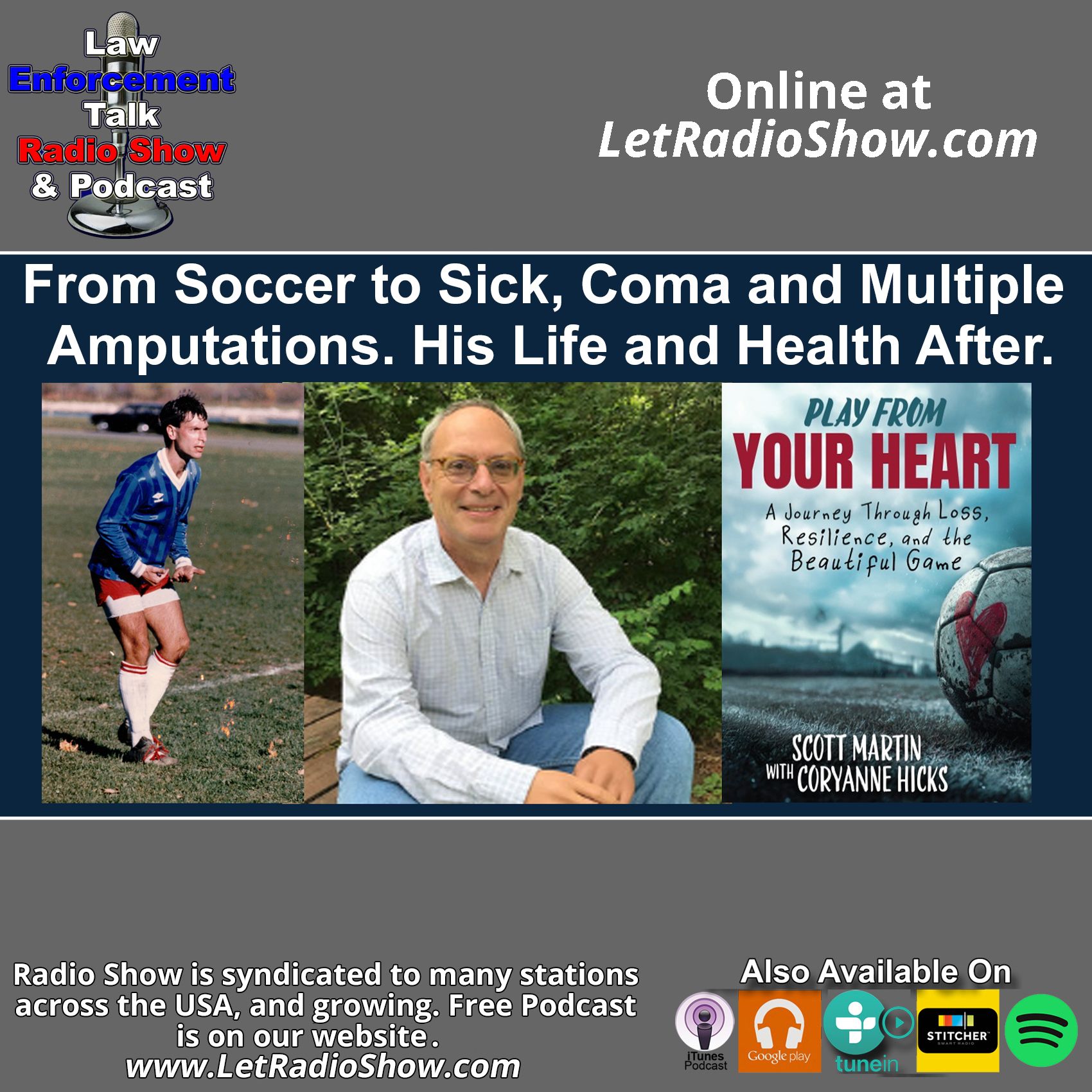
 From Soccer to Sick Coma and Multiple Amputations. His Life and Health After. In college athletics, discipline, endurance, and mental toughness are often seen as the ultimate measures of success. For Scott Martin, those qualities weren’t just part of the game, they defined his life. A former college athlete turned successful college soccer coach, Martin had built his identity around performance, leadership, and resilience. The Podcast is available for free on the Law Enforcement Talk Radio Show and Podcast website, also on Apple Podcasts, Spotify, YouTube and most major podcast platforms. #Free #Podcast #Radio
But nothing in his years on the field, or on the sidelines, could have prepared him for what was about to happen. The Law Enforcement Talk Radio Show and Podcast social media like their Facebook , Instagram , LinkedIn , Medium and other social media platforms.
What began as an ordinary day would spiral into a life-threatening medical crisis that would leave him in a coma, cost him his hands and feet, and force him to rebuild his life from the ground up. Supporting articles about this and much more from Law Enforcement Talk Radio Show and Podcast in platforms like Medium , Blogspot and Linkedin .
And somehow… he did.
A Normal Day That Turned Into a Nightmare
Scott Martin remembers the beginning as subtle, almost dismissible.
“I was fine. Completely fine,” he recalls. “Then I started feeling sluggish. I thought maybe I was just tired… overworked.” From Soccer to Sick Coma and Multiple Amputations. His Life and Health After. The episode is available across major platforms including their website, Apple Podcasts, Spotify, YouTube, with highlights shared across their Facebook, Instagram, and LinkedIn profiles.
Within hours, that feeling escalated into something far more serious.
“I blacked out,” he says. “And I didn’t wake up for a long time.”
That “long time” turned into a full month in a coma.
Doctors would later determine that Martin had been struck by a rare and aggressive flesh-eating disease. The infection spread rapidly through his body, overwhelming his system and forcing medical teams into a desperate race against time. From Soccer to Sick Coma and Multiple Amputations. His Life and Health After. Available for free on the Law Enforcement Talk Radio Show and Podcast website, also on Apple Podcasts, Spotify, Youtube and most major Podcast networks.
“They told my family they didn’t know if I was going to survive,” Martin says. “It was that bad.”
Fighting to Save His Life
While Martin lay unconscious, teams of doctors worked around the clock to keep him alive. The infection was relentless, and in order to stop it, they had to make unimaginable decisions.
Multiple amputations were performed.
To save his life, surgeons ultimately removed both of his hands and both of his feet.
“It’s hard to even process that,” Martin reflects. “You go to sleep one day, and when you wake up… everything is different.”
But at the time, he didn’t wake up to that reality immediately. For weeks, his body remained in a fragile state, suspended between life and death. The Law Enforcement Talk Radio Show and Podcast on social media like their Facebook , Instagram , LinkedIn , Medium and other social media platforms.
For his family, it was a waiting game filled with uncertainty, fear, and hope.
“They were told to prepare for the worst,” he says. “But they never gave up on me.”
Waking Up to a New Reality
When Martin finally emerged from the coma, he faced a reality that few could imagine.
“I didn’t fully understand what had happened at first,” he admits. “Then it started to sink in.”
Five months in the hospital followed, months filled with treatment, recovery, and the beginning of a completely new life. From Soccer to Sick Coma and Multiple Amputations. His Life and Health After. You can listen to the complete interview for free on our website, also on Apple Podcasts, Spotify, Youtube and most major podcast platforms.
But even in those early days, something stood out.
He wasn’t focused on what he had lost.
“I made a decision,” Martin says. “I wasn’t going to stay in that place mentally. I wasn’t going to let this be the end of my story.”
The Unthinkable Comeback
What happened next surprised even the people who knew him best.
Almost immediately after being discharged from the hospital, Martin returned to work.
“He didn’t ease into it,” one colleague noted. “He came back with purpose.”
For Martin, returning to coaching wasn’t just about work, it was about identity, structure, and reclaiming control over his life.
“Soccer gave me something to fight for,” he says. “It reminded me of who I was.”
But the challenges were immense. Everyday tasks had to be relearned. Physical limitations had to be overcome. Mental barriers had to be shattered. From Soccer to Sick Coma and Multiple Amputations. His Life and Health After. You can find the Law Enforcement Talk Radio Show and Podcast on Facebook, Instagram, Pinterest, X (formerly Twitter), and LinkedIn, as well as read companion articles and updates on Medium, Blogspot, YouTube, and even IMDB.
“You’re rebuilding everything,” he explains. “Not just your body, but your mindset.”
And he approached it the same way he approached the game he loved: with discipline, consistency, and heart.
Accountability and Hard Lessons
As Martin pieced his life back together, he also began to reflect on how his medical crisis unfolded. He pursued legal action involving the first hospital that treated him.
“That process was about accountability,” he says. “But it was also about understanding what happened.”
Through that experience, he gained a deeper awareness, not just of the medical system, but of life itself.
“You learn very quickly what matters,” he says. “You don’t take time, health, or people for granted anymore.”
A Message That’s Reaching the World
Today, Scott Martin’s story is inspiring audiences far beyond the soccer field. His journey has been shared across Facebook, Instagram, YouTube, and LinkedIn, gaining traction with people searching for strength, perspective, and hope. From Soccer to Sick Coma and Multiple Amputations. His Life and Health After. The episode is available across major platforms including their website, Apple Podcasts, Spotify, YouTube, with highlights shared across their Facebook, Instagram, and LinkedIn profiles.
His voice is also being heard through podcast interviews like the Law Enforcement Talk Radio Show and Podcast, on their website also on platforms like Apple Podcasts, Spotify, Youtube and where listeners are connecting deeply with his story. His experience has been featured in news coverage, further amplifying a message that resonates across industries and backgrounds.
“This isn’t just my story anymore,” Martin says. “It’s something people see themselves in.”
“Play From Your Heart”
Martin has captured his journey and the lessons he’s learned in his book, Play From Your Heart, available wherever books are sold.
The title itself reflects the philosophy that carried him through his darkest days.
“It’s about how you show up,” he explains. “When everything is taken from you… what’s left? Your heart. Your will. Your choice to keep going.”
Through his writing, speaking, and continued work, Martin is helping others navigate adversity, redefine their limits, and find purpose in the face of unimaginable challenges.
A Life Redefined
Scott Martin’s life is no longer defined by the game he once played, but by the fight he continues every day. The Podcast is available for free on the Law Enforcement Talk Radio Show and Podcast website, also on Apple Podcasts, Spotify, YouTube and most major podcast platforms.
From college athlete to coach… from healthy to critically ill… from coma to comeback… his journey is a testament to the power of resilience. From Soccer to Sick Coma and Multiple Amputations. His Life and Health After.
And perhaps his most powerful message is the simplest one:
“Your life can change in an instant,” Martin says. “The question is, what are you going to do next?”
Background song Hurricane is used with permission from the band Dark Horse Flyer.
You can contact John J. “Jay” Wiley by email at Jay@letradio.com , or learn more about him on their website .
Get the Free Clubhouse App, it is Drop In Social Audio. Think of it as your own talk radio show on your phone, and best of all it is free. Be sure to look for me and follow me, that's John J Wiley or @letradioshow you can do all that here.
Find a wide variety of great podcasts online at The Podcast Zone Facebook Page , look for the one with the bright green logo.
Be sure to check out our website .
Learn and get access to money saving tips and how to increase your net worth at www.LetSavings.com
Listen to the full story on the Free Podcast, available on the Law Enforcement Talk Radio Show and Podcast Website, on Facebook, Instagram, YouTube, Apple, Spotify, and more.
Be sure to follow us on X , Instagram , Facebook, Pinterest, Linkedin and other social media platforms for the latest episodes and news.
From Soccer to Sick Coma and Multiple Amputations. His Life and Health After.
Attributions
Amazon
Hosted by Simplecast, an AdsWizz company. See pcm.adswizz.com for information about our collection and use of personal data for advertising.
John Jay Wiley (1:30): He was a successful college athlete and coach. He was suddenly stricken with Flushing's disease, had multiple amputations, five months in a hospital, and immediately returned back to work. Lessons learned and how he built his new life after. Welcome to the law enforcement talk radio show. In the law enforcement talk radio show, we are joined by special guests talking about their experiences, their of investigating crimes.
John Jay Wiley (1:58): Plus, those who've experienced horrendous trauma, police, first responders, military, and victims of crime share their stories. Hi. I'm John Jay Wiley. In addition to being a broadcaster, I'm also a retired police sergeant. Be sure to check out our website, letradio.com, and also like us on Facebook.
Unknown Speaker (2:16): Search for the law enforcement talk radio show. Do you wanna be a guest on law enforcement talk radio show and podcast? It's really quite simple. And before you get into this notion that I'm not a cop, I wasn't a cop, I don't have something contribute. Well, the show is about investigating crime.
Unknown Speaker (2:36): That's one aspect of it from the real life perspective of those who did it. And then it's also about trauma, how trauma impacted them often crime based, but not always. Our guests quite often are law enforcement officers, other first responders, military, victims of crime, their spouses or survivors talking about how trauma impacted them, what happened, how it affected their lives and how they rebuilt their lives after. If you wanna be a guest, just contact me. It's really simple.
John Jay Wiley (3:08): Send email to jayletradio dot com. That's jayletradio dot com or go to letradio.com and the contact us page and you can get me right there as well. Joining us from Wisconsin, we have Scott Martin on the Law Enforcement Talk Radio Show. Scott was a college athlete. I'd say he still is because I'm not an athlete.
John Jay Wiley (3:29): He was suddenly stricken with flushing disease, which we'll talk about. He did five months at a hospital, had five amputations or numerous amputations, I'd say. And he immediately returned to work, a mistake I would make as well. And we're just gonna talk about that, lessons learned, and his book, which is Play From Your Heart available wherever books are sold. Scott, thanks for coming on the Law Enforcement Talk Radio Show, Tonya's story.
John Jay Wiley (3:52): Very much appreciated.
Scott Martin (3:55): Thank you, John. I'm I'm really looking forward to this. I've I've, done some listening on your podcast. I understand where you're gonna be going with this, and I think the audience is gonna be very intrigued with what they're gonna be hearing from us.
John Jay Wiley (4:05): Well, here's the thing about it, Scott, is, like, when when you first told me your story, because we have a a brief conversation, I'm like, wow. That's a lot to deal with. And and here's what happens. And the main reason I started the show is I wanted people to know there's light at the end of the tunnel. No matter how bad your circumstances, no matter how different they are, you can get a better life.
Unknown Speaker (4:26): It may not be the life you wanted, but it's a life you that's far better than you decided you're gonna have.
Scott Martin (4:33): Mhmm. Totally agree with that concept. Totally agree with that concept, John.
John Jay Wiley (4:38): Let's talk about your your case. You were a college athlete, and I said in the earlier portion of the show before I connected with you that you were a coach as well. Right?
Scott Martin (4:49): Yes. I was coaching at the university level when in, I guess everything's everything happened all at once.
John Jay Wiley (4:56): When you say everything happened, you went from what kind of sports were you coaching?
Scott Martin (5:01): Coaching, soccer at college level. I had been, teaching social studies and history at high school level and running soccer programs, and I had an opportunity to jump over to that level as a profession to start coaching at the college level. And I it's just something that, was in the cards for me, and I didn't wanna pass up the opportunity.
Unknown Speaker (5:21): That's a great opportunity. By the way, I played soccer in in high school. I got a yellow card in every game I played in because it was I was just horrible. I'm a horrible player. I always said in the beginning, I wasn't an athlete.
Unknown Speaker (5:31): The linemen, they ran too much. The halfbacks did a lot more running. I was a fullback, and I didn't care if I kicked the ball or not. I could just kick the heck out of them.
Scott Martin (5:41): Well, when I was playing in college and then, when I was playing after John, I actually played center back. When I when I showed up to the college, the coach knew that I came in as a forward. He said, I want you to take everything you know from attacking. I want you to spin it a 180 degrees and run the defense. I mean, it looking back, that was the best move, anyone ever played on me, and it worked out because that's where I really started learning the game.
Scott Martin (6:05): So when you're talking about playing it back, it's not so bad because you have such a a vision from the back, and you could see everything. You could see the entire game, and that's where I really learned the game, especially when I got into coaching. It paid off.
Unknown Speaker (6:17): It's a it's a a big game, a big transition. And, yeah, I did it really for something to do because I was we didn't have a football team at the time because it was such a small school. Although I if I had known I was gonna grow this size, I was. I probably stayed with football. And and we I work in radio, and part of the the ownership of the radio station, have, regional Mexican radio stations.
John Jay Wiley (6:39): They're big what they call football fanatics. And I'm thinking, Jesus. Bought as boring as watching Bane try.
Unknown Speaker (6:47): Oh, come on.
Unknown Speaker (6:48): Run, run, kick, kick out of bounds. That's it.
Scott Martin (6:50): There's a lot of tactics that goes into it, and I hope people can pick up. Well, here's what I'll throw out here. Try to look at it with the World Cup. I I suggest your listeners that they start watching the World Cup and avoid focusing so much on that stupid little round thing that we all call the ball and watch everything else that's going on because the upper upper level teams will do something that's called scanning, and they play according to not only the ball, but everything else on the field. It's it's considered at at the upper level, and this is where I I love to coach it as well.
Scott Martin (7:28): It's like playing three level chess versus checkers.
Unknown Speaker (7:31): Right. I get that.
Unknown Speaker (7:33): So much more to it.
John Jay Wiley (7:34): And the thing is that coach, what I don't understand is and you you're a relatively motivated person. Otherwise, you don't get to where you're at before the disease and after the disease. But how do you get people motivated to get out there and perform and do things like running, which is I don't care what you say. It is not good.
Scott Martin (7:54): Well, really, at the levels where I was playing and then and coaching and and still am. I'm coaching right now a group of under eighteens in Wisconsin at the state league level. And it it comes down to winning, John. I mean, we all know that.
Unknown Speaker (8:08): Right.
Scott Martin (8:08): It all just comes down to winning the enjoyment of that and then the accomplishment of it. Mean, that's why I was an athlete, and that's why I got into coaching as well. I I enjoy that aspect of life.
Unknown Speaker (8:19): How old of a guy were you when you made the transition from high school to college?
Scott Martin (8:24): I actually started playing at the upper levels, first division levels when I was 16. Was asked to play with, the well, at that time, the club men's team, and that's where the feeder program was for at the time, the North American Soccer League. So that was our route even though there wasn't a very good route. Not even college players moved over to the NASL very well. A lot of it was retired north, retired players from South America, Europe, and all around the world.
Scott Martin (8:55): So was really tough to get into that aspect of it. But the club system was really strong at the time, and the club systems, would generate money in order to play, around the country. All the upper clubs had their own bar, their own pub attached to the main field. So before and after matches, the tradition was to go in and and have beers together, and that's how they would generate the money in order to support the club. So it's a totally different system than it is today.
Scott Martin (9:25): Totally different.
John Jay Wiley (9:26): And things were you're you're reminding me of my college days. And by the way, I majored in drinking and minored in sociology. Got a four point o my major, DNF minor. I was out in no time. But we did intramural football.
Unknown Speaker (9:38): Your honesty.
John Jay Wiley (9:38): And everything about it was about the clubs. It was about pubbing and and drinking beer was and and socializing.
Scott Martin (9:46): Well, yeah, it depended on the level, but I I will say this, that I had my first beer in the Jeff's van at my first training session when I started playing with the men's club side. So, there was some of that, and, we got to be known pretty, to be pretty good on finishing up a boot. Yeah. Glass boot is, John?
Unknown Speaker (10:09): Job number. Yes.
Scott Martin (10:09): Okay. Yeah. So at major tournaments, and this is how casual things were, the teams that played towards the semifinals and stuff that were still around, and we tended to to do that would end up going into the pub when you're knocked out or what if you win the championship or losing championship. And you'd start passing around a boot. And the team that was second to last person finishing the boot had to buy the next boot.
Unknown Speaker (10:36): Uh-huh. And we never had to buy.
John Jay Wiley (10:39): Yeah. Well, that's you gotta be good at something. Right? Yeah.
Unknown Speaker (10:43): That's true.
John Jay Wiley (10:44): You gotta have a claim of fame. So, we're talking with Scott Martin. Scott is a very interesting story, very interesting case. He was a college level, athlete. He was very good at what he did.
John Jay Wiley (10:54): He went to, coaching. He was stricken with Washington's disease, which we'll talk about in few moments. He was hospitalized for five months as a result of this, had numerous amputations. He wrote the book Play From Your Heart, which is available where books are sold. We're gonna talk more about life before, what happened, what happened afterwards, and writing the book.
Unknown Speaker (11:16): Don't go anywhere. This is law enforcement talk radio show. We'll be right back.
Unknown Speaker (11:22): Someone asked, what's the catch? What's the cost? There is no cost for anything on the law enforcement talk radio show and podcast web website, letradio.com. Letradio.com. Again, that's letradio.com.
Kachava (11:38): Craving the coffee flavor you love but without the caffeine? Kachava's got you covered with their newest coffee flavor. This all in one nutrition shake delivers bold, authentic flavor crafted from premium decaffeinated Brazilian beans. Quality nutrition shouldn't be complicated. Just two scoops of Kachabba's all in one nutrition shake, and you've got 25 grams of protein, six grams of fiber, greens, and so much more.
Kachava (12:02): Whether you're craving that coffee taste to kick start your morning ritual or as a nutrient packed reward to round out your afternoon, Kochava keeps you fueled and satisfied wherever your day takes you. Plus, it actually tastes delicious. No fillers, no nonsense, just the good stuff your body craves. And for the times you feel like switching it up, you've got seven flavors to choose from, all with the highest quality ingredients. Treat yourself to the flavor and nutrition your body craves.
Kachava (12:29): Go to kachava.com and use code NEWS. New customers get 15% off their first order. That's kachava.com code NEWS.
ZipRecruiter (12:39): Finding great candidates to hire can be like, well, trying to find a needle in a haystack. Sure. You can post your job to some job board, but then all you can do is hope the right person comes along, which is why you should try ZipRecruiter for free at ziprecruiter.com/zip. ZipRecruiter doesn't depend on candidates finding you, it finds them for you. Its powerful technology identifies people with the right experience and actively invites them to apply to your job.
ZipRecruiter (13:06): You get qualified candidates fast. So while other companies might deliver a lot of hay, ZipRecruiter finds you what you're looking for. The needle in the haystack.
Progressive Insurance (13:16): See why four out of five employers who post a job on ZipRecruiter get a quality candidate within the first day. ZipRecruiter, the smartest way to hire. And right now, you can try ZipRecruiter for free. That's right, free at ziprecruiter.com/zip. That's ziprecruiter.com/zip.
Progressive Insurance (13:35): Ziprecruiter.com/zip.
John Jay Wiley (13:44): Return our conversation with Scott Martin on the law enforcement talk radio show. Scott was a college athlete, and he was a college level coach at University of Wisconsin, and he was suddenly stricken with Flushing disease, had numerous amputations, spent five months in the hospital, and immediately returned to work, which is something I would do as well. He's talking about the experience and building his life back to where it is today, and his book they wrote about is called play from your heart, which is available wherever books are sold. So let's go into your story, Scott. You are a a college level coach, and then tell us what happened.
Scott Martin (14:22): Well, following my first season at the college level, we were naturally ranked, so everything was going quite well. Great recruiting class. I was heading over to Europe, which I tended to do during summers to play and and also to coach. And Nike heard about me and said, hey. We'd like you to come down to the regional can't outside of Chicago and speak.
Scott Martin (14:48): It's like, okay. No problem. Well, there was a slight problem done. We were under contract with Adidas. So I showed up all in Adidas gear and cash off with me off to a closet and said, grab whatever you want.
Scott Martin (15:01): Put it on. Make sure you wear a Nike. Okay. So at the camp were national team players that were under contract with Nike and coaches from across the country. So it's it's not what you know, but who you know.
Scott Martin (15:13): Mhmm. And while we were playing an exhibition the first night, I had to pull myself out of the match because I was just so fatigued. I I couldn't keep up what was going on. I spent that night either throwing up profusely in the bathroom or sweating like crazy and shivering like crazy in the dorm room where I was. Woke up that morning, tagged a note on some of the door, apologizing I had to leave.
Scott Martin (15:42): No idea where doctors were outside of Chicago even though I was there. And but if you don't know where a doctor is, you can go to mom. Right. And I did. She was in Southern Wisconsin.
Scott Martin (15:52): I showed up. This is before cell phones, And she said something's I was I was supposed to show up the next day. Sorry. And she said something's wrong with you. You get your butt over to the emergency room, presented myself, took a temperature of one zero two point eight, which should have been sending off red flags.
Scott Martin (16:11): Sent me home and said, drinks and you're gonna be fine. Nope. Woke up the next morning even worse. Last thing I remember, John, was being in the front passenger seat with my stepfather driving and my mother outside her kitchen door just looking freaked out as we backed up the driveway. I woke up a month later.
Scott Martin (16:33): I don't remember anything after as we were backing out of the driveway. I woke up a month later to learn that my mother and one of my brothers had to make a decision. And that decision was either unplug me and I was what I was told was I was I had every machine you can think of. I was intubated. Everything was going on dialysis and that either unplug me and let me let me die or amputate both hands and parts of both feet and see how I'd handle life.
Scott Martin (17:05): And that was tech of a decision.
John Jay Wiley (17:08): That's a tough decision. And you go from being and you go from being okay to just feeling sluggish, I can't compete, pulling yourself out of game, which, look, I don't wanna do, to go into the doctor, they think you're okay. Then the next day, you are whites out. You're you're in a coma.
Scott Martin (17:27): Exactly. I was in a coma for a month. I had lost 40 pounds of muscle basically. So when I woke up, I didn't know what was going on. I couldn't move.
Scott Martin (17:38): I later learned that you know, because I thought perhaps I was paralyzed, so I was freaking out. I had a neck collar on and, again, intubated, so I couldn't speak or anything. That reason why I couldn't move was I lost 40 pounds from Atrivio muscles. Right. And it's that was that was too weak to move.
Scott Martin (17:56): So But that gave me something to focus on. I'm going go build that back so I can start moving and start becoming independent. I guess though, John, I also did something extremely strict. I'll admit to that. No problem.
Scott Martin (18:10): Once the doctor started talking about group A strep with necrotizing fasciitis, and then when he hit the the term flesh eating disease, it was what strong in the media at the time. Jim Henson from the Muppets, he passed from that a couple years earlier. Uh-huh. And as soon as that locked in, I just my mind just completely shut down. I don't wanna hear it.
Scott Martin (18:32): Just put me in a wheelchair. Let me get back. I I was supposed to be in Europe, but I missed that trip. My players are gonna be coming at some time, and I just wanna get back to work. And that's what I actually did for the next couple of decades that but four years later, I went back to coaching.
Scott Martin (18:55): We saw the National Rank program. I failed to look at anything in my head and my heart especially, and I ended up running in the brick wall depression. Yeah. And I had to make a change.
John Jay Wiley (19:07): Well, that that's not that's not shocking to me. First of all, to go from being someone who's in top physical and this is I'm just speaking to the preachers of choir here. So if you watch television and they show someone a comb and they get up and walk right away, that don't happen. I'm I'm like, this this you lost 40 pounds of muscle in one month.
Unknown Speaker (19:28): Yeah.
John Jay Wiley (19:29): And Yeah. That's when you're young. When you're older
Unknown Speaker (19:32): Mhmm.
Unknown Speaker (19:33): That goes away, like, in eight hours.
Scott Martin (19:36): Yeah. Well, there's just so much to unpack.
Unknown Speaker (19:42): Well, how do you go
Unknown Speaker (19:43): all of this.
John Jay Wiley (19:43): How do you go we'll get to the depression part in in a moment. But Yeah. When when you said I I was thinking it was flushing disease. It's flush eating disease. I understand that.
Unknown Speaker (19:52): Eating disease.
Unknown Speaker (19:53): And I but here's the thing. My thinking is this would never happen to me. This will happen to someone else. It never happened to me.
Scott Martin (20:00): There was there was so much going on. Like I said, my mind just stopped at one point when the doctor was first talking to me. Mind just stopped because I I didn't wanna hear it. It was so much to god. Comprehend isn't even a term go by.
Scott Martin (20:20): How can someone comprehend that?
Unknown Speaker (20:22): Right. I I don't I don't get it. I don't where do you even start and say, oh, by the way, this is what's going on. Oh, yeah? I'll show you.
Unknown Speaker (20:29): No. It's not.
Scott Martin (20:30): Yeah. Well, part of it was the first thing that did run through my mind, John, was I'm done playing. I knew that. I accepted that boom right away. I mean, habit basically, I'm agitated my feet.
Scott Martin (20:43): So that was done. For some reason, I was able to accept that. I guess I had a decent enough career. I was okay with it. But I was in the midst of coaching at the college level, which is one of the one you know, I was on my way, man.
Scott Martin (20:55): I was on my way to be going up to whatever level I would end up working at. So, yeah, to throw that all in, but also the maleness. I'll be honest. The maleness was a thing that I look back on, and I know darn well that as society raises us to be, quote, males, that got in my way. I think of of really truly healing.
John Jay Wiley (21:20): Look. First of all, I I agree with you 150%. Part of my background, and we could judge this all day long. It just is. I was brought up a certain way, and I would never let him see me sweat.
John Jay Wiley (21:34): I still don't let him see me sweat, and I'm going to not even ask for help. We're talking with Scott Martin. He was a college athlete, college level coach, was stricken with flesh eating disease, had numerous amputations, had five months in the hospital, and immediately returned back to work. He wrote the book Play From Your Heart, which is available wherever books are sold. When we return, we're gonna talk about long term effects.
Unknown Speaker (21:55): Don't go anywhere. This is law enforcement talk radio show. We'll be right back. Get access to free podcast versions of the show and more on Facebook. Do a search for the law enforcement talk radio show, and be sure to click like.
Grainger (22:12): When you manage procurement for multiple facilities, every order matters. But when it's for a hospital system, they matter even more. Grainger gets it and knows there's no time for managing multiple suppliers and no room for shipping delays. That's why Grainger offers millions of products and fast, dependable delivery so you can keep your facility stocked, safe, and running smoothly. Call 1800, click granger.com, or just stop by.
Grainger (22:38): Grainger, for the ones who get it done.
John Jay Wiley (22:43): Insurance isn't one size fits all. That's why drivers have enjoyed Progressive's name your price tool for years now. With the name your price tool, you tell them what you want to pay, and they'll show you options that fit your budget. So whether you're picking out your first policy or just looking for something that works better for you and your family, they make it easy to see your options. Visit progressive.com.
John Jay Wiley (23:02): Find a rate that works for you with the name your price tool. Progressive Casualty Insurance Company and affiliates. Price and coverage match limited by state law.
John Jay Wiley (23:16): Return on conversation with Scott Martin on the law enforcement talk radio show connecting with us from Wisconsin. He was a college level athlete and college level coach, was stricken suddenly with flesh eating disease. He spent five months in a hospital, had multiple amputations, and he went back to work immediately. And he struggles to build himself back up and what he did about it. He wrote the book, Play From Your Heart, which is available wherever books are sold.
John Jay Wiley (23:42): There's part of your story that is, Scott, that is fascinating to me, but it's also part of it's like, understand. My I've never had to deal with anything like the Fleischmann disease, nothing to that level and and amputations. But there's an old saying my mother used to say all the time, we all have a crosses of air. And then it's easy to become overwhelmed and say, poor me, get angry. I'm not going to do this.
John Jay Wiley (24:06): You said earlier before in the break, you kinda accepted your playing career is over, but you didn't have the same mentality when it come to your coaching career.
Unknown Speaker (24:15): Right.
John Jay Wiley (24:15): And you're talking about maleness as part of the
Scott Martin (24:17): Because I was in the midst of it, and we had done so well my first season.
John Jay Wiley (24:20): Yeah. I I get that. All this seems to be incredibly unfair and and poor timing to to say the least.
Scott Martin (24:28): I'll take that.
John Jay Wiley (24:29): Yeah. How do you not get angry?
Scott Martin (24:33): I never have, John. I never have. I've been discouraged. Of core oh my god. I've been discouraged, and that goes hand in hand with depression.
Scott Martin (24:45): Yeah. And depression is its is its own animal. No. It's its own thing, and that can just rip apart a person.
Unknown Speaker (24:54): We'll we'll talk about that in few moments because there's so many people that get affected by that, and I have my my my bouts with that as well. And we're not talking about having the blues and being sad. We're talking about an overwhelming lack of motivation for multiple years. Mhmm. Early on when you were affected, you came out of the coma.
John Jay Wiley (25:13): You realized your mom and your brother were in this life saving scenario for you about amputation or pulling the plug. Did the reality hit you at all? Because you had what kind of amputations did you have?
Scott Martin (25:31): Both mid forearm. So I lost both hands at the mid forearm and midfoot on both feet. One foot, they had to I had a Frankenstein, plastic surgeon, I guess. Again, I was out. He ended up, instead of doing a BK, a balloon knee amputation, he said, no, we're gonna do this.
Scott Martin (25:50): He he took muscle from my abdomen and skin from my thigh. I was on my back, so I couldn't take muscle from there. Excuse me, skin from there. He recreated the foot, that I now use to I was able to avoid a a PK, a blown knee amputation. So, yeah.
Unknown Speaker (26:07): Quite
Unknown Speaker (26:07): a lot. Old were you when this happened?
Scott Martin (26:12): I started feeling, you know, exactly one week after my 30 birthday.
John Jay Wiley (26:16): So you're still a young guy when it's going on. You're still a young guy now, but back then, 35 is like, I don't know. I'm I'm still kinda in the bullpen stage.
Scott Martin (26:25): Yeah, man. I was still playing at a high level. I mean, we just won the championship up in Minneapolis playing indoor. So, yeah, I was still I was still going, you know, full bore. I'm looking forward to everything, you know, getting playing wise.
John Jay Wiley (26:40): Part of the conversation I I get from you is you're you're pick yourself up by the bootstraps kinda guy. And so you you're doing well in coaching, and you say, I'm going back to work.
Scott Martin (26:51): Mhmm. Yeah. I was in hospital, John, after I was fitted with hooks. I mean, this is probably two or three months in. They moved I they switched me over to, thank goodness, to my electric hands, upper level sort of stuff.
Scott Martin (27:06): And as soon as I put those two hands up for some reason, I said, okay. Please give me a pencil and paper. And I knew I had to change something in my coaching, so I wrote a coaching manual, that was gonna be for my program. And everything went into it. I mean, that took my day.
Scott Martin (27:21): Took my day with things to do. I have to design and write everything down and and diagram and everything for the player and program, but that kept me busy. But, you know, a lot of things had to change in a very short period of time. But what didn't change was how I viewed myself instead of negatively to try to switch into positive. There was no way I could.
Unknown Speaker (27:44): Did you have
Unknown Speaker (27:45): I lost all my confidence.
John Jay Wiley (27:46): Did you have that learning curve of learning how to write and draw and all that stuff?
Scott Martin (27:51): No. It was just immediate. It was as if you could you could look at my writing before the amputations and after, and it's exactly the same. I don't know. I can't explain it.
Unknown Speaker (28:02): Well, mine's horrible. I'll just put it this way. I read. I print stuff, Scott, and I can't even read it. My wife's gotta read it.
Scott Martin (28:11): I hear you on that. No. Everything was everything was fine there. You know, I just kept, finding what needed to change and work on those things. And being in athletics as it was, it it gave me something to do, so to speak, goals to go after.
John Jay Wiley (28:28): You were still relatively early on in the prognosis. Was there any legal action involved?
Scott Martin (28:36): Oh, yes. A couple of months after I was released from the hospital, he was bugging me. How did I contract this? And so I called the doctor that I say saved my life, who's out of the intensive care unit, and I asked him point blank, you know, how does he said, no. We we didn't have time.
Scott Martin (28:54): We never looked into that. But you're asking the wrong question, Scott. I I don't understand, doctor. What are you what are you talking about? You're He said, You're asking the wrong question.
Scott Martin (29:04): You need to look at what happened in the emergency room. That's as far as you could go. So I went out and got an attorney and it was a three and a half year process to get everything together. There there definitely was a medical malpractice trial at the end of this during it.
John Jay Wiley (29:24): And that involved the emergency room visit?
Scott Martin (29:27): Mhmm. Yes. The physician there and everything that was found out. It was it was a two week long, very dramatic $10,000,000 lawsuit that came up. So, you know, with that much money on the line, the doctor and the the medical group of doctors, I mean, they're they had three attorneys.
Scott Martin (29:47): We had two. But oh, yeah. It was it was it was you know, it was very dramatic. A couple of things happened where the judge had to clear the courtroom and all of these things. My mother was up on the stand, and they tried to pin her down.
Scott Martin (30:00): And she came back at them and gave them a good one. Mean
Unknown Speaker (30:03): Oh, yeah. I can only imagine.
Unknown Speaker (30:04): Interesting.
Unknown Speaker (30:06): What was the final outcome of that court case?
Scott Martin (30:09): Well, I was over at a friend's apartment, when we got the call from my attorney who gave me the bad news that we had lost. But it was also at that time, John, that when there was a pivot point, a huge pivot point in my life with what I was going to do after that. Three months prior, I resigned my position, and I started running into discrimination when I was looking for other positions just to try to change things. So that was I went from a white guy in athletics to being labeled automatically as disabled, so therefore people thought I couldn't do things.
Unknown Speaker (30:49): Yeah. And I'm I'm gonna be honest. I listening. I don't like that term disabled. Look, I had ended my career, I was retired at the age of 33.
John Jay Wiley (30:59): I had multiple steel plates put in my right hand. I'm right handed and it ended my career. But I'm technically, I'm air quoting, physically disabled according to the law. But that doesn't mean I can't do things. There's certain things I can't do, but I could do most everything.
John Jay Wiley (31:16): I just do them differently.
Scott Martin (31:17): Exactly. Exactly. We're placed with a challenge in front of us. We need to overcome that challenge. So with me having no job, and now losing the lawsuit, I needed to make a change.
Scott Martin (31:31): So when I went to my apartment and pulled in the garage, I I literally got that. Write very honestly in the book. The whole book is very honest. But I chuckled that thinking that a lot of people would think that wouldn't be surprised if I didn't turn off my car when I closed the garage door or if I went out and blocked a pistol.
Unknown Speaker (31:50): Right.
Scott Martin (31:50): I don't think anyone a lot of people wouldn't have been surprised because, like, what the heck is the guy gonna do now? Well, that's exactly I did the opposite. Figured out. I stayed up all night listening to music and come up with, you know, a b c d all the way through the alphabet. And, alright, when a doesn't work, go to b, you know, go to s, go to k, whatever.
Scott Martin (32:09): I came up with something that ended up with me chucking every award I had ever won in trophy and everything, hopping into my car with my cat. I just got rid of everything. It didn't fit, and we headed out of works because I had an opportunity out there to live in a apartment and go on food stamps.
Unknown Speaker (32:27): We're gonna take a
Unknown Speaker (32:27): short break on that note.
Unknown Speaker (32:29): We'll return the conversation with Scott Martin in just a few moments. This is law enforcement talk radio show. I promise you, there's so much war heading away. You don't go anywhere. We'll be right back.
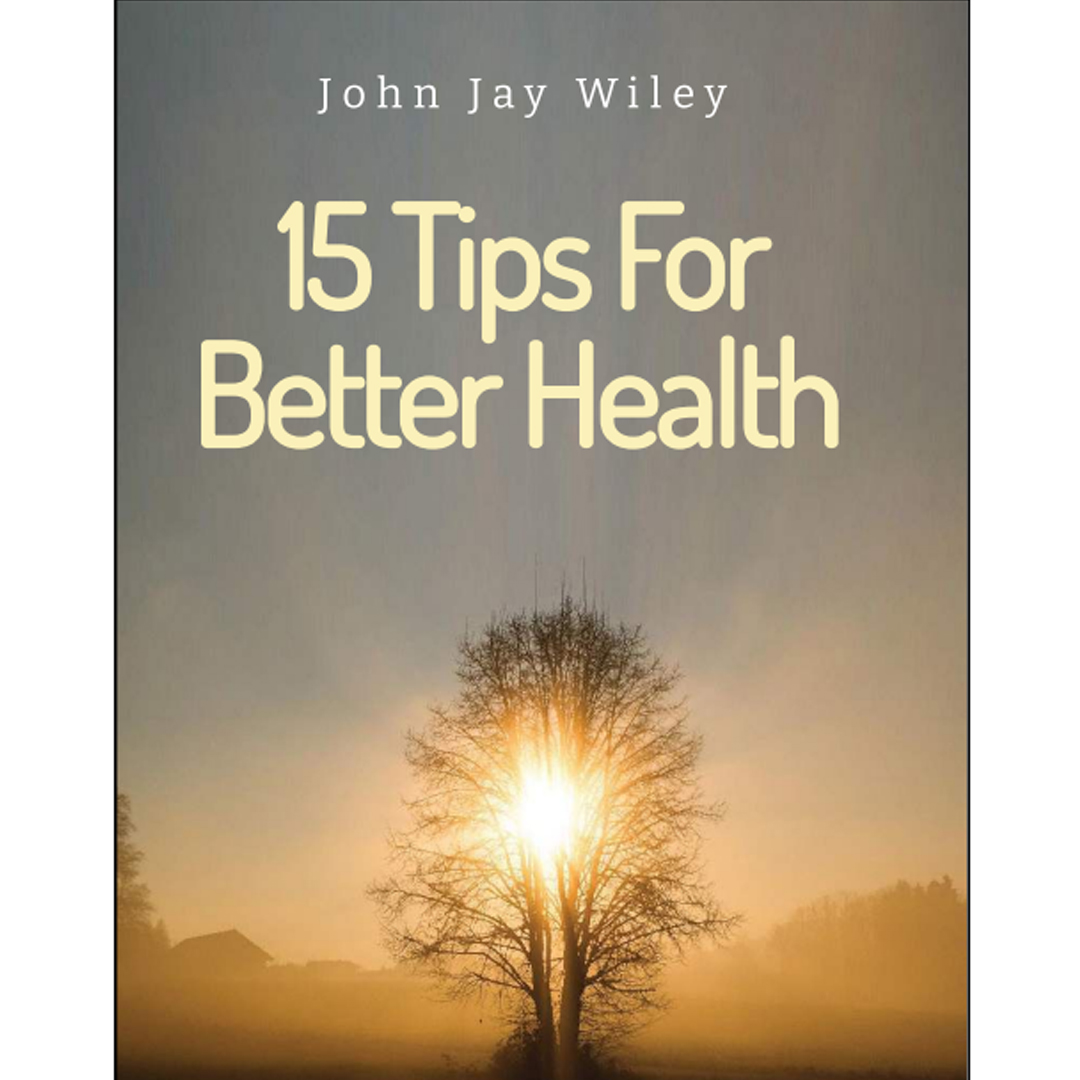
Unknown Speaker (32:42): How would you like to improve your health? Let's get healthy. Tips you can use today for free. They don't require any money at all. You can download a free ebook, 15 tips to improve your health at L E T Healthy dot com.
Unknown Speaker (32:57): It's lethealthy.com. Again, it's lethealthy.com, and let's get healthy for free.
John Jay Wiley (33:02): You're listening to this podcast, so I know you've got a curious mind. Here's a helpful fact you might not know yet. Drivers who switch and save with Progressive save over $900 on average. Pop over to progressive.com, answer some questions, and you'll get a quick quote with discounts that are easy to come by. In fact, 99% of their auto customers earn at least one discount.
John Jay Wiley (33:22): Visit progressive.com and see if you can enjoy a little cash back. Progressive Casualty Insurance Company and affiliates. National average twelve month savings of $946 by new customers surveyed who saved with Progressive between June 2024 and May 2025. Potential savings will vary.
John Jay Wiley (33:45): We're here in conversation with Scott Martin on the Law Enforcement Talk Radio Show. Scott is a college level athlete, a world famous guy, actually, and he is a college level coach. He was suddenly stricken with flesh eating disease, which we'll talk about in a few moments. He had numerous amputations, spent about five months in a hospital, immediately turned to work, and, he wrote the book, A Play From Your Heart, which is available wherever books are sold. Poor winter break, Scott, you're talking about you had this opportunity, and you took it and it vent it starting all over.
John Jay Wiley (34:18): It meant starting usually where you started eighteen, nineteen, 20, living in the worst scenario, food stamps, ramen noodles, the whole nine yards. That was your situation. Right?
Scott Martin (34:30): I I I intentionally, John, I intentionally, was breaking myself down in order to build myself back up. I needed to refocus, re redefine myself, and I did. I I ended up at a small school out in Olympi, Washington called Evergreen State College. I worked as an assistant to, to a guy, John Wedge. He didn't have the money to give me anything.
Scott Martin (34:53): He's like, no problem. I worked with him on the tactical side with his players and player development. And the exchange was that he was gonna help me. Well, what John was John Wedge was doing, John, was because he was so well known on the West Coast. He was gonna help me get back into coaching again at well, at least a paid position and back on the ladder, so to speak.
Scott Martin (35:17): And he did. He got me into it was a handshake deal coming in as the assistant coach at Gonzaga University with a gentleman who's going to be resigning immediately so that I would be able to slide in as the interim head coach. Perfect. Well, they hired a new athletic director at the same time. He was not aware of the handshake agreement, but he brought me in as the assistant coach anyway to someone that didn't know what they were doing, and it was extremely frustrating.
Scott Martin (35:45): But when the position came up again, the athletic director said, hey. I want you to apply for this. But a little something happened. Was watching a new show out of Seattle of this couple who had adopted two children from Haiti because there was a disaster there. I immediately started researching adoption.
Scott Martin (36:05): And the next morning, called my director and left a message. And I think it was a good thing he didn't respond because I had no idea how I was going to explain it to him. Please remove my name from consideration. And I didn't tell him why. What I started doing was down the road to adoption.
Scott Martin (36:21): As anyone that's adopted knows, it's a long process. A year and a half later, a little boy and little girl from Ethiopia excuse me, from Romania come home. Two year or in the next year, a boy from Ethiopia two years after that growth. And then I made her the basketball team of five kids Oh. Toddlers with a little girl from Ethiopia that came home.
Scott Martin (36:40): So I totally left soccer for twenty years and raised five kids from toddler stage. But, John, it all came home after diaper stage.
Unknown Speaker (36:50): So that
Unknown Speaker (36:50): was that helped things. Yeah. But, yeah, I
Unknown Speaker (36:53): I remember those days. They're not fun.
Scott Martin (36:56): Oh, no. No. And especially with my electric cans that are rubber. No. Doing diapers would not have been a good thing.
Scott Martin (37:03): So it worked out the best. Thoroughly enjoyed myself. I got away from coaching, but I still stayed in the game. I still stayed in the game. I knew what was going on.
Scott Martin (37:14): So twenty years later, I had an opportunity to return to coaching. And, really, that's the second half of the book with what happened.
John Jay Wiley (37:21): And the book is called Play From Your Heart, which is available where books are sold. I I gotta ask this question because earlier you talked about depression hitting in many, many years afterwards, and it it was overwhelming. When did that come about?
Scott Martin (37:34): Mhmm. When did it start? Yeah. Or when when did it break apart?
Unknown Speaker (37:39): When did it start?
Scott Martin (37:41): Oh, immediately after waking up, my calm was down. I mean, right away. Boom. I I knew it. It just it started, I'm sure, with confusion.
Scott Martin (37:50): I mean, I skipped through a lot of the the stages, and I think the biggest thing that's still with me a bit is guilt. I think a lot of people that go through something that affects so many other people, guilt is huge and that stayed with me for decades. Still does somewhat. But depression and I called the fog and how I feel, that's gone.
John Jay Wiley (38:14): Good. That's really good. The guilt thing is some and and here's what I say, and you can take it for what it's worth. I've got to learn to avoid the shoulda's. Shoulda, coulda, woulda's.
Unknown Speaker (38:25): I'm not God. I'm not Superman. I just did the best I could. And sometimes that's good enough.
Scott Martin (38:31): Sometimes it's good enough. We we're both driven people, and we know that make sure that everything's gonna work out, and be beneficial for everybody around us plus us.
Unknown Speaker (38:42): Now Yeah. Before we get back to you, how are the kids doing?
Scott Martin (38:46): In their twenties, doing fine. One has a child. Another one is, in graduate school. Other ones are out of college. One's in the military, so they're doing okay.
John Jay Wiley (38:57): And do you give yourself credit for that?
Unknown Speaker (39:00): I'm a parent, so, of course, they don't.
Unknown Speaker (39:01): Of course, you don't.
Unknown Speaker (39:02): I just
Unknown Speaker (39:03): Your parent to have us be a male? Of course not. I'm supposed to do that.
Scott Martin (39:07): Of course not. It's up to them. So there is something I always follow, John, and it's I I still use it in my coaching today, and I use it when I was in the classroom. My mission is not to teach you, but to put you in a position to learn. Uh-huh.
Scott Martin (39:20): There's a big difference, and I did that raising the kids too.
John Jay Wiley (39:23): I I look at this way. I had conversation with a a good friend talking about her now adult daughter. And my my daughters are adults now, and they're in mid thirties. And it's like, your job as a parent is over now. You you've done all the hard work.
John Jay Wiley (39:37): Now you just kinda you you you don't wanna enable them. You don't wanna be their excuse for lack of of accomplishment.
Scott Martin (39:45): Yeah. They have to be responsible.
Unknown Speaker (39:47): And that's what we talked about the coulda, shoulda, woulda, and that sometimes the the the I gotta avoid that guilt thing. The the things I could've done better, absolutely. But did I know about at the time? No.
Unknown Speaker (39:58): Mhmm. Yeah. Depends on what you want them to learn.
Unknown Speaker (40:03): So when did you
Unknown Speaker (40:04): position to do.
John Jay Wiley (40:04): When did you write the book, play from your heart?
Scott Martin (40:07): After with what we're gonna get into talking about when I returned to coaching happened, that's when I knew, boom. We have a book. We actually have a movie, I think, too. You do. But that's one
John Jay Wiley (40:19): I made a joke earlier about a a b rated TV movie. I think this is, your story is one that can remember Brian's song when we were kids?
Unknown Speaker (40:29): Yes. And Yeah.
Unknown Speaker (40:31): You don't forget movies like that. That that your story is so inspirational. It needs to be made into a TV movie or a movie.
Scott Martin (40:40): Oh, wait till you hear the next part. This is total total Hollywood, man. Total Hollywood about my return to coaching.
Unknown Speaker (40:49): Please do.
Unknown Speaker (40:49): Shall we?
Unknown Speaker (40:50): Yes.
Scott Martin (40:50): Alright. Here we go. So, I mentioned earlier on discrimination. I was discriminated against even with my resume at this pretty big club in Bellingham, Washington where we were living at the time. And it was one of these clubs where parents paid thousands of dollars for their kids with the expectation, you know, these kids might college scholarships down the road.
Scott Martin (41:10): Who knows? Professional, national team, or whatever. So there's large expectations. But I showed up with my resume, and I met the new director of coaching who never shook my hand, by the way, had told me a lot. Always tells me a lot from if people don't or how they do
Unknown Speaker (41:26): it. Right.
Scott Martin (41:26): Give me great insight into that person. So I showed up and he said, well, you're gonna coach the the c team of under thirteens. So the c team is not the a team, not the b team, the c team, the ones that everybody skipped over and left me with. Uh-huh. So right there, it was, okay.
Scott Martin (41:45): I'm I've already I remember watching these kids. They do have some talent, but what they lack is confidence, and they lack size. So I knew what to work on, which actually, John, was the same thing I needed to work on, not the size. But I we we worked on this together because with me putting them in positions to learn, I know what they were getting, but I was also getting something. So at the end of the book, I asked the question, I don't know if I needed them more than they needed me, but it doesn't really matter.
John Jay Wiley (42:13): Got both of what you needed. The book is called Play From Your Heart. We're talking with Scott Martin. Scott, we're gonna wrap things up. I would love to find out more because I'm convinced your journey is not done yet.
Unknown Speaker (42:27): I agree with you.
John Jay Wiley (42:29): This is where we have some level I hate this word. Psychologists hate it. Therapists hate it. We have some level of control over dictating our future.
Unknown Speaker (42:37): Mhmm. Agreed.
John Jay Wiley (42:39): And I can't control what other people do, but I can't control my response to it. We're talking with Scott Martin. Scott was a college athlete, a college level coach. He was stricken with flesh eating disease, had numerous amputations, spent five months in a hospital, were immediately returned to work. And he wrote the book about his experience called Play From Your Heart.
John Jay Wiley (42:57): Scott, thanks for being a guest on the show and tell us all about it. Very much appreciated. I'd like to thank our guests for coming on the Law Enforcement Talk Radio Show. The Law Enforcement Talk Radio Show is a nationally syndicated weekly radio show broadcast on numerous AM and FM radio stations across the country. We're always adding more affiliate stations.
John Jay Wiley (43:16): If you enjoyed the podcast version of the show, which is always free, please do me a favor and tell a friend or two or three. I'll be back in just a few days with another episode of the Law Enforcement Talk Radio Show and podcast. Until then, this is John Jay Wiley. See you.
John Jay Wiley (43:36): This episode is brought to you by Progressive Insurance. Do you ever think about switching insurance companies to see if you could save some cash? Progressive makes it easy to see if you could save when you bundle your home and auto policies. Try it at progressive.com. Progressive Casualty Insurance Company and affiliates.
Unknown Speaker (43:52): Potential savings will vary. Not available in all states. If you like the show, please take a moment to rate, review, and subscribe. It really does help the show to grow. Thank you for listening.