Apple Podcasts
 Spotify
 Amazon Music
 Audacy
 Audible
 Castbox
 Castro
 Deezer
 Fountain
 Goodpods
 iHeartRadio
 PocketCasts
 Podcast Addict
 Podchaser
 Podverse
 Spreaker
 Podurama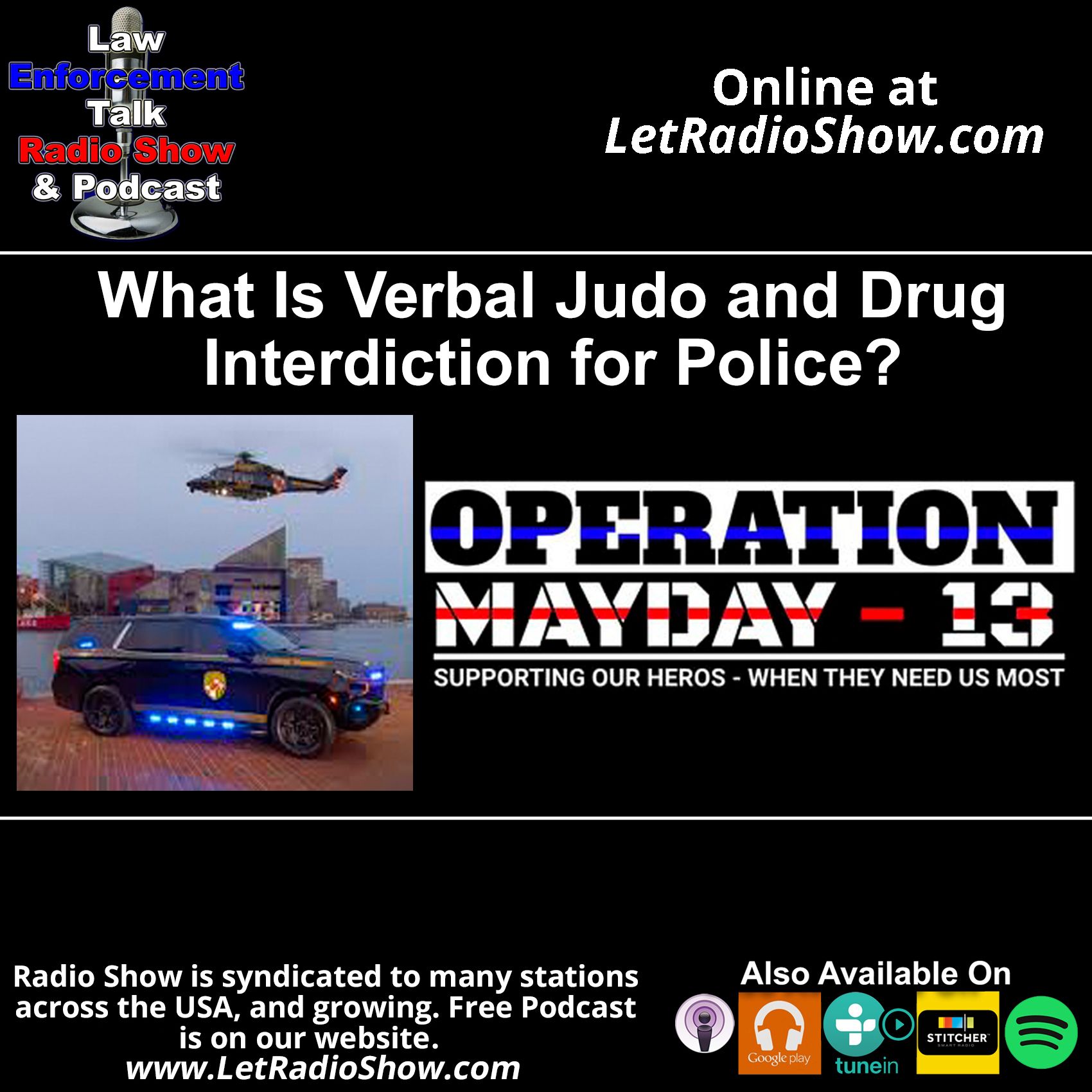


What Is Verbal Judo and Drug Interdiction for Police? A Maryland State Perspective. In modern policing, success is not measured solely by arrests or seizures, but by how safely and professionally officers navigate high-stress encounters. Two critical tools continue to shape effective law enforcement across the United States: verbal judo and drug interdiction for police. Both rely heavily on observation, communication, and disciplined decision-making rather than force. Check out Jerimy Tindall's Podcast appearance, and content shared for free on the Law Enforcement Talk Radio Show and Podcast website, also on Apple Podcasts, Spotify, YouTube and most major podcast platforms.
The Power of Verbal Judo in Policing
Verbal judo for police is a tactical communication system developed by Dr. George Thompson, widely recognized as the father of the discipline. First introduced in his groundbreaking 1983 book, verbal judo teaches officers how to use words strategically to de-escalate conflict and gain voluntary compliance. The Law Enforcement Talk Radio Show and Podcast social media like their Facebook , Instagram , LinkedIn , Medium and other social media platforms.
Rather than relying on aggressive commands, verbal judo emphasizes professionalism, empathy, and redirection. Officers are trained to ask purposeful questions, actively listen, and use respectful language to manage tense encounters. Supporting articles about this and much more from Law Enforcement Talk Radio Show and Podcast in platforms like Medium , Blogspot and Linkedin .
“Verbal judo isn’t about winning an argument,” Dr. Thompson often explained. “It’s about achieving a peaceful resolution while maintaining officer safety and dignity for everyone involved.” What Is Verbal Judo and Drug Interdiction for Police? A Maryland State Perspective.
Although Dr. Thompson passed away in 2001 at the age of 69, his teachings remain deeply influential. In recent years, police instructors have renewed their focus on tactical communication, blending scientific analysis with realistic training scenarios to prepare officers for the psychological stress of the job.
A Maryland State Police Example
Jerimy Tindall, a retired Maryland State Police Sergeant, offers a powerful real-world example of verbal judo in action. Early in his career, Tindall encountered a suicidal individual, an incident that could have easily turned violent. Available for free on the Law Enforcement Talk Radio Show and Podcast website, also on Apple Podcasts, Spotify, Youtube and most major Podcast networks.
“I realized very quickly that force would only make things worse,” Tindall recalled. “What worked was slowing the situation down, listening, and choosing my words carefully.”
Through calm dialogue and empathy, Tindall was able to de-escalate the situation without using force, a moment he credits directly to verbal judo training. He later retired early to focus on the growing demands placed on his family, but his lessons continue to resonate with officers today.
Drug Interdiction for Police: More Than Traffic Stops
In addition to his experience with tactical communication, Tindall also worked drug interdiction in Frederick, Maryland, a specialized area of policing focused on preventing illicit drugs from reaching their destination. What Is Verbal Judo and Drug Interdiction for Police? A Maryland State Perspective. Look for The Law Enforcement Talk Radio Show and Podcast on social media like their Facebook , Instagram , LinkedIn , Medium and other social media platforms.
Drug interdiction often takes place during traffic stops, including pretextual stops. These are lawful stops initiated for a traffic violation but used to investigate unrelated criminal activity. The U.S. Supreme Court affirmed this practice in Whren v. United States, ruling that an officer’s motivation is irrelevant as long as probable cause exists for the traffic violation.
“When you stop a vehicle, you’re observing everything,” Tindall said. “Body language, tone of voice, how someone reacts when they see police lights, it all tells a story.”
Officers trained in drug interdiction learn to recognize behavioral indicators of stress that may suggest criminal activity. Sudden braking, furtive movements, inconsistent answers, or visible nervousness can all contribute to developing probable cause during a lawful stop.
Observation, Communication, and Strategy
Drug interdiction is rooted in constant observation and communication. Every driver responds differently to stress, and officers are trained to watch and listen closely. Communication extends beyond spoken words to include posture, gestures, and tone. Available for free on their website and streaming on Apple Podcasts, Spotify, Youtube and other podcast platforms.
Beyond individual stops, agencies also rely on spatial optimization to deploy interdiction resources effectively. This strategic planning determines where officers, training, and testing equipment should be placed to disrupt drug trafficking networks. By identifying likely source routes and trafficking corridors, agencies can maximize impact without overstretching resources. What Is Verbal Judo and Drug Interdiction for Police? A Maryland State Perspective.
Supporting Those Injured in the Line of Duty: Operation Mayday-13
After retiring, Jerimy Tindall and his family founded Operation Mayday-13, a nonprofit organization dedicated to helping first responders injured in the line of duty. The organization provides financial assistance to police officers, firefighters, and EMTs facing hardship after on-duty injuries.
“Too many first responders fall through the cracks,” Tindall said. “Mayday-13 exists to make sure they’re not forgotten.” The Law Enforcement Talk Radio Show and Podcast episode is available for free on their website , Apple Podcasts , Spotify and most major podcast platforms.
Operation Mayday-13 can be found on Facebook, where community members can learn more or reach out for assistance. First responders face risks ranging from vehicle accidents and violence to hazardous exposures and PTSD. While federal programs like the Public Safety Officers’ Benefits (PSOB) and state workers’ compensation systems exist, gaps in coverage remain, gaps nonprofits like Mayday-13 work to fill. What Is Verbal Judo and Drug Interdiction for Police? A Maryland State Perspective.
Continuing the Conversation
Discussions around verbal judo and drug interdiction continue to gain traction across News outlets and social media platforms like their Facebook, Instagram, and LinkedIn. These topics are also explored in depth on podcasts available via Apple Podcasts and Spotify, where current and retired officers share firsthand experiences and lessons learned.
More information and the interview with him is available on the Law Enforcement Talk Radio Show and Podcast website also on Apple Podcasts, Spotify, Youtube and other major platforms
From tactical communication to strategic interdiction, the message is clear: effective policing depends as much on words and awareness as it does on authority. As Jerimy Tindall’s career illustrates, the right words at the right moment can save lives, on both sides of the badge.
Listeners can tune in on the Law Enforcement Talk Radio Show website, on Apple Podcasts, Spotify, YouTube, and most every major Podcast platform and follow updates on Facebook, Instagram, and other major News outlets. You can find the show on Facebook, Instagram, Pinterest, X (formerly Twitter), and LinkedIn, as well as read companion articles and updates on Medium, Blogspot, YouTube, and even IMDB.
Stay connected with updates and future episodes by following the show on Facebook, Instagram, LinkedIn, their website and other Social Media Platforms.
Interested in being a guest, sponsorship or advertising opportunities send an email to the host and producer of the show jay@letradio.com.
Listen to this special episode on the Law Enforcement Talk Radio Show and Podcast website on Apple Podcasts, Spotify, Youtube, Facebook, Instagram, LinkedIn, and most major podcast platforms.
Find a wide variety of great podcasts online at The Podcast Zone Facebook Page , look for the one with the bright green logo.
Be sure to check out our website .
Be sure to follow us on X , Instagram , Facebook, Pinterest, Linkedin and other social media platforms for the latest episodes and news.
Background song Hurricane is used with permission from the band Dark Horse Flyer.
You can contact John J. “Jay” Wiley by email at Jay@letradio.com , or learn more about him on their website .
What Is Verbal Judo and Drug Interdiction for Police? A Maryland State Perspective.
Attributions
Amazon
Hosted by Simplecast, an AdsWizz company. See pcm.adswizz.com for information about our collection and use of personal data for advertising.