Apple Podcasts
 Spotify
 Amazon Music
 Audacy
 Audible
 Castbox
 Castro
 Deezer
 Fountain
 Goodpods
 iHeartRadio
 PocketCasts
 Podcast Addict
 Podchaser
 Podverse
 Spreaker
 Podurama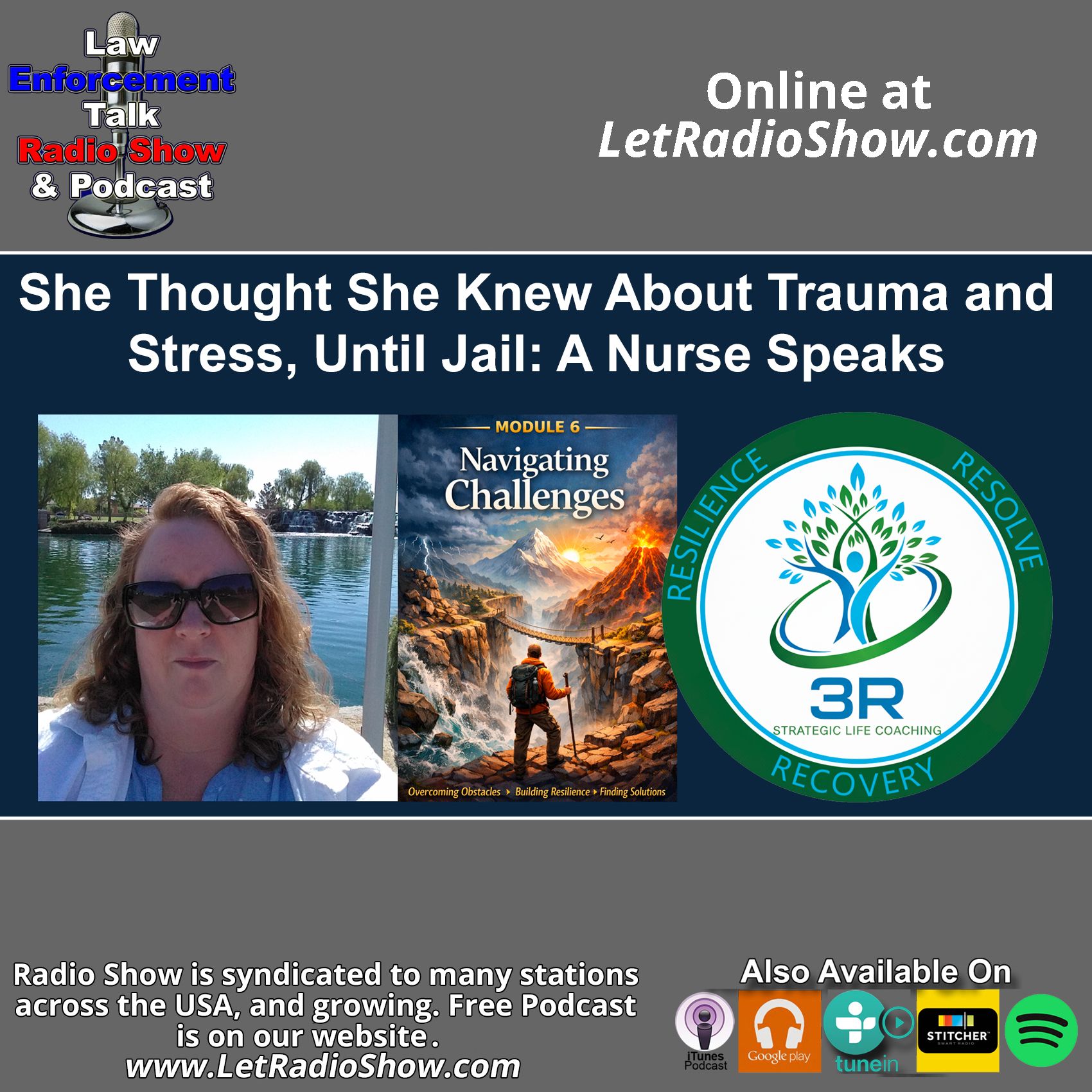



She Thought She Knew About Trauma and Stress, Until Jail: A Nurse Speaks. For years, she believed she understood trauma and stress. As a registered nurse, she had already witnessed illness, injury, and emotional hardship both personally and professionally. But nothing, she says, truly prepared her for what she would experience working behind the secured doors of a correctional facility. The Law Enforcement Talk Radio Show and Podcast social media like their Facebook , Instagram , LinkedIn , Medium and other social media platforms.
Now a retired RN and founder of 3R Strategic Life Coaching, LLC, Laura Bulbitz is sharing her journey publicly through the Law Enforcement Talk Radio Show and Podcast, it's social media platforms like facebook, Instagram, LinkedIn, and more. Hoping her story resonates with correctional professionals, nurses, police officers, and other first responders facing silent burnout. The Podcast is available and shared for free on the Law Enforcement Talk Radio Show and Podcast website, also on Apple Podcasts, Spotify, YouTube and most major podcast platforms.
A Calling Born from Personal Trauma
Long before she stepped into a jail medical unit, Bulbitz’s path toward nursing was shaped by deeply personal experiences. Trauma within her own family, including serious illness and a devastating accident involving her husband and son, became the catalyst that pushed her toward healthcare. Supporting articles about this and much more from Law Enforcement Talk Radio Show and Podcast in platforms like Medium , Blogspot and Linkedin .
“I wanted to help people survive the moments that change everything,” she said. “When your world flips upside down, healthcare workers are often the first faces you see.”
Nursing became more than a career, it became a mission. She worked in demanding environments and eventually transitioned into correctional healthcare, attracted by strong benefits and stable employment opportunities.
At the time, it seemed like a practical decision.
“It looked like a good move financially and professionally,” she recalled. “I thought I was prepared.”
Inside the World of Correctional Nursing
Correctional nurses, often called jail nurses, serve as registered nurses (RNs) or licensed practical nurses (LPNs) responsible for providing healthcare to incarcerated individuals in jails, prisons, and detention centers. Their role is critical but frequently misunderstood. Available for free on the Law Enforcement Talk Radio Show and Podcast website, also on Apple Podcasts, Spotify, Youtube and most major Podcast networks.
Unlike traditional hospital settings, correctional healthcare combines medicine with security protocols and high-risk environments.
Daily responsibilities include:
Conducting intake assessments for new detainees
Managing chronic illnesses such as diabetes and hypertension
Administering medications and monitoring treatment plans
Responding to emergencies, injuries, and mental health crises
Collaborating with correctional officers and outside specialists
The work requires autonomy, critical thinking, psychiatric awareness, and adaptability, often with fewer resources than hospitals provide. Look for The Law Enforcement Talk Radio Show and Podcast on social media like their Facebook , Instagram , LinkedIn , Medium and other social media platforms.
“It’s fast-paced, unpredictable, and emotionally intense,” Bulbitz explained. “You’re treating patients while constantly aware of safety and security.”
She quickly realized the emotional weight of the job extended far beyond clinical care.
“You’re seeing trauma every single day, addiction, mental illness, violence, despair,” she said. “And you carry those stories home whether you want to or not.”
When Compassion Meets Burnout
Over time, the cumulative stress began to take a toll.
Correctional nurses frequently operate in environments where emergencies can escalate rapidly, and emotional detachment becomes a survival mechanism. For Bulbitz, years of exposure combined with her own unresolved personal trauma created a perfect storm. Available for free on their website and streaming on Apple Podcasts, Spotify, Youtube and other podcast platforms.
“I didn’t notice it happening at first,” she said. “You just keep going because that’s what nurses do.”
Eventually, exhaustion turned into burnout, emotional fatigue that no amount of rest seemed to fix.
“I realized I wasn’t the same person anymore,” she shared. “The compassion was still there, but I was drained. Completely drained.”
After years of service, she made the difficult decision to retire from nursing altogether.
“It felt like losing part of my identity,” she admitted. “But I also knew I couldn’t keep pouring from an empty cup.”
A New Mission Emerges
Leaving nursing did not mean leaving service behind. Instead, Bulbitz began transforming her experiences into something new.
Today, she works as a life coach specializing in corrections professionals, law enforcement officers, healthcare workers, and first responders, people she believes often carry invisible emotional burdens. It is discussed across News platforms and shared on Facebook, Instagram, LinkedIn, Apple, and Spotify, where true crime audiences continue to get their content.
A life coach, she explains, differs from a therapist. Rather than diagnosing or treating mental health conditions, coaching focuses on present goals and future growth.
“A life coach helps people move forward,” she said. “It’s about clarity, accountability, and building strategies to improve life now.”
Her coaching approach emphasizes:
Goal-oriented planning
Actionable strategies for career and personal balance
Accountability and motivation
Active listening and powerful questioning
“Many first responders don’t want therapy,” she noted. “But they do want tools to regain control of their lives.”
Though life coaching remains an unregulated industry without formal licensing requirements, Bulbitz combines professional experience with specialized training and firsthand understanding of high-stress professions. You can find the show on Facebook, Instagram, Pinterest, X (formerly Twitter), and LinkedIn, as well as read companion articles and updates on Medium, Blogspot, YouTube, and even IMDB.
“I’ve lived the burnout,” she said. “I speak their language.”
Sharing the Message Publicly
Determined to reach a wider audience, Bulbitz began sharing her story online. Her message quickly gained attention across The Law Enforcement Talk Radio Show and Podcast website, their facebook, Instagram, and LinkedIn, where professionals related to her honest discussions about stress, trauma exposure, and career transitions.
The Law Enforcement Talk Radio Show and Podcast, is available on their website and platforms like Apple Podcasts, Spotify, YouTube and most major podcast platforms.
She expands conversations through longer-form discussions focused on resilience and personal transformation.
“A Nurse speaks,” she often says at the start of her talks, a reminder that her perspective comes from lived experience, not theory. Free on their website and streaming on Apple Podcasts, Spotify, Youtube and other podcast platforms.
“The goal isn’t to relive trauma,” she explained. “It’s to learn how to move forward without letting it define you.”
Turning Pain Into Purpose
Looking back, Bulbitz says her journey has come full circle. The trauma that once pushed her into nursing eventually guided her toward coaching, helping others navigate the emotional realities of service careers.
“I thought my nursing career ending was a failure,” she said. “Now I see it was a transition.”
Through 3R Strategic Life Coaching, LLC, she now helps professionals rediscover balance, redefine success, and rebuild resilience after years of high-pressure work. The Law Enforcement Talk Radio Show and Podcast on social media like their Facebook , Instagram , LinkedIn , Medium and other social media platforms.
Her message is simple but powerful:
“You can care deeply about others without losing yourself,” she said. “But you have to learn how to take care of the caregiver too.”
For Bulbitz, the lessons learned behind jail walls continue to shape her mission today, proving that sometimes the hardest chapters of life become the foundation for helping others heal.
Check out the Show "Cops Under Fire". Good stuff and it is part of the TruBlu Streaming Network.
Background song Hurricane is used with permission from the band Dark Horse Flyer.
You can contact John J. “Jay” Wiley by email at Jay@letradio.com , or learn more about him on their website .
Find a wide variety of great podcasts online at The Podcast Zone Facebook Page , look for the one with the bright green logo.
Be sure to check out our website .
Be sure to follow us on X , Instagram , Facebook, Pinterest, Linkedin and other social media platforms for the latest episodes and news.
She Thought She Knew About Trauma and Stress, Until Jail: A Nurse Speaks.
Attributions
3R Strategic Life Coaching, LLC
Hosted by Simplecast, an AdsWizz company. See pcm.adswizz.com for information about our collection and use of personal data for advertising.