
We Teach People How to Treat Us and It Starts Within

We Teach People How to Treat Us and It Starts Within. There’s a phrase that gets passed around often because it hits uncomfortably close to home: we teach people how to treat us. What it really means is this, our actions, reactions, and what we tolerate become instructions. When we stay silent in the face of disrespect, remain in situations that drain us, or excuse behavior that crosses our values, we unintentionally signal that it’s acceptable. On the flip side, when we set boundaries, communicate clearly, and stand by our standards, we teach others how to interact with us in a healthier, more respectful way.
This isn’t about controlling other people. It’s about taking responsibility for our own self-respect.
READ THIS FREE ARTICLE: In Defense of the Word “Cop”.
The Ways We Accidentally Teach Poor Treatment
Most people don’t "decide" to accept bad behavior, it happens gradually.
Tolerating disrespect.
Staying quiet when someone crosses a line teaches them there are no consequences. Silence is often read as permission.
Lack of boundaries.
If you don’t define what’s acceptable, others will define it for you. Unspoken limits rarely get honored.
Inconsistent reactions.
When behavior is sometimes allowed and sometimes challenged, the message becomes unclear. Mixed signals teach people that rules don’t really apply.
Over time, these patterns don’t just affect relationships—they shape how we see ourselves.
Teaching Others to Treat You Better
Creating change doesn’t require confrontation or hostility. It requires clarity and consistency.
Set clear boundaries.
Know what you will and will not accept. Be specific, not vague.
Communicate clearly.
Say what you need calmly and directly. People are not mind readers.
Enforce boundaries consistently.
When a line is crossed, address it immediately. Sometimes that means ending a conversation, or even a relationship.
Reinforce positive behavior.
When someone treats you well, acknowledge it. Respect grows where it’s recognized.
LISTEN TO THE FREE PODCAST: A Stranger Saved a Retired NYPD Officer’s Life on Christmas Eve.
Prioritize self-respect.
How you treat yourself quietly teaches others how valuable you believe you are.
But boundaries with others are only half the equation. The most important relationship you have is the one inside your own head. And that often directly impacts your behavior and teaches people how to treat us.
The Conversation That Shapes Everything
Psychology Today puts it simply: "the most important conversation you are having is the one in your head."
That inner dialogue, your self-talk, runs constantly. While you work, drive, scroll social media, or lie awake at night, there is a voice narrating your experience. And whether you realize it or not, it’s the most influential voice you hear.
Negativity from others is hard enough. But when negativity comes from inside your own mind, it becomes exhausting.
The truth is this: other people can influence us, but we decide what messages we accept. Once we repeat someone else’s negativity internally, it’s no longer "their" voice, IT'S OURS.
Reflect on Your Self-Talk
If you don’t like how others are treating you, take an honest look at how you talk to yourself.
Try this exercise:
Write down your thoughts without filtering them.
Walk away for a short time.
Come back and read them as if someone else wrote them.
Look for patterns.
Are you self-critical? Defeated? Constantly worried?
What labels do you apply to yourself?
What advice are you giving yourself?
READ THIS FREE ARTICLE: Unplug and Disconnect for Success
Then ask: Is this constructive, or destructive?
Awareness is the first step to changing the pattern.
Replace the Negativity
Imagine preparing for a presentation and hearing thoughts like, "I’m incompetent. Everyone can see I’m nervous." That kind of self-talk increases fear and shuts down confidence.
But what if the message shifted to:
I’ve prepared. Nervousness is normal. I can handle this.
Replacing negative self-talk with realistic, supportive thoughts doesn’t ignore challenges, it changes how you face them. Mistakes become part of learning, not proof of failure.
Reassure Yourself
Talk to yourself the way you would encourage a child, a niece, or a nephew. You wouldn’t tear them down, you’d guide, reassure, and remind them of their strength.
You deserve the same kindness.
Self-talk can be a steady hand during difficulty, reminding you of what you already know and who you already are.
Relabel Your Inner Language
Words matter. Labels become identities.
Terms like "loser", "screw-up", or "incompetent" quietly shape behavior. One that I hear often is I'm Tech Challenged, or worse yet, I don't have time to learn. Challenge these. Replace them with truthful, forward-moving language.
Instead of "screw-up", try "learner".
Mistakes don’t define you, refusing to learn from them does.
LISTEN TO THE FREE PODCAST: The Worst Mass Shooting in U.S. History
Reinterpret the Truth
Painful self-talk often contains a kernel of truth wrapped in distortion. Separate the facts from the harsh tone. Ask:
What part of this is useful?
What part is exaggerated or untrue?
When you untangle the message, you gain insight without self-destruction.
Use Positive Self-Affirmations
Positive affirmations are simple statements that reinforce confidence, resilience, and self-worth. Used consistently, they reshape the inner voice.
Examples:
I am enough.
I can learn.
I can make the time.
I am capable of doing hard things.
I learn from my mistakes.
I am in charge of my own happiness.
How to use them:
Say them aloud.
Write them where you’ll see them daily.
Build them into your morning or evening routine.
Combine them into messages that feel personal and true.
The Jerry Rice Mindset
NFL legend Jerry Rice didn’t become great by accident. He practiced like every play was a touchdown. Every route ended in the end zone. Every drill mattered.
He stayed late. He ran harder. He believed that how you practice is how you perform.
Rice famously said:
“Today I will do what others won’t, so tomorrow I can accomplish what others can’t.”
That mindset applies far beyond football.
How you practice self-respect, through boundaries, self-talk, and daily choices, is how your life plays out under pressure.
READ THIS FREE ARTICLE: 3 Tips to Help You Stand Out from the Crowd.
Final Thought
You teach people how to treat you by what you allow, what you say, and what you believe about yourself.
When you change the conversation in your head, your standards rise.
When your standards rise, your boundaries strengthen.
And when your boundaries are clear, the world responds accordingly.
It all starts with the voice you choose to believe.
Attribution
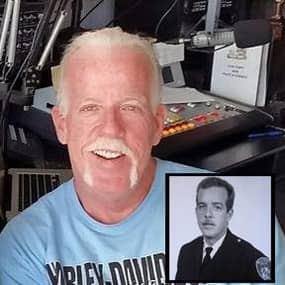
Radio Show Host and Producer
Retired from the Baltimore Police Department at the rank of Sergeant. He was retired early due a permanent line of duty injury that occurred during an act of violence. The injury resulted in 3 surgeries, two steel plates and a fusion of his right wrist and thumb.
About 8 years after retiring from police work, he began a career in the audio broadcasting space. Starting with "audio-blogs" in 1999. Which progressed into a brokered once a week radio show and then led to broadcasting school.
After graduating he has been a full time FM radio personality and launched the Law Enforcement Today Show as a podcast in March of 2017. This was in a partnership with Law Enforcement Today's Robert Greenberg. The show was quickly recruited by radio and is a nationally syndicated radio show, broadcasting weekly on many US Radio Stations to millions of people.
The partnership with them ended in the Summer of 2023 and the show was renamed the Law Enforcement Talk Radio Show and Podcast.
The radio show is syndicated by Talk Media Network. Go to the Radio Page of the site for more information.

Gun Or Taser®? Let's Talk The Reality and Truths.