In Defense of the Word “Cop”

In Defense of the Word “Cop”. What comes to mind when you see the word “Cop”? For some, it sparks debate. For others, it’s a casual shorthand. But for many of us who wore the badge, Cop is a title of pride, one earned, not given.
I use the word often on social media, and I use it with respect. I’m a retired Cop from Baltimore, Maryland, and in my world, “Cop” was always a compliment. It was never meant as an insult, nor was it ever treated like one by those who actually lived the work. Yet, over time, some have insisted the word carries a negative or derogatory tone. That misunderstanding is exactly why this discussion matters.
READ THE FREE ARTICLE: Could This Be The One Trait that Predators Target?
A Word That Covers an Entire Profession
In the United States, policing isn’t a single job description. We have Police Officers, Deputy Sheriffs, State Troopers, State Officers, Game Wardens, Wildlife Officers, Park Rangers, Corrections Officers, Probation Officers, Federal Agents, and more. Each agency carries its own structure, Officer, Agent, Corporal, Sergeant, Lieutenant, Captain, and so on.
Technically, the accurate way to address someone would be “Police Sergeant,” “State Police Lieutenant,” or “Highway Patrol Trooper.” Identifying a Highway Patrol Sergeant simply as a “Police Officer” isn’t accurate and, frankly, doesn’t reflect the rank they earned. In Defense of the Word “Cop”.
That’s where the word Cop becomes useful. It’s universal. It covers all of these roles and ranks without diminishing any of them. It acknowledges the brotherhood and sisterhood of everyone who steps into the job, regardless of patch, agency, or title.
What the Word Cop Really Means
For many of us, being called a Cop meant something deeper: it meant you actually did the job. It meant you were the one who showed up, not just in uniform, but in spirit.
Because the truth is, not everyone wearing a badge fits the definition. Across agencies, there are Officers, Deputy Sheriffs, and Troopers who are essentially mobile report takers. They avoid hot calls. They’re the last to arrive at dangerous scenes, by choice. They rarely get blood on their uniforms, whether their own, a victim’s, or another officer’s. And they almost never have complaints filed against them, because doing the bare minimum keeps their IA file clean.
LISTEN TO THIS FREE PODCAST: Fatal Police Shooting Caught On A Camera He Bought
Ironically, those are often the ones who climb the promotional ladder quickest.
In the Baltimore Police Department, we called them “Humps.” They stretched routine calls far longer than necessary, spent half their shift looking for reasons to stay inside the station house, and allowed other officers to handle the dangerous work on their posts. That meant fellow officers were tied up covering ground they shouldn’t have had to, and the community on their assigned post suffered for it. In Defense of the Word “Cop”.
By contrast, a Cop, or as the old-timers said, “Real Police”, was the officer who showed up, stepped in, and took responsibility. They backed their partners, protected their posts, and acted with both courage and purpose. That is the spirit the word represents.
The Outrage Over a Word
Every now and then, someone on social media erupts into a faux outrage when I use the word Cop. Their complaint isn’t about the topic being discussed, not even when the story is tragic or violent. No, their focus is the word itself.
But here’s my stance, and I don’t waver on it:
When I call someone a Cop, it’s a compliment.
If someone chooses to take offense, that’s on them, not on me.
And when a post says a COP WAS SHOT, anyone who fixates on my vocabulary instead of the fact that a criminal shot an officer has their priorities wildly out of line. Their motives, frankly, become very questionable.
READ THIS FREE ARTICLE: Giving Voice to the Untold Stories of Law Enforcement.
Proud of the Title
I’m a Retired Baltimore Police Sergeant. I don’t often refer to myself as a Cop, out of respect for the term, others can call me that, but I would be embarrassed to call myself that. I’m honored to have served. Honored to be part of a profession that demands courage, sacrifice, and resilience. Honored to stand among the men and women who truly earned the word. In Defense of the Word “Cop”.
So yes, I’ll keep using the word Cop.
Because to me, and to many others who lived the life, it’s not just a name.
It’s a standard.
It’s a legacy.
It’s a badge of honor.
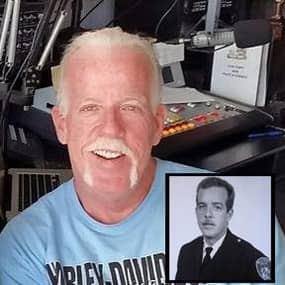
Radio Show Host and Producer
Retired from the Baltimore Police Department at the rank of Sergeant. He was retired early due a permanent line of duty injury that occurred during an act of violence. The injury resulted in 3 surgeries, two steel plates and a fusion of his right wrist and thumb.
About 8 years after retiring from police work, he began a career in the audio broadcasting space. Starting with "audio-blogs" in 1999. Which progressed into a brokered once a week radio show and then led to broadcasting school.
After graduating he has been a full time FM radio personality and launched the Law Enforcement Today Show as a podcast in March of 2017. This was in a partnership with Law Enforcement Today's Robert Greenberg. The show was quickly recruited by radio and is a nationally syndicated radio show, broadcasting weekly on many US Radio Stations to millions of people.
The partnership with them ended in the Summer of 2023 and the show was renamed the Law Enforcement Talk Radio Show and Podcast.
The radio show is syndicated by Talk Media Network. Go to the Radio Page of the site for more information.

Gun Or Taser®? Let's Talk The Reality and Truths.