Gun Or Taser®? Let's Talk The Reality and Truths.
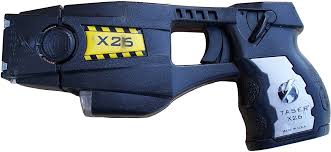
Gun Or Taser®? The Reality and Truths. In modern policing, TASERs have become a common and essential tool for law enforcement officers. These devices are designed to temporarily incapacitate a suspect by delivering an electrical charge that disrupts voluntary muscle control. When used correctly, TASERs can reduce injuries, prevent escalation, and help officers gain control over non-lethal threats.
However, despite their effectiveness in many situations, TASERs® are not suitable for deadly force encounters. Expecting them to replace firearms in life-threatening situations can put both officers and civilians at significant risk.
The Purpose of a TASER
A TASER® is classified as a less-lethal weapon, intended to control individuals who are resisting arrest, acting aggressively, or refusing commands without causing permanent injury.
LISTEN: Choose from hundreds of free podcast episodes from the Nationally Syndicated Law Enforcement Talk Radio Show. FREE.
Training emphasizes that TASERs® are most effective when:
A suspect is actively resisting or combative
Officers need to gain control quickly
The threat does not immediately endanger life
In other words, TASERs® are designed to stop behavior, not to stop a deadly attack.
Reliability and Effectiveness
One of the major limitations of TASERs® in deadly force situations is reliability. Unlike firearms, TASERs® depend on several conditions to work properly:
Both probes must make contact with the body
Clothing or movement can prevent proper contact
Only one cartridge is available before a reload is required
If a probe misses or malfunctions, the TASER® may fail completely. In a fast-moving, high-risk scenario, such as a suspect armed with a knife or firearm, a failed TASER® deployment could be fatal. Field experience shows TASER® failure rates can range from 25% to 60%, often influenced by clothing or environmental factors like cold weather. Gun Or Taser? The Reality and Truths
Distance and Reaction Time
Deadly encounters can unfold in seconds. For example, a suspect with a knife can cover 21 feet in about 1.5 seconds. Human reaction time averages 0.25 seconds, and it takes an officer roughly 1.3–1.8 seconds to draw, aim, and fire a firearm. If a TASER® fails, those fractions of a second could mean serious injury or death.
Even when a TASER® works perfectly, the electrical cycle lasts only about five seconds, during which a suspect may still be able to move or attack. TASERs® are therefore effective only when officers have time to control a suspect, not when a lethal threat is imminent.
READ: His Honest Approach to Weight Loss at 67. FREE
Stopping Power
Firearms are designed to stop a lethal threat immediately. TASERs® work through neuromuscular disruption, which does not guarantee a suspect will drop a weapon or stop an attack.
There are numerous documented cases where suspects:
Pulled out TASER probes mid-attack
Continued fighting despite electrical shocks
Were unaffected due to drugs, adrenaline, or body mass
In deadly force situations, even a few seconds of continued aggression can be fatal.
Risk to Officers and Bystanders
Relying on TASERs® in deadly encounters can create dangerous hesitation. Officers may attempt less-lethal options even when a suspect poses a lethal threat. This hesitation can lead to:
Officer injury or death
Suspects harming bystanders
Escalation of an already dangerous situation
LISTEN: Is the Word Cop an Insult or Offensive? Free.
Law enforcement policy typically states that deadly force is justified when an officer or another person faces imminent threat of death or serious bodily harm. In these circumstances, less-lethal tools are not appropriate. Gun Or Taser®? The Reality and Truths
The Role of TASERs®
Despite their limitations, TASERs® are a critical tool for modern policing. They are highly effective for handling:
Intoxicated or emotionally disturbed individuals
Aggressive suspects without weapons
Resisting subjects
In many cases, TASERs® allow officers to resolve conflicts safely without firearms. The key takeaway is that TASERs® are intended to prevent deadly force, not replace it.
Conclusion: A Tool, Not a Solution
Public debates sometimes question why officers don’t just use TASERs® in violent encounters. While understandable, this perspective overlooks the realities of policing. TASERs® are an essential tool, but they cannot replace firearms when a suspect poses an immediate lethal threat. Gun Or Taser? The Reality and Truths
Understanding the difference between less-lethal force and deadly force is essential. Officers are trained to resolve situations safely whenever possible, but when lives are at risk, they must rely on tools capable of stopping the threat instantly. TASERs® save lives in many scenarios, but in deadly force encounters, they are not a substitute for a firearm. Gun Or Taser? The Reality and Truths.
READ: Could This Be The One Trait that Predators Target? Free.
Attributions
Wikipedia

Radio Show Host and Producer
Retired from the Baltimore Police Department at the rank of Sergeant. He was retired early due a permanent line of duty injury that occurred during an act of violence. The injury resulted in 3 surgeries, two steel plates and a fusion of his right wrist and thumb.
About 8 years after retiring from police work, he began a career in the audio broadcasting space. Starting with "audio-blogs" in 1999. Which progressed into a brokered once a week radio show and then led to broadcasting school.
After graduating he has been a full time FM radio personality and launched the Law Enforcement Today Show as a podcast in March of 2017. This was in a partnership with Law Enforcement Today's Robert Greenberg. The show was quickly recruited by radio and is a nationally syndicated radio show, broadcasting weekly on many US Radio Stations to millions of people.
The partnership with them ended in the Summer of 2023 and the show was renamed the Law Enforcement Talk Radio Show and Podcast.
The radio show is syndicated by Talk Media Network. Go to the Radio Page of the site for more information.
A Call for Change From Lived Experience